 blog
blog
Is Natural Deodorant Worth It for Heavy Sweaters?
Table of Contents
- Deodorant vs. Antiperspirant: What Heavy Sweaters Need to Know
- Natural Deodorant Detox Symptoms: What to Expect and How Long They Last
- Best Aluminum-Free Deodorant for Excessive Sweating: Ingredients That Work
- How to Transition to Natural Deodorant Without Giving Up
- Hyperhidrosis vs. Heavy Sweating: When Natural Deodorant Isn't Enough
- Clothing, Diet, and Lifestyle: Factors That Affect Natural Deodorant Performance
- Is Natural Deodorant Worth It for Heavy Sweaters? The Verdict
- Frequently Asked Questions
Last Updated: September 27, 2026
Deodorant vs. Antiperspirant: What Heavy Sweaters Need to Know
If you sweat heavily, the honest answer to "is natural deodorant worth it for heavy sweaters" is this: it depends on what you're trying to fix. Natural deodorant controls odor, not sweat. Antiperspirant does the opposite. Confusing the two is the single biggest reason people give up on natural formulas within a week.
| Feature | Antiperspirant | Natural Deodorant |
|---|---|---|
| Main job | Reduce sweat | Control odor |
| Key ingredient | Aluminum salts | Baking soda, arrowroot, clay |
| Blocks sweat ducts | Yes | No |
| Best for | Wetness control | Odor control |
| Skin sensitivity risk | Irritation, clogged pores | Baking soda reactions |
How Aluminum Compounds Block Sweat Ducts
Aluminum salts work by dissolving into the sweat on your skin and forming a temporary plug inside the sweat duct. That plug physically reduces how much sweat reaches the surface. It's not a chemical "blocker" in the scary sense, but it does interrupt the sweat glands' output.
Why Natural Deodorant Doesn't Stop Sweat
Natural deodorant will not keep your shirt dry. It isn't designed to. Instead, it changes the environment on your skin so odor-causing bacteria can't multiply as easily.
Natural Deodorant Detox Symptoms: What to Expect and How Long They Last
Natural deodorant detox symptoms are real, but they're not what the internet claims. You may notice more odor, more wetness, or a temporary rash during the first one to three weeks. Most people level out by week two or three.
Common transition signs include:
- Stronger body odor for the first 7-14 days
- More noticeable wetness as sweat ducts unplug
- Mild irritation or itching in the underarm crease
- A rash if you're sensitive to baking soda
The 'Detox' Science: What's Actually Happening
Your body isn't "detoxing" in the wellness-magazine sense. There are no toxins leaving your armpits. What's happening is a bacterial reset, and the mechanism is more specific than most guides admit.
A few things speed up the adjustment:
- Wash your underarms twice daily with a gentle soap
- Exfoliate once or twice a week to clear dead skin
- Wear breathable fabrics during the first two weeks
- Reapply natural deodorant midday if needed
Why the Timeline Varies So Much
The "two to three weeks" figure is an average, not a rule. Three variables drive how long your transition actually runs:
- How long you used antiperspirant. Someone who used it for a decade has a more established bacterial shift to reverse than someone who switched after a year.
- How heavy you sweat. Heavy sweaters produce more sweat substrate for bacteria to feed on, which can extend the odor window.
- Your starting microbiome. Skin bacterial communities vary person to person. Some people never get a noticeable spike at all.
Best Aluminum-Free Deodorant for Excessive Sweating: Ingredients That Work
The best aluminum-free deodorant for excessive sweating contains three things: a moisture absorber, an odor neutralizer, and a skin soother. Skip formulas that only list fragrance and oils.
Look for these ingredients on the label:
- Arrowroot powder - absorbs moisture without the grit of baking soda
- Baking soda - neutralizes odor fast, but can irritate sensitive skin
- Kaolin or bentonite clay - pulls moisture and helps with absorbency
- Magnesium hydroxide - raises skin pH to slow odor bacteria
- Coconut oil - adds a moisture barrier and mild antibacterial action
- Zinc ricinoleate - traps odor molecules rather than masking them
- Essential oils - add scent, but choose low-irritation options like lavender or tea tree
Baking Soda Sensitivity and Skin Reactions
Baking soda sensitivity is the number one reason people quit natural deodorant. It shows up as a red, itchy rash in the underarm crease, sometimes within a day of use.
How to Transition to Natural Deodorant Without Giving Up
The smartest way to transition to natural deodorant is to do it gradually, not overnight. Heavy sweaters who quit cold turkey on a Monday usually cave by Thursday.
Red Door by Elizabeth Arden for Women →
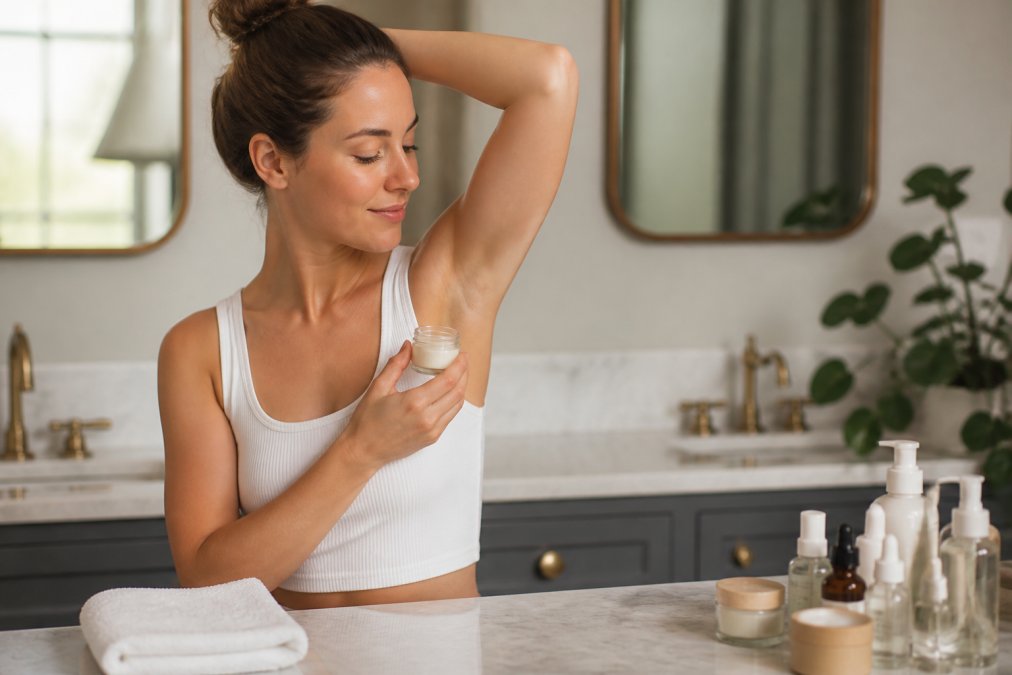
A transition plan that works:
- Use antiperspirant at night, natural deodorant during the day, for the first week.
- Drop the nighttime antiperspirant in week two.
- Apply natural deodorant twice daily: morning and after lunch.
- Carry a travel size for reapplication on high-sweat days.
- Give it a full 30 days before deciding.
Application and Reapplication Tips for Heavy Sweaters
Reapplication is not a sign of failure. For heavy sweaters, it's normal.
- Apply to clean, dry skin, not over yesterday's layer.
- Use a pea-sized amount, not a thick swipe. More product doesn't mean more protection.
- Keep a travel stick in your bag, desk, or car.
- Blot sweat with a tissue before reapplying so the new layer sticks.
- Choose a stick over a spray for longer wear.
Hyperhidrosis vs. Heavy Sweating: When Natural Deodorant Isn't Enough
Hyperhidrosis is a medical condition that causes sweating beyond what's needed for temperature control. Heavy sweating is a normal response to heat, exercise, or stress. The difference matters.
Clothing, Diet, and Lifestyle: Factors That Affect Natural Deodorant Performance
Your deodorant is only part of the equation. Fabric, food, and stress all change how much you sweat and how strong it smells. For heavy sweaters, the fabric choice is often the single biggest lever, bigger than the deodorant brand itself.
Clothing Fabric Interaction: Why Your Shirt Matters More Than You Think
Natural deodorant leaves moisture and oils on your skin that then transfer to fabric. How that fabric responds depends on its fiber structure:
- Polyester and other synthetics are hydrophobic, meaning they repel water but attract oils. That's a problem because the odor-causing compounds in sweat are oil-soluble. Synthetics hold onto those compounds through repeated washes, which is why workout shirts develop a permanent "gym smell" that never fully comes out. For heavy sweaters using natural deodorant, synthetics are the worst-case pairing.
- Cotton absorbs moisture well and releases odor compounds more readily in the wash, but it stays wet against the skin, which can feel uncomfortable and feed bacteria during long wear.
- Linen breathes better than cotton and dries faster, making it a strong summer option, though it wrinkles and offers less moisture wicking.
- Merino wool is the standout for heavy sweaters. The fiber naturally resists odor bacteria and regulates temperature, which is why it's the go-to base layer in hiking and cycling gear. It costs more and requires gentler washing, but it holds up far better against odor buildup than synthetics.
Diet and Lifestyle Factors
What you eat and drink changes the chemistry of your sweat, and no deodorant can override that:
- Caffeine stimulates the sympathetic nervous system, which directly triggers sweat gland activity. Cutting back after noon can reduce afternoon sweat volume noticeably.
- Spicy foods contain capsaicin, which activates heat receptors and can trigger sweating independent of actual body temperature.
- Alcohol raises skin temperature and dilates blood vessels, increasing sweat output for hours after drinking.
- Red meat and processed foods are associated with stronger body odor for some people, though the effect varies widely.
- Stress raises sweat gland activity almost instantly through the same sympathetic pathway as caffeine.
- Hydration dilutes the concentration of odor compounds in sweat, which can reduce how strong it reads.
Is Natural Deodorant Worth It for Heavy Sweaters? The Verdict
For most heavy sweaters, natural deodorant is worth it if you're chasing odor control, not dryness. It won't stop sweat, and it won't survive a 90-degree commute without reapplication. But it can keep you smelling fresh without aluminum, and it plays nicely with sensitive skin once you find the right formula.
Frequently Asked Questions
Does natural deodorant actually work for heavy sweating?
Natural deodorant won't stop you from sweating because it contains no aluminum to block sweat ducts. What it does is neutralize odor-causing bacteria and manage moisture with ingredients like arrowroot powder and clay. For heavy sweaters, this means you'll still sweat, but you won't smell. Many people find that with consistent use and proper reapplication, natural deodorant manages odor effectively even during intense activity.
How long does the detox period last when switching to natural deodorant?
Most people experience natural deodorant detox symptoms for one to four weeks. During this transition period, your underarms may sweat more or smell stronger as your body adjusts to life without aluminum-based pore-clogging. The duration varies based on how long you used antiperspirant, your body chemistry, and how consistently you apply the natural formula. Some people notice improvement within days, while others need a full month.
What natural ingredients help control sweat and odor?
Look for formulas containing arrowroot powder or clay-based ingredients for absorbency, baking soda for odor neutralization (if your skin tolerates it), and essential oils for antimicrobial action. Probiotics and enzymes can support a healthy skin microbiome. Moisture-wicking ingredients help manage wetness. Avoid synthetic fragrance if you have sensitive skin, and patch-test products with baking soda since sensitivity is common.
Are there natural ingredients that help control sweat?
No natural ingredient blocks sweat the way aluminum does. However, arrowroot powder, clay, and cornstarch absorb moisture and keep you feeling drier. Some formulas include witch hazel or certain essential oils that temporarily tighten pores. If you need clinical-strength sweat control, natural deodorant alone may not be sufficient, and you may want to talk to a dermatologist about hyperhidrosis treatment options.
Switching to natural deodorant as a heavy sweater takes patience, the right ingredients, and realistic expectations. If you're ready to build a routine that actually works, Green Vitality USA makes it easy with fast shipping, a curated selection of health and beauty products, and pricing that won't wreck your budget. Browse our deodorant and skincare lineup, find a formula that fits your skin, and get it delivered to your door. Shop now and make the switch on your terms.