 blog
blog
Best Eco-Friendly Alternatives to Plastic Bottles in 2026
Table of Contents
- Why Swap Plastic Bottles for Eco-Friendly Water Bottles
- Top Eco-Friendly Alternatives to Plastic Bottles Compared
- Benefits of Stainless Steel Water Bottles
- Glass vs Stainless Steel Water Bottles: Which Lasts Longer?
- How to Clean Reusable Water Bottles the Right Way
- Frequently Asked Questions
Last Updated: October 2, 2026
Why Swap Plastic Bottles for Eco-Friendly Water Bottles
The best eco-friendly alternatives to plastic bottles solve two problems at once: they cut the waste stream from single-use containers and they hold up to daily refilling far better than thin disposable plastic. This guide from Green Vitality USA walks through the strongest options, what each one costs you in care and durability, and how to pick the right fit.
The case for switching is straightforward. Municipal recycling programs across the country have tightened what they accept, and many curbside systems no longer take most single-use plastic bottles at all. That means the bottle you toss in the blue bin often ends up in a landfill anyway.
Reusable bottles also tend to keep drinks colder or hotter for longer, which matters if you're carrying water through a workday or a gym session. The trade-off is maintenance: a reusable bottle only pays off if you actually clean it.
Below, we'll compare stainless steel, glass, silicone, and bamboo options side by side, then cover the cleaning routine that keeps any of them safe to use.
Top Eco-Friendly Alternatives to Plastic Bottles Compared
The best eco-friendly alternatives to plastic bottles fall into three material families: stainless steel, glass, and silicone or bamboo hybrids. Each has a distinct strength, and the right pick depends on whether you prioritize durability, taste neutrality, or light weight.
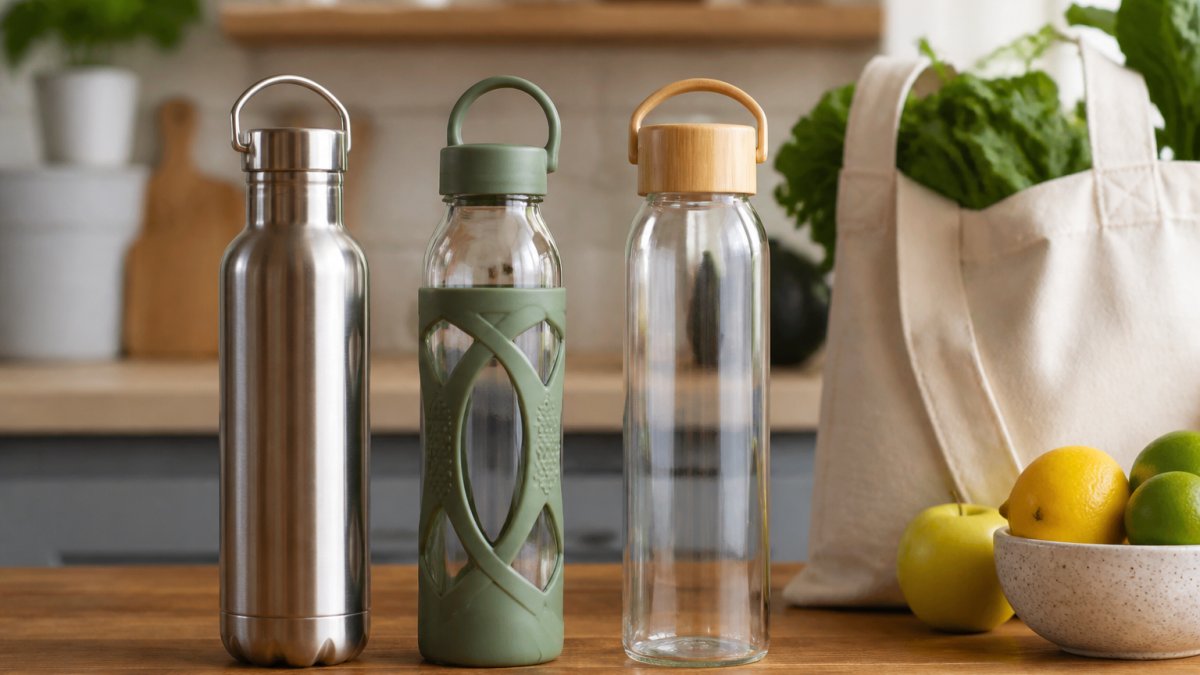
Here's how the main options stack up before we dig into each one.
| Material | Durability | Weight | Best For | Main Drawback |
|---|---|---|---|---|
| Stainless steel | High | Moderate | Daily commutes, gym bags | Can dent if dropped |
| Glass | Moderate | Heavy | Home and office use | Breakable |
| Silicone | Moderate | Light | Travel, kids | Retains odors over time |
| Bamboo | Low to moderate | Light | Short errands | Not fully watertight |
Stainless Steel Water Bottles
Stainless steel is the most durable everyday choice. A single-wall or double-wall steel bottle resists cracking, holds temperature well, and won't leach flavor into your water.
The catch is weight. A full 32-ounce steel bottle is noticeably heavier than a plastic one, so if you're carrying it on a long hike, that matters.
Glass Water Bottles
Glass wins on taste. It's completely inert, so nothing transfers into your drink, and it's easy to see when it needs scrubbing.
The obvious limitation is breakage. A silicone sleeve helps, but a glass bottle still isn't the right pick for a gym bag that gets tossed around.
Silicone and Bamboo Options
Silicone bottles are light, flexible, and collapse down for travel. Bamboo-capped bottles look great on a desk and use a renewable material for the lid.
Both come with caveats. Silicone can hold onto smells from flavored drinks, and a bamboo cap alone doesn't make a bottle leakproof.
Benefits of Stainless Steel Water Bottles
The benefits of stainless steel water bottles come down to three things: they last for years, they hold temperature, and they don't affect how your water tastes. For most people replacing a daily plastic habit, steel is the lowest-maintenance upgrade.
Durability is the headline. A quality steel bottle survives drops, dishwasher cycles, and years of refilling that would crack or cloud a plastic one.
Temperature control is the second advantage. Double-wall vacuum insulation keeps cold drinks cold through a full workday and hot drinks hot for hours, which single-use plastic can't do at all.
There's also a hygiene angle. Stainless steel doesn't scratch as easily as plastic, and scratches are where bacteria tend to collect. A smooth interior is simply easier to keep clean.
Glass vs Stainless Steel Water Bottles: Which Lasts Longer?
Stainless steel lasts longer than glass in nearly every real-world scenario. Steel resists impact, survives being dropped on concrete, and won't shatter in a bag. Glass can last just as long, but only if it's handled carefully and never knocked over.
So the honest answer is that steel wins on lifespan, but glass wins on purity. If your bottle lives on a desk and gets washed by hand, a glass bottle can serve you for years. If it travels in a backpack, steel is the safer bet.
Here's the practical breakdown:
- Durability: Steel survives drops; glass can crack or shatter
- Taste: Glass is fully inert; steel is neutral when food-grade
- Weight: Glass is heavier for the same volume
- Cleaning: Both are easy to wash; glass shows residue more clearly
- Cost over time: Steel usually costs more upfront but rarely needs replacing
For most people, steel is the better long-term investment. Glass is the better choice if taste and visibility matter more than toughness.
How to Clean Reusable Water Bottles the Right Way
Cleaning a reusable bottle properly takes about two minutes and prevents the buildup that makes bottles smell. The routine is simple: wash daily with hot soapy water, scrub the lid and gasket, and dry everything completely before reassembly.
Most people clean the bottle and forget the lid. That's a mistake. The gasket and threads are where residue and odor-causing bacteria collect fastest.
Follow this routine:
- Rinse the bottle with hot water after each use
- Wash with dish soap and a bottle brush daily
- Scrub the lid, spout, and removable gasket separately
- Soak stubborn odors in a baking soda and water solution
- Air-dry upside down with the lid off
- Deep-clean the gasket weekly, or replace it if it stays cloudy
For stainless steel, avoid bleach-based cleaners, which can pit the surface over time. For glass, check the sleeve for trapped moisture. For silicone, a baking soda soak handles most lingering smells.
Frequently Asked Questions
What is the most eco-friendly alternative to plastic water bottles?
Stainless steel and glass are the most eco-friendly alternatives to plastic bottles. Stainless steel is durable, lightweight, and keeps drinks cold for hours, while glass is fully recyclable and doesn't retain flavors. Both reduce single-use plastic waste and are free from BPA and other chemicals found in some plastic bottles. Your best choice depends on whether you prioritize portability (stainless steel) or pure taste (glass).
Are stainless steel bottles better for the environment than glass?
Both are far better than single-use plastic. Stainless steel bottles are typically more durable and energy-intensive to produce, but they last for years and are recyclable. Glass is infinitely recyclable and made from abundant materials, but it's heavier and can break. If you want a bottle that survives drops and travel, stainless steel usually has a lower long-term environmental impact because you replace it less often.
How do I clean reusable water bottles to prevent odors and bacteria?
Wash your bottle daily with warm water and dish soap, using a bottle brush to reach the bottom and sides. For stainless steel, avoid abrasive scrubbers. For glass, check if it's dishwasher-safe. Once a week, deep clean with a mixture of baking soda and water or white vinegar to remove odors. Let all parts air-dry completely before reassembling to prevent mold growth.
Is silicone a safe and eco-friendly material for water bottles?
Food-grade silicone is generally considered safe and more eco-friendly than plastic because it's non-toxic, BPA-free, and more durable. However, silicone is not widely recyclable and may not biodegrade. It's a good choice for collapsible bottles or sleeves, but for a primary water bottle, stainless steel or glass offers better long-term sustainability and durability.
Switching away from single-use plastic is a small daily habit with a long payoff, but the bottle only works if it's easy to keep clean and pleasant to carry. Green Vitality USA stocks a curated range of wellness and self-care essentials, backed by a fast, user-friendly shopping experience and dependable customer service, so you can build a routine that actually sticks. Browse the collection and find the reusable bottle that fits your day. Shop Now.