 how-to
Is It Safe to Buy Supplements Online in 2026?
Table of Contents
- Why Buying Supplements Online Carries Real Risks
- How to Identify Counterfeit Supplements Before You Buy
- Why Third-Party Supplement Testing Matters
- FDA Regulation vs. Marketing Claims: What the Label Actually Means
- Digital Hygiene and Payment Security When You Buy Supplements Online
- Subscription Traps, Return Policies, and International Shipping Risks
- What Makes the Best Online Health and Beauty Store
- Frequently Asked Questions
Last Updated: September 27, 2026
Why Buying Supplements Online Carries Real Risks
The short answer: it can be safe, but only when you know what to check. Millions of households now buy supplements online as a matter of routine, yet the same convenience that makes it appealing also opens the door to fake products, mislabeled bottles, and sellers who vanish after checkout. This guide from Green Vitality USA walks through a practical safety protocol, from spotting counterfeits to protecting your payment details.
How to Identify Counterfeit Supplements Before You Buy
Counterfeit supplements are fake or unauthorized copies sold under a real brand's name. They often look nearly identical to the genuine product, which is why label inspection alone is not enough.
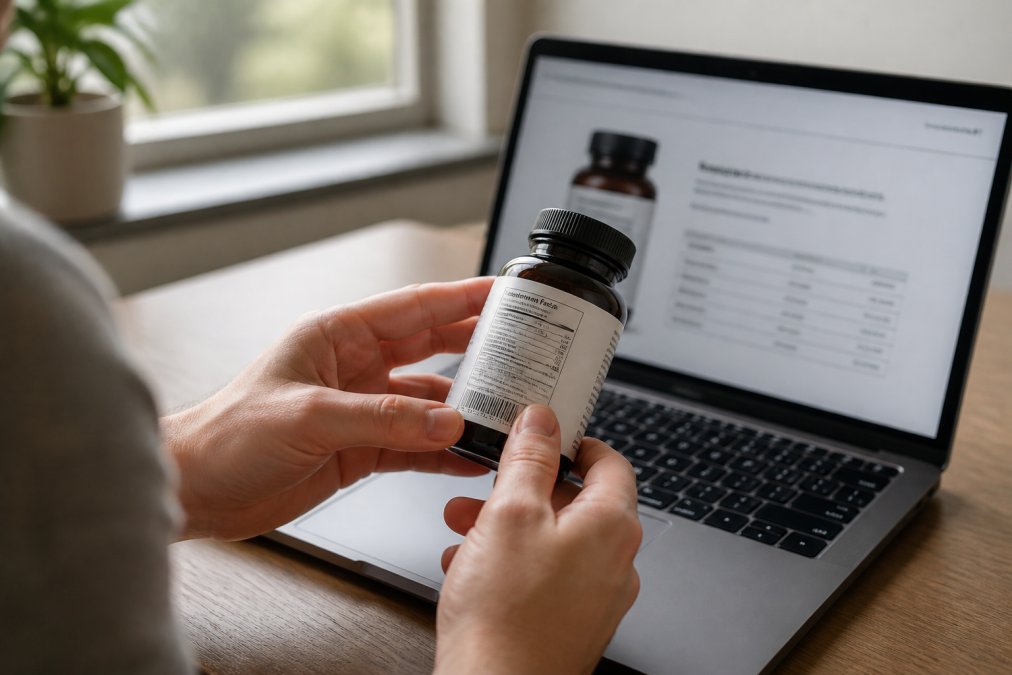
- Lot number and expiration date: Real products print both clearly. Fakes often smudge, skip, or misalign them.
- Seals and packaging quality: Look for a broken or missing safety seal, blurry print, or thin, flimsy bottles.
- Seller authorization: Check the brand's own website for a list of authorized sellers. If a marketplace seller is not on it, walk away.
- Price that seems too low: Deep discounts on popular brands are a common sign of counterfeit goods.
- Grammar and spelling on the label: Errors are a red flag for unauthorized production.
Why Third-Party Supplement Testing Matters
Third-party supplement testing is an independent lab analysis that checks a product for purity, potency, and contaminants. It is the single best signal that what is on the label matches what is in the bottle, because the manufacturer is not the one doing the checking.
The Certifications Worth Looking For
Not every seal means the same thing. These are the programs most commonly cited by quality-focused brands and retailers:
- NSF Certified for Sport, tests for contaminants and also screens against substances banned by major athletic organizations. The strictest of the common seals.
- USP Verified Mark, from the United States Pharmacopeia. Confirms the product contains the ingredients listed, in the declared amounts, and meets limits for contaminants.
- ConsumerLab.com, an independent reviewer that tests products it buys off the shelf and publishes pass/fail results. Useful for cross-checking a specific brand.
- Informed Choice / Informed Sport, batch-level testing for banned substances, common in sports nutrition.
Reading a Certificate of Analysis and Batch Testing Results
A certificate of analysis (COA) is a document from an independent lab that reports what was actually found in a specific batch of product. It should list the product name, batch or lot number, test date, the lab's name, and the results.
Look for these items on a COA:
- Heavy metals: Lead, arsenic, cadmium, and mercury should be tested and within safe limits.
- Microbial contamination: Checks for bacteria, yeast, and mold.
- Potency: Confirms the ingredient amounts match the label.
- Purity: Confirms no fillers or adulterated ingredients were found.
- Identity: Confirms the raw material is actually the plant or compound named on the label, a common failure point for herbal products.
How to Verify a COA Is Real
A PDF with a lab logo is easy to fake. Three checks separate a real report from a decorative one:
- Match the lot number on the COA to the lot number printed on the bottle you received. If they do not match, the report does not apply to your product.
- Check the lab's name. Independent labs that do this work are identifiable businesses with their own websites. If the "lab" has no presence outside the brand's own site, treat the report as unverified.
- Look at the test date. A COA from three years ago does not describe a batch made last month.
What Testing Does Not Cover
Third-party testing confirms identity, potency, and contamination limits. It does not confirm the product works, that the dose is effective for your goal, or that the ingredients are safe to combine with medications you take. Those are separate questions, and the reason a pharmacist or physician is worth consulting before adding anything new to a routine.
FDA Regulation vs. Marketing Claims: What the Label Actually Means
The FDA does not approve dietary supplements for safety or effectiveness before they are sold. It can act after a product reaches the market if problems surface, but that is a safety net, not a pre-check. This is the core difference between how drugs and supplements are regulated.
What the Law Actually Requires on a Label
Under the FDA's labeling rules for dietary supplements, a compliant product must carry:
- The statement of identity, the words "dietary supplement" or a description of the product.
- The net quantity of contents, how much is in the bottle.
- The Supplement Facts panel, which lists ingredients and amounts per serving.
- A serving size and servings per container.
- The manufacturer, packer, or distributor's name and address.
- A domestic address or phone number for reporting problems.
- Any required directions for use and warnings.
The Two Claims That Cross the Line
Supplement makers may make structure/function claims, statements about how a nutrient affects normal body function, such as "supports immune health." They may not make disease claims, statements that a product treats, prevents, or cures a disease, unless the product is approved as a drug.
How Enforcement Actually Works
The FDA's post-market tools include:
- Warning letters to companies making illegal claims or selling adulterated products.
- Product recalls when contamination or mislabeling is found.
- Import alerts that flag foreign suppliers for detention at the border.
- The Tainted Products database, which lists supplements found to contain hidden pharmaceutical ingredients, a recurring problem in products marketed for weight loss, sexual enhancement, and bodybuilding.
You can search warning letters and recalls on the FDA's site before buying from an unfamiliar brand. It takes two minutes and surfaces problems that no review section will mention.
What You Can and Cannot Trust on the Label
What you can trust:
- The Supplement Facts panel, which lists ingredients and amounts per serving.
- The manufacturer's contact information.
- Any third-party certification seal from a recognized testing body.
What you should question:
- Proprietary blends that hide individual ingredient amounts.
- Claims that a product treats, cures, or prevents a disease.
- Vague promises with no supporting lab data.
- "Doctor-formulated" language with no named doctor and no published formula rationale.
If You Suspect a Product Is Mislabeled or Unsafe
You do not have to wait for a recall. The FDA accepts reports through its MedWatch program for supplements, and the FTC handles complaints about deceptive advertising and false health claims. Filing a report creates a paper trail that regulators use to prioritize enforcement. Keep the bottle, the order confirmation, and any lab documentation, those are the details that make a report actionable rather than a dead end.
Digital Hygiene and Payment Security When You Buy Supplements Online
Payment security is where most shoppers drop their guard. A convincing storefront can still be a data-harvesting operation.
Protect yourself with these habits:
- Pay with a credit card or a trusted payment service, not a direct bank transfer.
- Check that the checkout page uses a secure connection before entering card details.
- Use a unique password for every shopping account.
- Turn on two-factor authentication where it is offered.
- Avoid saving card details on unfamiliar sites.
Subscription Traps, Return Policies, and International Shipping Risks
Three problems trip up online supplement buyers more than any others: auto-renewals, hard returns, and overseas shipping.
| Problem | Warning Sign | What to Do |
|---|---|---|
| Subscription trap | Pre-checked renewal box | Uncheck it or cancel before the trial ends |
| No returns | Missing or vague policy | Buy elsewhere |
| Overseas shipping | Long, untracked transit | Choose a domestic seller with tracking |
What Makes the Best Online Health and Beauty Store
The best online health and beauty store combines verified products, clear lab documentation, fair return terms, and fast domestic shipping. Those four things separate a trustworthy retailer from a risky one.
Frequently Asked Questions
Is it safe to buy supplements online from Amazon or other third-party marketplaces?
Third-party marketplaces carry higher risk because inventory is commingled and unauthorized sellers can list products. Counterfeit and adulterated ingredients have appeared in marketplace listings, even for well-known brands. If you buy supplements online through a marketplace, check that the seller is the manufacturer or an authorized retailer, and look for batch testing documentation. Buying directly from a brand's own site gives you a clearer supply chain and easier recourse if something goes wrong.
How can I tell if a supplement is third-party tested?
Look for a certificate of analysis (COA) that names an independent lab and a specific batch number, not just a logo on the label. Reputable brands publish COAs on their website or will send one on request. Third-party supplement testing checks for potency, purity, heavy metals, and microbial contamination. If a brand cannot produce a COA for the exact batch you received, treat that as a red flag and consider a verified retailer instead.
Does the FDA regulate online supplement sales?
The FDA regulates dietary supplements as a category of food, not as drugs. That means products do not need pre-market approval for safety or effectiveness before they are sold. The FDA can act after a product reaches the market if it is adulterated or misbranded, and it monitors adverse events. This lighter regulatory oversight is exactly why third-party testing, label accuracy checks, and buying from verified retailers matter so much when you buy supplements online.
What should I check before entering my payment details on a supplement website?
Confirm the site uses HTTPS and shows a secure checkout, and pay with a credit card or a service that offers dispute resolution rather than a wire transfer or gift card. Read the return policy and cancellation terms before you buy, especially for subscriptions that auto-renew. Watch for international shipping risks too: customs delays, no US return address, and no way to verify the seller if the product arrives damaged or does not match the listing.
Buying supplements online comes down to verification. Check the seller, read the lab report, protect your payment details, and know the return terms before you commit. Green Vitality USA makes that easier with a curated catalog, a fast and user-friendly shopping experience, and a customer-focused team ready to help. Shop now and stock your routine with products you can actually trust.