 how-to
How to Clean Your Yoga Mat Properly: Step-by-Step
Table of Contents
- Why Cleaning Your Yoga Mat Matters More Than You Think
- How Often to Clean a Yoga Mat (Weekly, Monthly, and After Every Class)
- Supplies You Need: Gentle Soap, Water Temperature, and Soft Cloths
- Step-by-Step: How to Deep-Clean Your Yoga Mat Properly
- DIY Yoga Mat Cleaner Recipes That Actually Work
- Best Yoga Mat Cleaner Options: Store-Bought vs. Homemade
- How to Clean a Yoga Mat After Hot Yoga
- Material-Specific Care: Rubber, Cork, PVC, and What to Avoid
- Frequently Asked Questions
Last Updated: October 6, 2026
Why Cleaning Your Yoga Mat Matters More Than You Think
Learning how to clean your yoga mat properly is one of the most overlooked habits in a home practice.
Here is the part most guides skip: pores in the material trap sweat deep inside, where a quick wipe cannot reach it, and that trapped moisture causes the smell.
Below: a simple weekly and monthly schedule, the supplies that work, and the exact steps for a full deep clean.
How Often to Clean a Yoga Mat (Weekly, Monthly, and After Every Class)
Most guides give you a number and stop there. The real question is which level of cleaning a situation calls for. Use this three-tier framework.
The three tiers of mat cleaning
Tier 1, Routine wipe-down (after every practice). A light spray of diluted gentle soap and a soft-cloth wipe.
Tier 2, Spot clean (as needed). A targeted wipe of a specific area, like a sweat puddle or where your hands and feet land.
Tier 3, Deep clean (on a schedule or when signals appear). A full-surface wash, front and back, with a rinse and full air-dry.
Quick decision guide
| Situation | Tier | Why |
|---|---|---|
| Finished a normal class, light sweat | Tier 1 | Surface only; no buildup yet |
| Noticed a slick or greasy patch | Tier 2 | Localized oil or product residue |
| Mat smells after a wipe-down | Tier 3 | Odor means buildup has soaked in |
| Practiced hot yoga or sweated heavily | Tier 3 | Heat and sweat push moisture deep |
| Shared a mat or borrowed one | Tier 3 | Hygiene risk from another person's sweat |
| Mat has been rolled up damp | Tier 3 | Mildew risk; needs a full dry-out |
| More than a month since last full clean | Tier 3 | Routine maintenance |
| Traveling or short on time | Tier 1 or 2 | Do what you can; deep clean when home |
How often each tier should happen
- Tier 1: After every single practice, no exceptions.
- Tier 2: Whenever you see or feel a problem area. No fixed schedule.
- Tier 3: Once a month for most people. Every one to two weeks if you practice hot yoga, sweat heavily, or share your mat.
Signals that bump you to a deep clean
- A smell that lingers after a wipe-down
- Visible discoloration or dark patches
- A slick or greasy feel on the surface
Why frequency alone is the wrong frame
Two people can practice the same number of times per week and need very different schedules. A hot-yoga practitioner on a porous rubber mat may need a deep clean weekly, while a gentle-flow practitioner on a closed-cell PVC mat may be fine monthly. Sweat volume, mat material, and sharing all shift the schedule, use the tiers and signals, not just the calendar.
Supplies You Need: Gentle Soap, Water Temperature, and Soft Cloths
You do not need a cabinet full of products. A gentle soap, the right water temperature, and a soft cloth or sponge cover almost every mat.
Water temperature matters. Warm water lifts sweat and oil; cool water works for a quick rinse.
Soap choice matters just as much. Dish soap cuts oil but only when diluted, a few drops in a full spray bottle is plenty.
Here is what to gather:
- A spray bottle for your diluted mix
- Two soft cloths or microfiber towels
- A gentle soap such as diluted dish soap or Castile soap
Step-by-Step: How to Deep-Clean Your Yoga Mat Properly
Here is the full deep-clean method we recommend. It works on most mats and takes about 15 minutes, plus drying time.
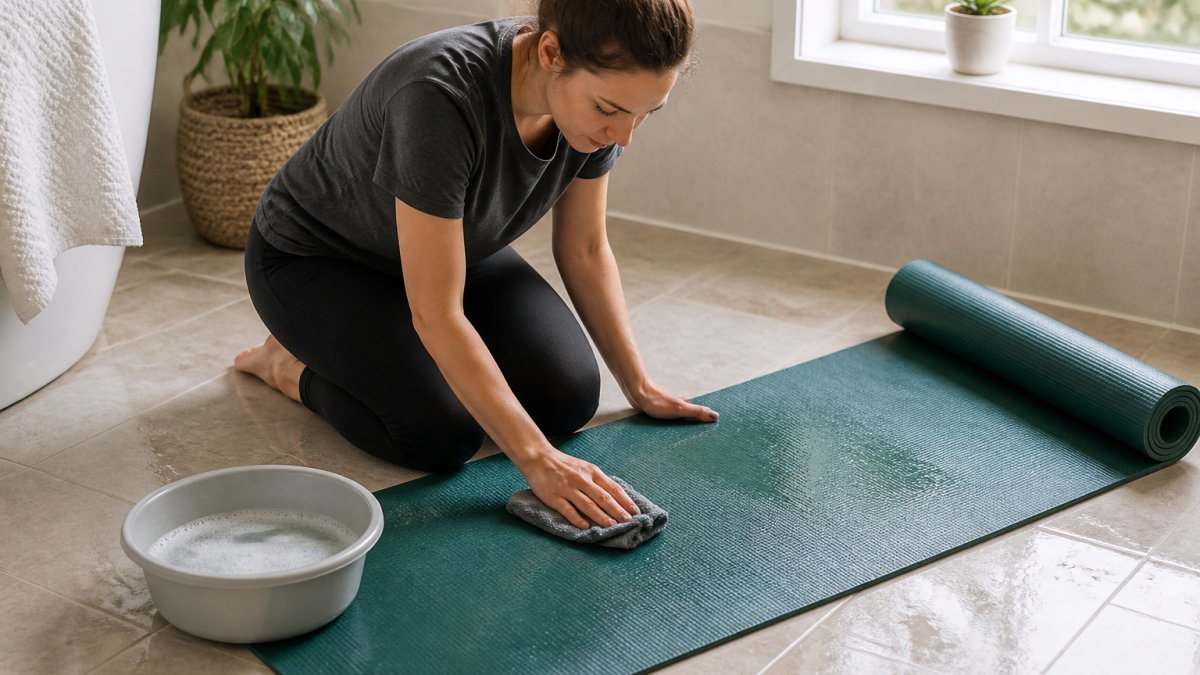
- Check the care label first. Follow any manufacturer instructions on the mat or its packaging.
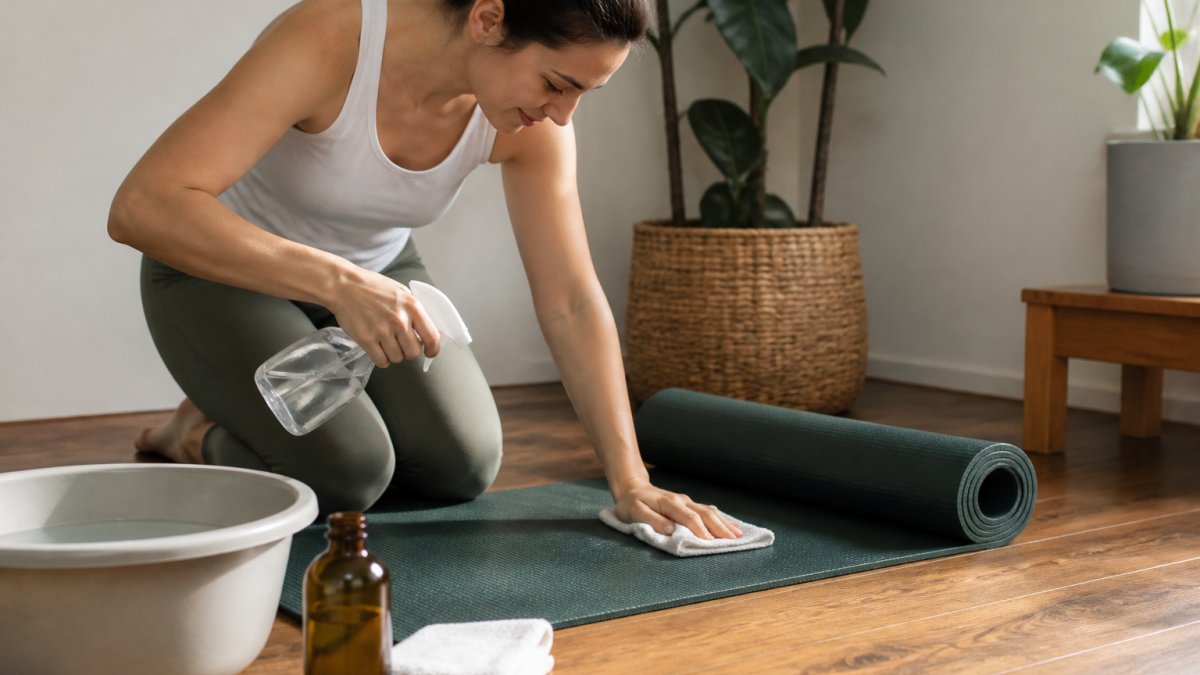
- Mix your solution. Add a few drops of gentle soap to a spray bottle of warm water.
- Lay the mat flat. Work on a clean floor or in a bathtub.
- Wipe the surface. Spray in sections and wipe with a soft cloth, front and back.
- Rinse well. Wipe again with a clean, damp cloth to remove all soap residue.
- Remove excess water. Press the mat between two towels. Never wring or twist it.
- Air-dry completely. Hang or lay the mat flat in a ventilated spot, away from direct sun.
Spot-Cleaning vs. Full Submersion
Spot-cleaning handles small marks and everyday sweat; full submersion handles deep grime and odor. Only submerge a mat if the care label says it is safe. Most closed-cell mats handle a short soak in cool or warm water with diluted soap, but open-cell and cork mats often should not be submerged. When in doubt, spot-clean.
Rinsing, Wringing, and Air-Drying Without Warping
Rinsing removes the soap that would otherwise turn sticky. Wringing is where mats get ruined. Do not twist, fold hard, or hang a wet mat over a thin bar. That stretches the material and leaves permanent creases.
Instead:
- Press water out with a towel
- Lay the mat flat or drape it over a wide, smooth rack
- Keep it out of direct sunlight, which fades color and dries out rubber
DIY Yoga Mat Cleaner Recipes That Actually Work
A DIY yoga mat cleaner is cheap, fast, and easy to control. The best recipe is the simplest: warm water, a few drops of gentle soap, and a spray bottle.
For a natural cleaner, try this mix:
- 1 cup warm water
- 1 tablespoon Castile soap
- Optional: a few drops of tea tree oil for its cleaning properties
For odor that lingers, a light sprinkle of baking soda can help lift smells. Wipe it away with a damp cloth and let the mat dry.
Half Exercise Ball Trainer, 23 inch Balance Ball Trainer, 660lbs Capacity →
A few rules keep your DIY mix safe:
- Skip vinegar on rubber and cork, since it can break them down over time
- Never mix soap with bleach or other harsh chemicals (the CDC)
- Make small batches so the mix stays fresh
Best Yoga Mat Cleaner Options: Store-Bought vs. Homemade
The best yoga mat cleaner comes down to convenience versus control. Store-bought sprays are ready to use and often formulated for specific materials; homemade mixes cost less and let you pick every ingredient.
| Option | Best For | Cost | Watch Out For |
|---|---|---|---|
| DIY soap and water | Budget-minded, most mats | Lowest | Must mix fresh, test first |
| Castile-based spray | Natural-minded users | Low | Can leave residue if too strong |
| Store-bought spray | Busy people, specific materials | Higher | Check the label for your mat type |
| Disinfecting wipes | Quick spot clean only | Moderate | Can dry out or damage some mats |
If you want a ready-made option, look for a biodegradable spray cleaner made for your mat material. Read the label to confirm it suits rubber, PVC, or cork.
At Green Vitality USA, we stock wellness and fitness essentials for people who want simple, reliable products delivered to their door. Our product catalog includes fitness gear to round out your home setup, so you can build a routine without hunting across five different stores.
How to Clean a Yoga Mat After Hot Yoga
Cleaning a yoga mat after hot yoga needs to happen right away, not the next morning, heat and heavy sweat push moisture deep into the mat, exactly where odor starts.
Follow this routine after every hot class:
- Wipe the mat down before you leave the studio
- Spray with a diluted gentle soap mix at home
- Wipe front and back with a soft cloth
- Rinse with a clean, damp cloth
- Air-dry fully, laid flat or over a wide rack
- Deep-clean once a week if you practice hot regularly
A towel over your mat during class cuts down on how much sweat reaches the surface, the easiest habit change you can make.
If your mat still smells after a deep clean, the buildup may be too deep for surface cleaning. At that point, replacement is often the smarter move. Our Green Vitality USA fitness collection carries mats and balance trainers built for regular practice.
Material-Specific Care: Rubber, Cork, PVC, and What to Avoid
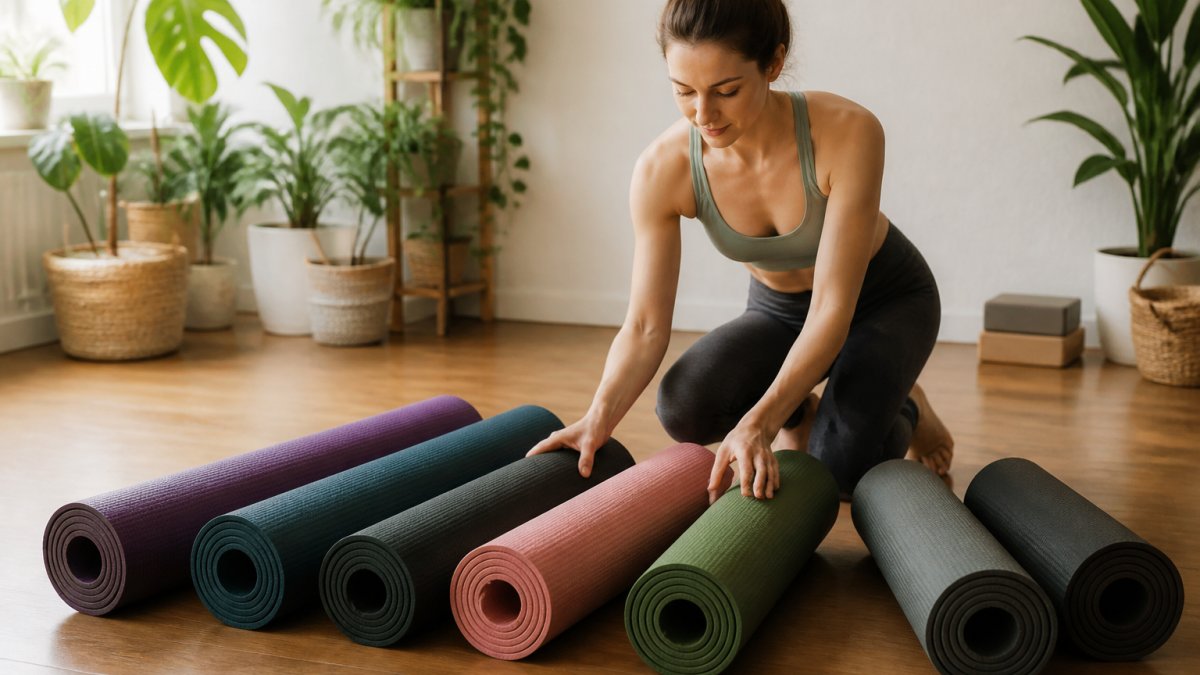
Every mat material responds differently to water, soap, and heat. The biggest mistake is treating a cork mat like a PVC mat. Match the method to the material and check the care label first.
How to identify your mat material
- Natural rubber: Heavy, grippy, often labeled "natural rubber" or "tree rubber." Common in premium and eco mats.
- PVC (polyvinyl chloride): Dense, slightly plastic feel, usually the least expensive. Often labeled "PVC" or "vinyl."
- TPE (thermoplastic elastomer): Lighter than PVC, spongier, often marketed as "eco-friendly." Frequently labeled "TPE."
Material-by-material cleaning rules
Natural rubber. Wipe with warm water and a few drops of diluted gentle soap.
PVC. The most forgiving material.
TPE. Treat like PVC but with cooler water.
Polyurethane (PU). The PU top layer is absorbent, which is why it grips so well and also why it stains.
Cork. Cork's grip activates with moisture, so a light wipe is usually enough. Never soak a cork mat.
What to avoid on every mat
- Bleach and ammonia-based cleaners. They can discolor the surface and break down bonding between layers.
- Undiluted soap or harsh detergents. Concentrated soap leaves a sticky film that traps dirt and kills grip.
- Vinegar on rubber and cork. It can degrade these materials over repeated use.
When the care label wins
General advice is a starting point, not a rule. If the manufacturer's care label conflicts with anything above, follow the label. Pricier mats usually have more specific care needs, and ignoring them is the fastest way to void a warranty or ruin the surface.
Frequently Asked Questions
Can you put a yoga mat in the washing machine?
Most yoga mats should not go in a washing machine. The agitation and heat can break down the top grip layer, cause the mat to bunch or tear, and strip away the tackiness that keeps you from sliding. Always check the manufacturer's care label first. If your mat is machine-washable, use cold water on a gentle cycle and air-dry it completely before rolling it up. For most rubber, PVC, and cork mats, hand-washing with diluted gentle soap and warm water is the safer choice.
Can you use vinegar to clean a yoga mat?
White vinegar works as a natural cleaner for many mats, but it is not safe for all materials. A diluted mix of one part white vinegar to three parts water in a spray bottle can cut through sweat and odor on PVC and some rubber mats. Avoid vinegar on cork mats, since the acidity can break down the cork surface over time. Always test a small corner first, and never mix vinegar with baking soda in the same bottle because it neutralizes both ingredients.
How do you dry a yoga mat after cleaning it?
Lay the mat flat on a clean towel or hang it over a shower rod or drying rack with the textured side facing out. Keep it out of direct sunlight, which can fade colors and weaken rubber. A fan or open window speeds drying. Never roll or store a damp mat: trapped moisture causes mold, mildew, and that sour smell that is hard to remove. Let it air-dry completely, which usually takes 4 to 12 hours depending on humidity.
How do you remove odor from a yoga mat?
Persistent odor usually means sweat and bacteria have soaked into the mat surface. Start with a deep clean using warm water and a few drops of gentle dish soap or Castile soap, then rinse and air-dry fully. For stubborn smells, sprinkle baking soda over the dry mat, let it sit for 15 to 30 minutes, then wipe it away with a damp cloth. Store the mat unrolled in a breathable bag between uses so air circulates and odor does not return.