 how-to
How to Store Wellness Supplements Properly at Home
Table of Contents
- Why Proper Storage of Wellness Supplements Matters
- Where to Store Supplements: Choosing the Right Location
- Vitamin Storage Temperature: Maintaining Optimal Conditions
- Protecting Supplements from Heat, Moisture, and Light
- Storage Guidance by Supplement Form
- Storing Supplements in a Pill Organizer: Best Practices
- Supplement Expiration Date and Shelf Life
- Safe Storage Around Children and Pets
- Frequently Asked Questions
Last Updated: October 12, 2026
Why Proper Storage of Wellness Supplements Matters
How you store wellness supplements properly at home directly affects their potency and safety. Supplements degrade when exposed to heat, moisture, light, and air. A bottle stored carelessly can lose effectiveness in weeks. The same bottle stored correctly lasts months or years at full strength.
This matters because you're investing in your health. Taking a degraded supplement wastes money and delivers little benefit. Proper storage protects your investment and ensures you get what you paid for.
This guide shows you exactly how to store wellness supplements so they stay potent and safe.
Where to Store Supplements: Choosing the Right Location
The best location for supplements is cool, dark, and dry. Most homes have several spots that work. Some common areas actually harm supplements.
Best Rooms in Your Home
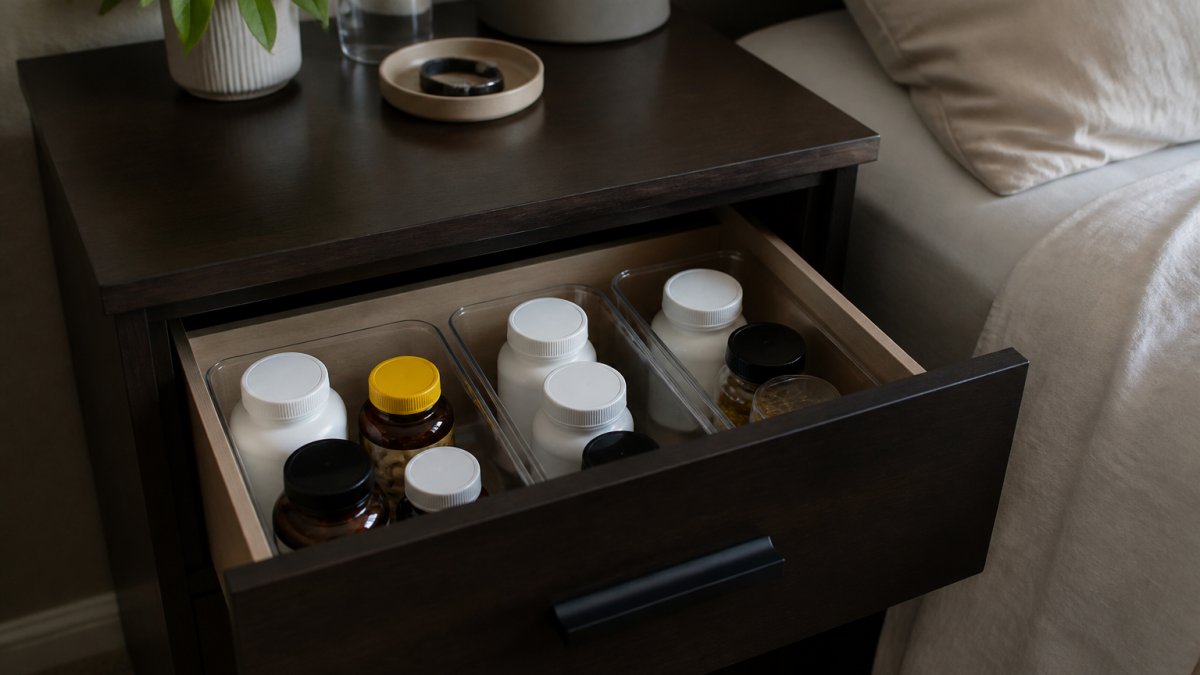
The bedroom is often ideal for supplement storage. Bedrooms stay cool and dark naturally. A nightstand drawer or closet shelf keeps supplements away from daily temperature swings. Avoid the bathroom medicine cabinet, bathrooms get humid from showers and baths.
The kitchen pantry works if it's far from the stove and oven. Heat from cooking damages supplements. A high shelf away from appliances is safer than a counter near windows.
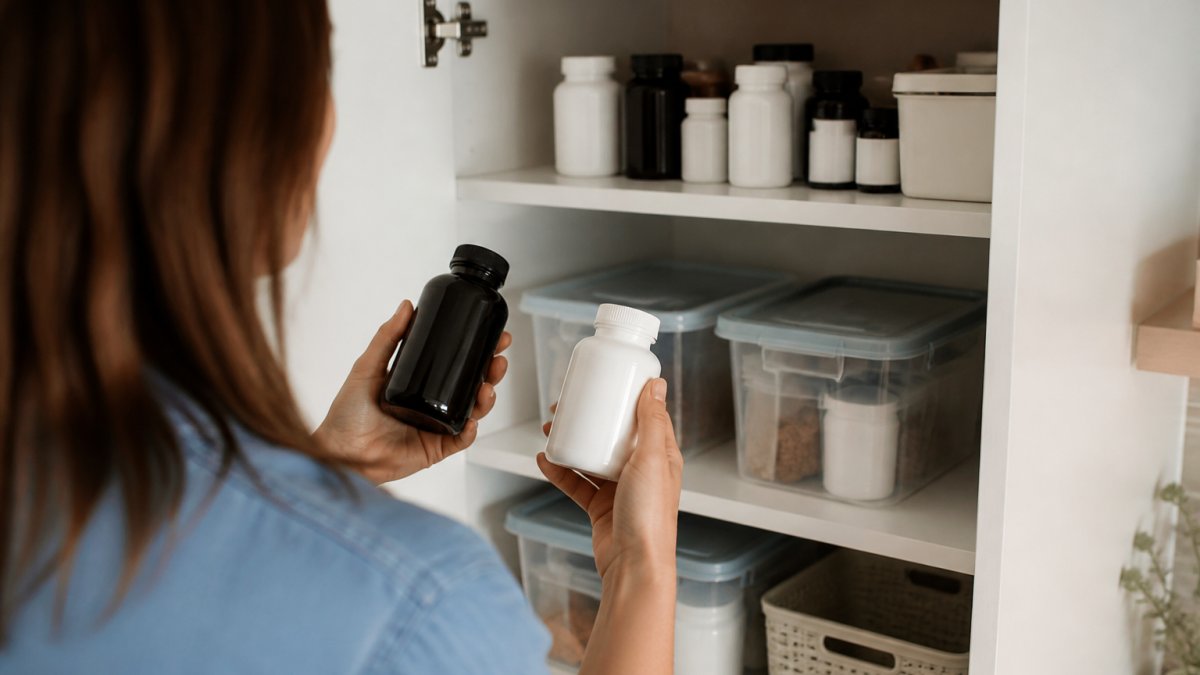
A linen closet or hallway closet provides stable, cool conditions. These spaces rarely experience temperature changes. They stay dark and tend to have lower humidity than bathrooms.
Locations to Avoid
Never store supplements in the kitchen near appliances. Heat from the stove, oven, and dishwasher damages vitamins and minerals. The temperature swings near these appliances break down supplement compounds.
Bathrooms are problematic. Steam from showers and baths creates moisture that degrades supplements. Humidity promotes mold growth and chemical breakdown. Even a sealed bottle can allow moisture in over time.
Windowsills expose supplements to direct sunlight. Light breaks down many vitamin formulas. Even clear supplement bottles allow damaging UV rays through.
Avoid garages, basements, and attics. These spaces experience extreme temperature swings. Garages get very hot in summer and cold in winter. Basements often stay damp. Attics become furnaces in warm months.
Keep supplements away from the refrigerator. The constant opening and closing creates temperature fluctuations. Frost can form inside bottles if they're stored in freezers.
Vitamin Storage Temperature: Maintaining Optimal Conditions
Most supplements store best at room temperature between 59 and 77 degrees Fahrenheit. This range keeps compounds stable without needing refrigeration.
Consistency matters more than the exact temperature. A closet that stays at 70 degrees all year is better than a room that swings from 60 to 80 degrees daily.
Heat is the enemy of supplement stability. Every 10-degree increase above room temperature roughly halves the shelf life of many vitamins.
Cold temperatures slow degradation but don't eliminate it. Refrigeration isn't necessary for most supplements. It can actually be harmful because opening the refrigerator repeatedly introduces condensation. Moisture gets inside bottles, damaging contents.
Some supplements like probiotics may benefit from cool storage. Check the label. If the manufacturer recommends refrigeration, follow that instruction. If they don't mention it, room temperature storage is correct.
Protecting Supplements from Heat, Moisture, and Light
Three enemies destroy supplement potency: heat, moisture, and light. Controlling these three factors preserves quality and shelf life.
Managing Humidity and Moisture
Moisture is the fastest killer of supplements. It promotes mold growth and chemical breakdown. Sealed containers are your first defense.
Keep supplement bottles tightly closed between uses. Don't leave caps off while you're taking a dose. Recap immediately. Open bottles degrade rapidly because air and moisture enter freely.
Desiccant packets inside supplement bottles absorb moisture. Don't remove these packets. They're doing essential work protecting your supplements.
Store supplements in a dry area. If your home is naturally humid, consider storing supplements in a bedroom closet rather than a kitchen cupboard. Basements and bathrooms retain moisture and should be avoided.
Use airtight containers if you transfer supplements. Glass jars with rubber seals work well. Plastic containers with tight-fitting lids also protect supplements. Avoid paper bags or cloth containers, these allow moisture in.
Shielding from Direct Sunlight
Light degrades many vitamins and herbal supplements. UV rays break down compounds in the supplement formula. Even indoor light can cause some damage over time.
Store supplements in opaque or amber-colored containers. These block light better than clear bottles. If your supplements come in clear bottles, transfer them to amber glass bottles for long-term storage.
Keep supplements away from windows. Sunlight streaming through glass still damages supplements. Even indirect light near a window causes degradation over months.
Dark closets and drawers are ideal. Bathroom cabinets work only if they're far from windows and shower steam. Pantry shelves work if they're not near windows or bright overhead lights.
Storage Guidance by Supplement Form
Different supplement forms require slightly different storage approaches. Tablets, capsules, powders, liquids, and gummies all have unique needs.
Tablets and Capsules
Tablets and capsules are the most stable supplement forms. They resist moisture and temperature changes better than powders or liquids.
Store tablets and capsules in their original bottles when possible. Manufacturers design these bottles to protect contents. The original packaging often includes desiccant packets that absorb moisture.
Keep the original label visible. You need the expiration date and storage instructions. The label tells you when the supplement was manufactured and when it expires.
Close the bottle tightly after each use. This prevents air and moisture from entering. A loose cap allows degradation to accelerate.
Powders and Liquids
Powders and liquids are more vulnerable to moisture and temperature swings than tablets.
Store powders in airtight containers with tight lids. Transfer them from the original packaging only if necessary. If you must transfer, use glass jars with rubber seals or plastic containers with airtight lids.
Keep powders in a cool, dark place. Humidity causes powders to clump and degrade. Store them in a bedroom closet or pantry shelf away from appliances.
Liquid supplements require extra care. Keep bottles upright and sealed tightly. Liquids are more susceptible to bacterial growth if exposed to air. Store them in a cool location, away from direct sunlight.
Check liquid supplements regularly for signs of separation or discoloration. These indicate degradation. Discard liquids that smell off or show visible changes.
Gummies and Probiotics
Gummies are vulnerable to heat and moisture. They can melt or stick together in warm conditions.
Store gummies in a cool location, ideally below 75 degrees. A bedroom closet works better than a kitchen cabinet. Keep the original bottle sealed tightly.
Probiotics are living organisms. They're sensitive to heat and moisture. Many probiotic supplements benefit from cool storage. Check the label, if the manufacturer recommends refrigeration, follow that guidance.
If you refrigerate probiotics, keep them in a sealed container. Don't let them sit on a shelf where temperature fluctuates. Consistent cool storage preserves the beneficial bacteria.
Storing Supplements in a Pill Organizer: Best Practices
Pill organizers are convenient for daily use. They let you pre-sort supplements for the week. But they create storage challenges that bulk bottles avoid.
Pill organizers expose supplements to air and light. They're typically clear plastic, allowing light in. They're not sealed, so moisture can enter.
Use pill organizers only for supplements you'll take within one week. Don't fill an organizer for a month.
Keep the organizer in a cool, dark place when not in use. Store it in a drawer or cupboard, not on a counter.
Transfer supplements from bulk bottles to the organizer on the day you need them, if possible. This minimizes air exposure.
Consider using opaque pill organizers instead of clear ones. These block light better.
Don't leave supplements in an organizer longer than necessary. Return unused supplements to their original sealed bottles. This preserves potency for future use.
Supplement Expiration Date and Shelf Life
Every supplement has an expiration date. This date indicates when the manufacturer guarantees potency at the stated dosage. After this date, the supplement may still be safe but might not deliver full benefits.
Reading Expiration Labels
Expiration dates appear on supplement bottles. They're usually printed as a month and year: "EXP 06/2027" means the supplement expires in June 2027.
Some supplements show a "Best By" date instead of an expiration date. This indicates peak potency, not safety. The supplement is usually safe after this date but may be less effective.
Check the expiration date before taking a supplement. Don't use supplements past their expiration date. You can't be certain of potency or safety after that point.
Write the purchase date on your supplement bottles. This helps you rotate stock. Use older supplements first. This practice ensures you're always taking the freshest supplements.
Store supplements in a way that keeps expiration dates visible. Don't hide bottles in the back of a closet where you forget about them. Rotate stock regularly so nothing sits unused past its expiration date.
Signs Your Supplements Have Degraded
Supplements can degrade before their expiration date if stored improperly. Watch for these signs:
- Discoloration or visible changes in appearance
- Unusual smell or taste
- Clumping in powders or gummies that have melted together
- Separation in liquid supplements
- Mold or visible contamination
- Capsules that are cracked or leaking
If you notice any of these signs, discard the supplement. It's no longer safe or effective. Don't take it hoping it's still okay. The cost of a new bottle is worth the safety and effectiveness.
Temperature swings and humidity cause most degradation. Supplements stored in bathrooms often show signs of breakdown within months. Supplements stored in cool, dry closets last much longer.
Safe Storage Around Children and Pets
Supplements look like candy to children. Colorful gummies especially attract young kids. Pets may also investigate supplement bottles.
Store all supplements out of reach of children. High shelves in closets work well. Locked cabinets provide extra security.
Use child-resistant caps when available. Many supplement bottles come with these caps.
Keep supplements in their original labeled bottles. The label includes poison control information if a child ingests too much.
Store pet supplements separately from human supplements. Pets can't tell the difference.
Watch for supplements that are toxic to pets. Some ingredients safe for humans harm animals.
Educate children about supplements. Explain that these are medicines, not candy. Teach them not to eat supplements without permission.
Proper supplement storage is simple but essential. Cool, dark, dry conditions preserve potency and safety.
When you store wellness supplements properly at home, you protect your investment and ensure effectiveness.
| Storage Location | Temperature | Light | Humidity | Best For |
|---|---|---|---|---|
| Bedroom closet | Stable | Dark | Low | Tablets, capsules, powders |
| Pantry shelf | Stable | Dark | Low | Most supplements |
| Linen closet | Stable | Dark | Low | All forms |
| Kitchen counter | Variable | Bright | Variable | Avoid |
| Bathroom cabinet | Variable | Variable | High | Avoid |
| Garage/attic | Extreme | Variable | Variable | Avoid |
Frequently Asked Questions
Where should supplements be stored at home?
Store wellness supplements in a cool, dry place away from direct sunlight. Ideal locations include bedroom drawers, linen closets, or pantry shelves away from the stove or sink. Avoid bathrooms and kitchens near heat sources or windows. Keep containers sealed and stored at room temperature between 68°F and 77°F. Label instructions on your product bottle will specify exact storage requirements.
Should supplements be refrigerated after opening?
Most supplements don't require refrigeration and can degrade if exposed to cold temperatures and condensation. However, some liquid supplements, probiotics, and omega-3 oils benefit from refrigeration to extend shelf life. Always follow the label instructions on your specific product. If refrigerated, store in an airtight container to prevent moisture absorption. Remove supplements from the fridge only when you need to use them to minimize temperature fluctuations.
How can I tell if a supplement has gone bad?
Check the expiration date first; discard any supplements past this date. Look for visible signs of degradation: discoloration, unusual odor, clumping in powders, or separation in liquids. Moisture damage often causes tablets or capsules to stick together or become brittle. If a supplement smells off or looks different from when you purchased it, don't use it. Proper storage conditions preserve potency and quality, so degradation often signals storage failure.
Can moisture affect vitamins and supplements?
Yes, moisture is one of the primary enemies of supplement quality. Humidity causes tablets and capsules to break down, powders to clump, and potency to degrade. Store supplements in sealed containers with tight-fitting lids in a dry environment. Use desiccant packets or silica gel in storage containers if you live in a humid climate. Keep supplements away from bathrooms and kitchens where steam and moisture are common. Maintain humidity levels below 60% in your storage area for optimal preservation.