 how-to
How to Choose the Best Yoga Mat for Beginners
Table of Contents
- How to Choose the Best Yoga Mat for Beginners: Start With Your Practice
- Yoga Mat Thickness Guide: Cushioning, Joint Support, and Stability
- Yoga Mat Materials: Grip, Durability, and Environmental Impact
- How to Find a Non-Slip Yoga Mat That Holds Up in Hot Yoga
- Choosing a Yoga Mat for Sensitive Knees and Achy Joints
- Mat Size, Weight, and Portability: Matching Dimensions to Your Body and Routine
- How to Test a Mat Before Buying: Return Policies and Break-In Tips
- Common Mistakes Beginners Make When Buying a Yoga Mat
- Frequently Asked Questions
Last Updated: October 4, 2026
How to Choose the Best Yoga Mat for Beginners: Start With Your Practice
Learning how to choose the best yoga mat for beginners comes down to one idea: match the mat to your body and your practice, not to a trend.
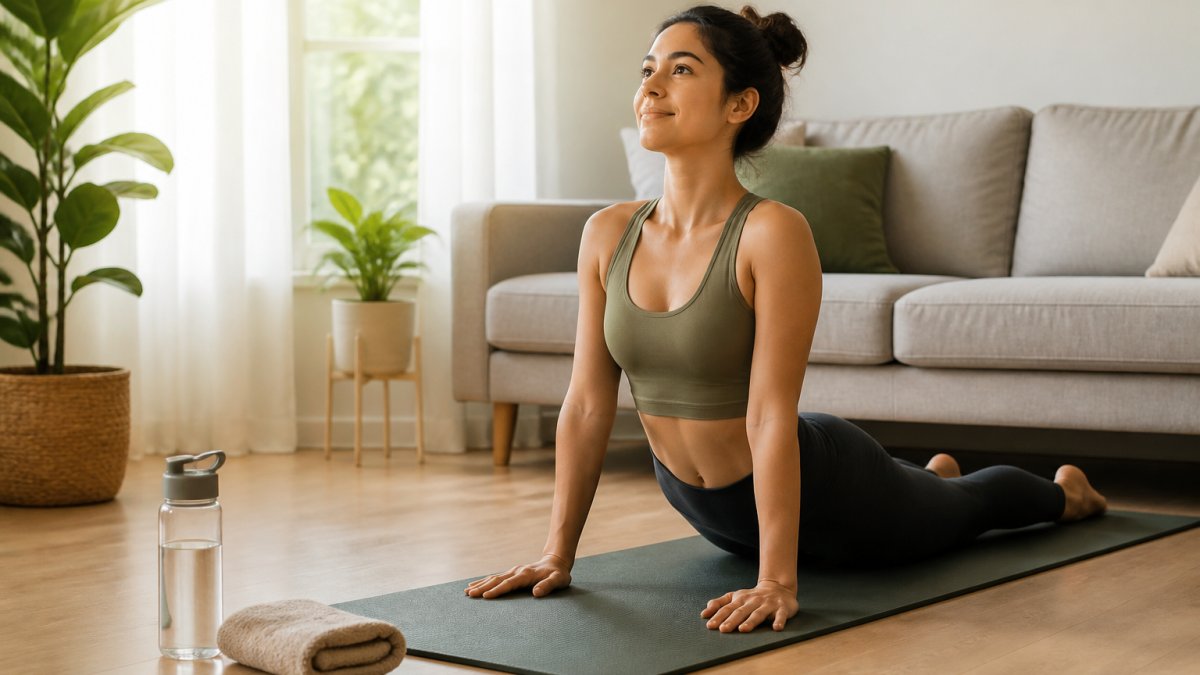
A yoga mat does three jobs: it cushions your joints, keeps your hands and feet from sliding, and gives you a stable base for balance poses.
Below, we break down thickness, material, grip, size, and price, and how to test a mat before you commit.
The Beginner Decision Tree: Practice Style, Budget, and Physical Needs
Start with three questions, in this order. First, what style do you practice? Gentle or restorative classes need cushioning; hot yoga needs grip above all. Second, what is your budget? A first mat need not be expensive, but the cheapest mats often fail at grip.
Work through it like this:
- Hot or sweaty practice → prioritize a non-slip yoga mat with a closed-cell surface
- Gentle or restorative practice → prioritize cushioning, around 6 mm
- Sensitive knees or wrists → prioritize thickness and joint support
- On a tight budget → prioritize grip over brand name
Most beginners fall into two or three of these at once. Pick the one that would end your practice if you got it wrong.
Yoga Mat Thickness Guide: Cushioning, Joint Support, and Stability
Mat thickness is the most misunderstood spec in yoga. Thicker does not mean better: a thicker mat adds cushioning but reduces stability, because your hands and feet sink instead of pressing into a firm surface.
A mat is a foam spring: under load, it compresses. A thin, dense mat compresses little, so your hand pushes back against a firm surface and your balance muscles get clean feedback.
Here is the trade-off in plain terms:
| Thickness | Cushioning | Stability | Best For |
|---|---|---|---|
| 1-3 mm | Minimal | Highest | Travel, experienced practice |
| 4-5 mm | Moderate | Good | Most beginners, vinyasa |
| 6 mm | High | Reduced | Sensitive knees, restorative |
| 8 mm+ | Highest | Lowest | Floor work, seated practice |
How Thick Should a Yoga Mat Be for Beginners?
For most beginners, 4 to 5 mm is the right starting point: enough cushion for knees and wrists, firm enough to balance without wobbling.
Go thicker, around 6 mm, only if you have sensitive joints. Go thinner only if you already prefer a firm surface. The 8 mm-and-up mats sold as "extra comfort" are usually a mistake for standing poses, because your feet sink and your balance suffers.
The Thickness Decision Path: Weight, Pose Type, and Joint Sensitivity
Thickness is not one number for one person. Work through these three questions and the answer usually falls out.
1. What is your body weight? A 120-pound and a 220-pound practitioner need different foam densities for the same cushioning.
2. What poses dominate your practice? Count the poses you spend the most time in:
- Standing balance poses (warrior, tree, chair) → thinner is better, 4-5 mm
- Kneeling and seated poses (child's pose, cat-cow, seated forward fold) → thicker helps, 6 mm
- Floor work and savasana → thicker is fine, 6-8 mm
- Sun salutations and flow → 4-5 mm, because you transition between standing and kneeling constantly
**3.
Most beginners land on 5 mm: enough cushion for knees and wrists, enough firmness for balance. If you cannot decide, 5 mm is the safest first mat.
Yoga Mat Materials: Grip, Durability, and Environmental Impact
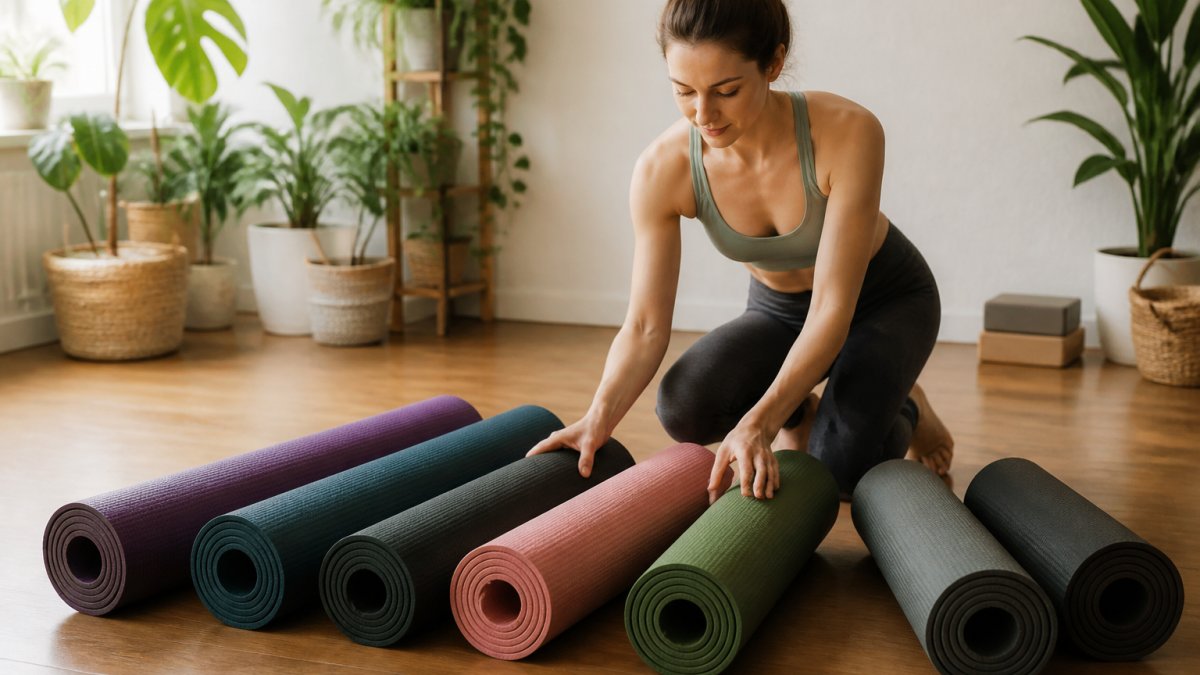
Mat material decides how well your mat grips, how long it lasts, and what happens to it when you're done.
PVC is the traditional mat material.
TPE is lighter and more eco-friendly. It is comfortable and often cheaper, but wears faster than PVC or rubber.
Natural rubber offers the best grip of the group, especially when wet, and is more durable.
Cork sits on top of a rubber base.
Closed-Cell vs. Open-Cell Surfaces: What It Means for Cleaning and Sweat
A closed-cell surface has no pores, so sweat and dirt wipe away easily. An open-cell surface is porous, so it absorbs sweat and needs deeper cleaning. Closed-cell mats suit heavy sweaters and hot yoga; open-cell mats feel grippier but hold moisture and odor if you skip cleaning.
Half Exercise Ball Trainer, 23 inch Balance Ball Trainer, 660 lbs Capacity →
How to Find a Non-Slip Yoga Mat That Holds Up in Hot Yoga
Grip is the one feature you cannot compromise on, because a slipping mat is a safety issue. A non-slip yoga mat stays put under your hands and feet, and on the floor beneath you.
Two things create grip: the surface texture your hands touch and the base that contacts the floor.
In hot yoga, sweat changes everything. A mat that grips dry skin can turn slick once your palms are wet.
Choosing a Yoga Mat for Sensitive Knees and Achy Joints
Most mat guides treat joint pain as a thickness question. It is not. A yoga mat for sensitive knees needs more cushioning at the contact points, not all-over softness, and the answer depends on which joints hurt, how tall you are, and how you move.
Match the Mat to the Joint, Not the Whole Body
Different joints need different things from the same mat:
- Knees, need compression resistance. A 6 mm mat with firm, dense foam protects the kneecap without letting your hips sink. A soft 8 mm mat feels good for one pose and ruins your balance in the next.
- Wrists, usually need a firmer surface, not a softer one. When your palm sinks into foam, your wrist bends back further than it should. A 4-5 mm dense mat keeps the wrist closer to neutral; a wedge or folded blanket under the heel of the hand helps more than extra thickness.
- Hips and sit bones, need padding in seated poses. A 6 mm mat plus a folded blanket or cushion under the sit bones works better than a thicker mat, because you can add padding exactly where you need it and remove it for standing poses.
- Lower back, rarely a mat problem. If back discomfort shows up in poses, it is usually a technique or alignment issue, not a cushioning issue.
Height, Mobility, and Accessibility
Height. Standard mats run about 68 inches long. If you are taller than roughly 5'10", your hands or feet hang off the end in poses like downward dog.
Grip and hand strength. If you have limited hand strength or grip issues, a mat with a pronounced texture gives you more to hold onto than a smooth surface.
Getting up and down. If kneeling or rising from the floor is difficult, a slightly thicker mat (6 mm) cushions the transition, and a firm edge is easier to push off from than a soft, rounded one.
What to Do When a Pose Still Hurts
A mat is a tool, not a cure. If a pose still hurts through a good mat, modify the pose rather than buying a thicker one. Common fixes:
- Fold a towel or blanket under the knee in kneeling poses
- Place a wedge or folded blanket under the wrists in plank and downward dog
- Sit on a cushion or block in seated poses
- Shorten your stance or widen it to change the joint angle
Mat Size, Weight, and Portability: Matching Dimensions to Your Body and Routine
Standard mats run about 68 inches long and 24 inches wide, fitting most people under roughly 5'10".
Width matters more than most beginners expect. A 24-inch mat feels narrow the first time you do a wide stance. A 26-inch mat gives you room to move without stepping off the edge.
Weight and portability trade off against everything else. Thicker, rubber-based mats are heavier and harder to carry.
How to Test a Mat Before Buying: Return Policies and Break-In Tips
You cannot fully judge a mat from a product photo. Test it in person if you can, and lean on the return policy if you cannot.
Use this checklist before you commit:
- Press a palm flat on the surface and try to slide it. If it moves easily, grip is weak.
- Stand on it in bare feet and shift your weight side to side. Note how much you wobble.
- Place it on a hard floor, not carpet, since hard floors expose slipping.
- Dampen your hands and repeat the palm test. This simulates a sweaty practice.
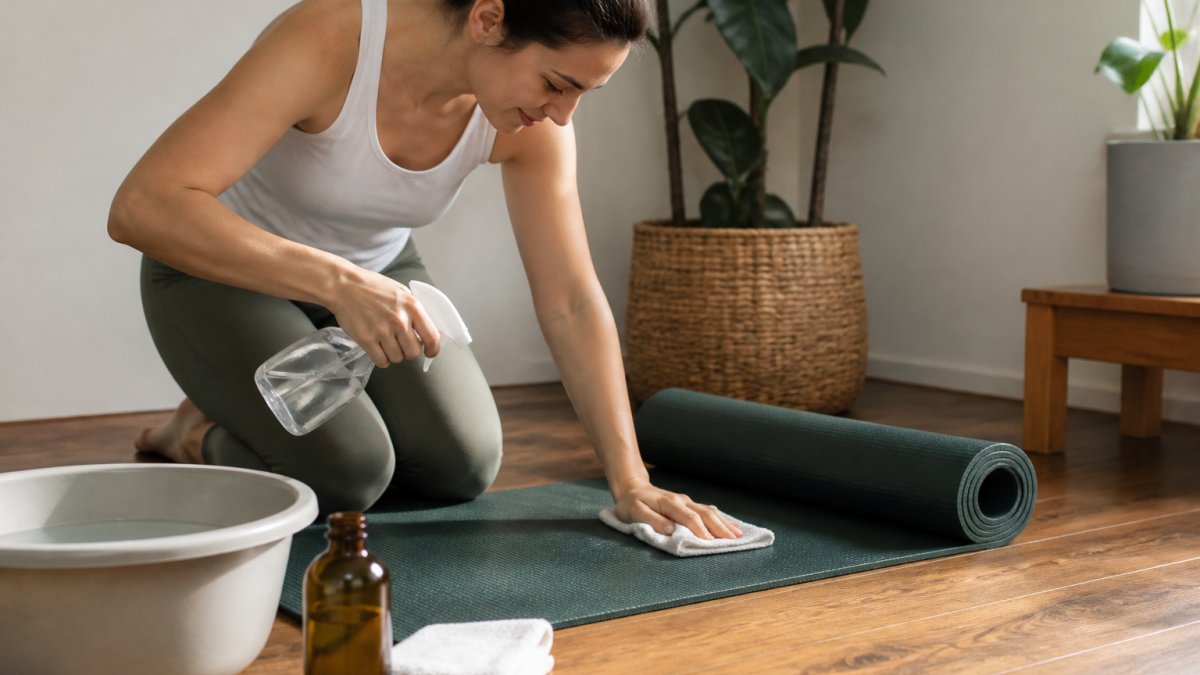
Break-in is real. Many mats, especially rubber and cork, grip better after several sessions. Wipe a new mat with a damp cloth before first use, and clean it regularly to keep grip consistent.
Common Mistakes Beginners Make When Buying a Yoga Mat
The most common mistake is buying for looks instead of function. A pretty mat that slips will sit in a closet.
Three more worth avoiding:
- Ignoring material. PVC, TPE, rubber, and cork behave differently in sweat, and the wrong one ruins hot yoga.
- Skipping the return policy. If you cannot test the mat first, the return window is your only safety net.
- Choosing a mat too short or too narrow. Stepping off the edge mid-pose breaks focus fast.
A good first mat is not the most expensive or the thickest. It is the one that grips, supports your joints, and fits how you actually practice.
Choosing the right mat is the first step toward a practice you'll actually keep, and finding quality wellness gear without the guesswork shouldn't be hard.
Frequently Asked Questions
How thick should a yoga mat be for beginners?
Most beginners do well with a mat between 4 and 6 millimeters thick. That range offers enough cushioning for knees and wrists without the wobble that comes from thicker mats. If you have sensitive joints or practice restorative yoga, a 6-millimeter mat provides extra padding. For balance-heavy styles like Vinyasa or hot yoga, a thinner 3 to 4-millimeter mat keeps you grounded. Try a few thicknesses in person before committing.
Which yoga mat material is best for beginners?
Natural rubber offers the best grip and durability, though it costs more and has a distinct smell at first. PVC mats are affordable and easy to clean, making them a solid starter option. TPE mats fall in between: lighter than PVC, more eco-friendly, and reasonably grippy. If you sweat a lot or practice hot yoga, a natural rubber or textured TPE mat will outperform a smooth PVC surface. Match the material to how often you practice and how much you want to spend.
Why do my knees hurt on a yoga mat?
Knee discomfort usually comes from insufficient cushioning, not the mat itself being defective. Standard 3-millimeter mats are too thin for kneeling poses on hard floors. A mat of at least 5 to 6 millimeters, or a dedicated knee pad placed under the mat, reduces pressure on the kneecap. Check that your mat sits flat and does not bunch up, since wrinkles create uneven pressure points during floor poses.
How do I clean and care for a yoga mat?
Wipe your mat down after every session with a diluted vinegar solution or a gentle mat cleaner, then air-dry it fully before rolling. Closed-cell surfaces resist moisture and are easier to clean; open-cell surfaces absorb sweat and need deeper cleaning every few weeks. Avoid direct sunlight for long periods, which breaks down rubber and foam. Roll your mat with the top surface facing outward to prevent edges from curling during storage.