 how-to
How to Spot Fake Beauty Products: A 2026 Guide
Table of Contents
- Why Counterfeit Beauty Products Matter: Health and Safety Risks
- How to Verify Beauty Product Authenticity: Step-by-Step Checks
- Red Flags: What Signals a Counterfeit Product
- Gray Market vs. Counterfeit: Understanding the Difference
- Digital Verification Tools Beyond Lot Codes
- Reporting Counterfeit Beauty Products to the FDA
- Where to Buy Authentic Beauty Products Safely
- Conclusion
Why Counterfeit Beauty Products Matter: Health and Safety Risks
Counterfeit beauty products pose genuine health threats beyond wasted money. Fake cosmetics expose your skin to dangerous, unregulated substances, heavy metals, bacterial contamination, or harmful chemicals that legitimate manufacturers never use (the FDA). Your skin absorbs what you apply to it, making this a serious concern. The counterfeit industry thrives because convincing fakes fool even experienced buyers, with consequences ranging from mild irritation to serious dermatological damage. Some counterfeits contain lead, mercury, or arsenic at levels that would trigger immediate recalls in legitimate products; others harbor bacteria causing infections or long-term skin damage. At Green Vitality USA, we understand that our customers deserve authentic, safe products, which is why we've built this guide to help you verify what you're buying. The stakes matter most for vulnerable populations, those with sensitive skin, allergies, pregnant individuals, and anyone with existing skin conditions, but nobody should accept counterfeit risk.
How to Verify Beauty Product Authenticity: Step-by-Step Checks
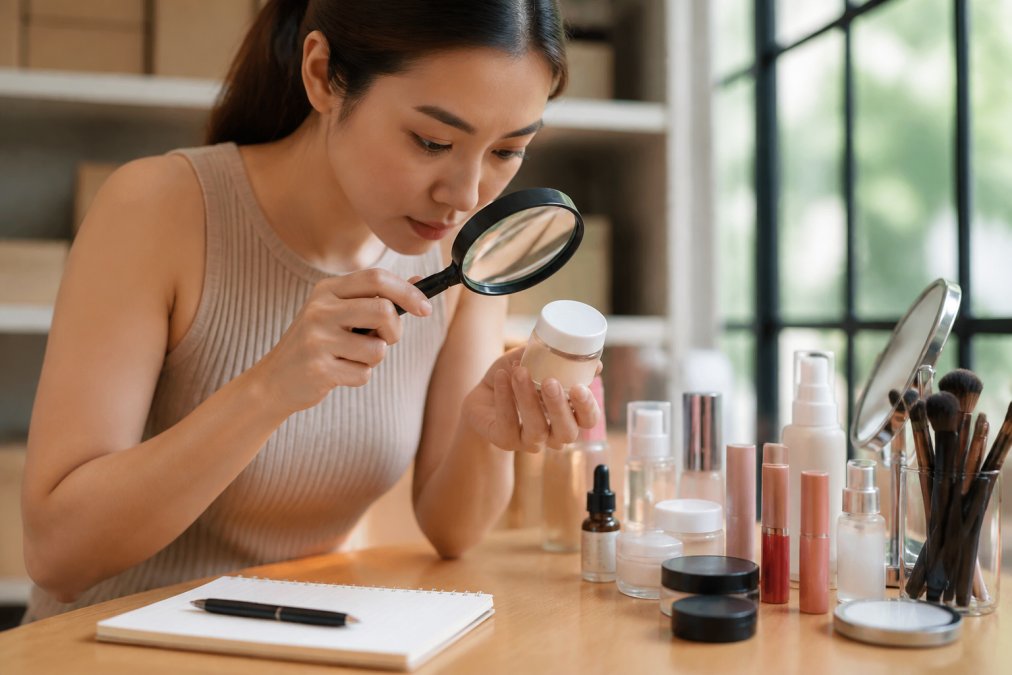
Verifying authenticity requires examining multiple elements that collectively confirm whether a product is genuine. No single check is foolproof, but combining several methods gives strong confidence.
Check the Batch Number and Lot Code
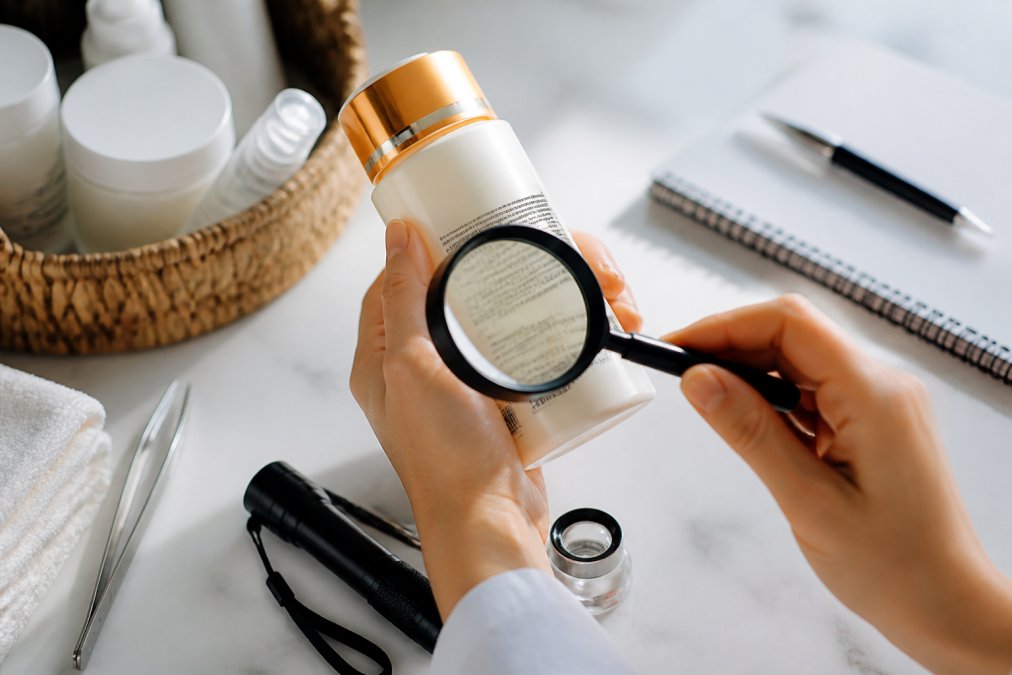
Every legitimate cosmetic carries a batch number or lot code identifying when and where it was manufactured. This code is your first line of defense. If a product lacks a batch number, that's an immediate red flag. The batch number typically appears on the bottom, back, or side of packaging as a combination of letters and numbers. Cross-reference it with the brand's official website or contact their customer service directly. Many brands now offer digital verification systems where you can input the batch code and confirm authenticity. Pay attention to printing quality, genuine products use clear, professional printing with consistent font size and alignment. Counterfeits often show smudged numbers, uneven spacing, or hastily applied ink.
Examine Packaging Quality and Printing Details
Legitimate beauty brands invest in professional packaging; counterfeits cut corners. Start with the box itself, is the cardboard sturdy and well-constructed, or flimsy? Are edges crisp and properly sealed? Look at printing: colors should be vibrant and consistent, logos sharp and centered, text evenly spaced with no crowding. Check for spelling and grammatical errors in ingredient lists or instructions, counterfeits frequently contain these mistakes. Label adhesion matters too; authentic products have firmly attached labels with smooth, secure seams, while fakes often peel at corners or show air bubbles.
Verify the Ingredient List and Label Accuracy
The ingredient list must comply with regulatory standards. In the United States, the FDA requires ingredients listed in descending order by weight using standardized nomenclature (the FDA). Misspelled chemical names, inconsistent formatting, or illogical ingredient order signals a counterfeit. Compare the ingredient list to the brand's official website. Check for regulatory compliance marks, manufacturing dates, and expiration dates, counterfeits often omit these or print them faintly. Legitimate manufacturers make this information easy to find.
Assess Product Texture, Consistency, and Fragrance
Once opened, your senses become verification tools. Authentic products have consistent texture and fragrance profiles matching brand standards. For creams and serums, texture should feel smooth and uniform; grittiness, separation, or oily films indicate problems. Fragrance is telling, legitimate products use carefully selected scent profiles. If a product smells noticeably different, too strong, too weak, or chemically artificial, consider it counterfeit. Color consistency matters too; authentic products maintain color batch to batch.
Red Flags: What Signals a Counterfeit Product
Suspiciously Low Prices and Unauthorized Retailers
If a product costs significantly less than official retail price, investigate why. Legitimate brands maintain pricing consistency across authorized retailers. Prices 50% or more below standard suggest unauthorized stock, expired products, or counterfeits (the FTC). Third-party marketplaces present particular risk, some sellers are legitimate resellers, others sell counterfeit stock. Be cautious with sellers lacking history, unclear sourcing, or no return policy. Authorized retailers are listed on the brand's official website. Gray market products (legitimate items diverted from intended channels) are technically authentic but may be expired or damaged; the price difference is usually smaller than counterfeit pricing.
Spelling Errors, Logo Misalignment, and Font Issues
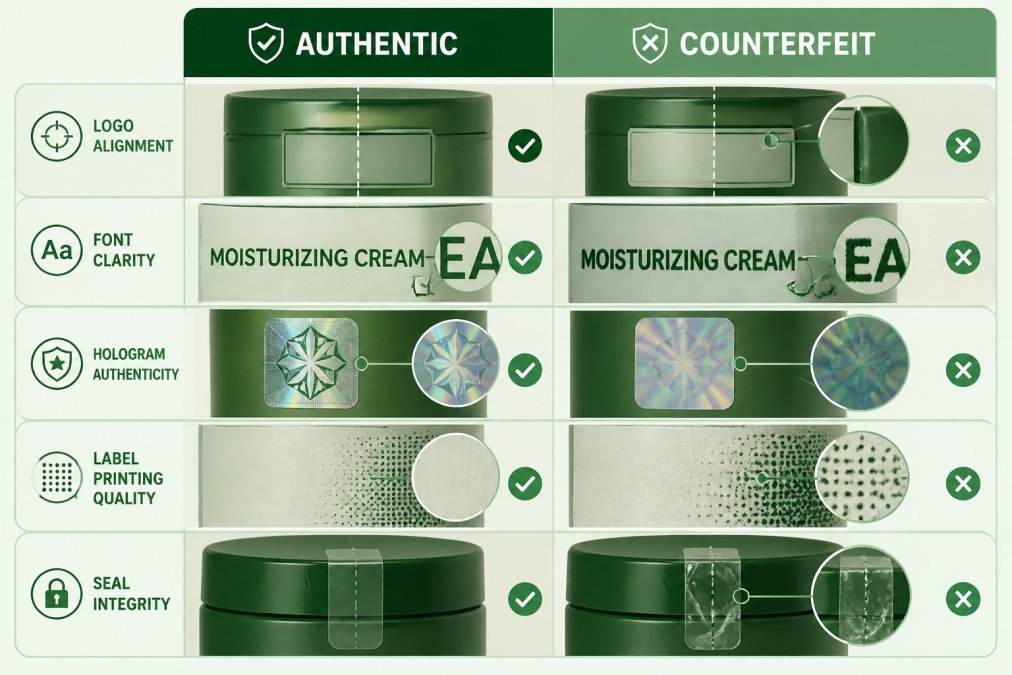
Counterfeits frequently contain spelling mistakes because manufacturers may not speak the brand's language fluently or lack original design files. Check packaging carefully for misspelled words or awkward phrasing. Logo alignment reveals manufacturing quality, authentic products have logos centered precisely; counterfeits show logos slightly off-center or tilted. Font consistency is another indicator; legitimate brands use specific typefaces throughout packaging. Compare fonts on packaging to the brand's official website, they should match exactly.
Seal Integrity and Fill Level Problems
Examine seals before purchasing if possible. Authentic products have secure, professional seals showing clear evidence of tampering if opened. Counterfeits often have loose or poorly applied seals. Check fill level, legitimate products fill containers consistently. Underfilled products are suspicious. Look for leakage or product residue on packaging; legitimate products are sealed carefully to prevent spills, while counterfeits sometimes show sticky residue indicating poor manufacturing.
Gray Market vs. Counterfeit: Understanding the Difference
Counterfeit products are unauthorized reproductions manufactured outside brand control, made to deceive consumers. They contain unauthorized formulations, inferior ingredients, and potentially harmful substances with significant health risks and no consumer protections.
Gray market products are legitimate products manufactured by the brand but sold through unauthorized distribution channels. They're authentic but may be older stock, intended for different regions, or overstock the brand didn't authorize for resale. While technically genuine, they may be expired or lack proper consumer support.
The key distinction: counterfeits are fake; gray market products are real but unauthorized. Both carry risks, but counterfeits pose direct health dangers while gray market products mainly pose quality concerns. Counterfeit manufacturing and sales are illegal. You can identify gray market products by researching the seller and asking about product origin. Legitimate resellers are usually transparent about sourcing.
Digital Verification Tools Beyond Lot Codes
Modern authentication goes beyond visual inspection. Many brands now offer digital tools that verify authenticity using technology counterfeits can't easily replicate. Holographic labels and security features use special printing techniques creating visual effects that change when viewed from different angles. Counterfeits attempting to copy these rarely match authentic quality. QR codes linked to brand authentication systems provide another verification layer, scan with your smartphone and the brand's system should confirm authenticity. Blockchain-based systems are emerging in premium beauty, creating immutable authentication records. Some brands embed NFC chips or RFID tags in packaging that communicate with authentication apps. Check the brand's official website for information about their authentication systems. If your product doesn't authenticate through the brand's official system, you've found a counterfeit.
Reporting Counterfeit Beauty Products to the FDA
If you've purchased a counterfeit, reporting it protects other consumers and disrupts the counterfeit supply chain. Report through the FDA's MedWatch program, providing details about where you purchased the product, the brand name, batch number, counterfeit indicators, and any health effects experienced. Include photographs of packaging and irregularities. Report directly to the brand as well, most have dedicated customer service channels for suspected counterfeits. The Federal Trade Commission (FTC) also accepts reports, focusing on fraud and consumer protection aspects.
Where to Buy Authentic Beauty Products Safely
The safest way to avoid counterfeits is buying from authorized retailers listed on the brand's official website. Direct-from-brand purchases through official websites or brand-owned stores eliminate middlemen and counterfeit risk entirely. Established, reputable retailers with strong authenticity reputations are generally safe choices. At Green Vitality USA, we've built our business on curating authentic, high-quality beauty and wellness products. We work directly with manufacturers and authorized distributors to ensure every product is genuine. Our commitment to authenticity means you can shop with confidence, knowing we've verified every item in our collection.
Avoid unfamiliar sellers on third-party marketplaces unless you can verify legitimacy. Check seller ratings, read reviews mentioning authenticity, and look for clear sourcing information. When shopping online, check URLs carefully, counterfeit websites often use domain names closely resembling legitimate brands with slight variations. If unsure whether a website is official, go directly to the brand's main website and find the shopping link from there.
Conclusion
Learning how to spot fake beauty products protects both your skin and wallet. The verification methods covered here, from batch code checking to digital authentication, provide practical tools for confident purchasing decisions. Counterfeit cosmetics represent genuine health risk, but informed consumers understanding warning signs can avoid them. When you shop with Green Vitality USA, you're buying from a retailer committed to authenticity, quality curation, and your well-being. We verify every product before it reaches your door, so you can focus on your beauty routine rather than worrying about authenticity. Your skin deserves authentic, safe products, make that your standard.
| Verification Method | What to Check | Red Flag Indicator |
|---|---|---|
| Batch Number | Code format, printing clarity, brand database match | Missing code, smudged printing, code doesn't match records |
| Packaging Quality | Cardboard sturdiness, label adhesion, seal integrity | Flimsy box, loose labels, poor seals |
| Printing Details | Logo alignment, font consistency, spelling accuracy | Misaligned logos, font variations, spelling errors |
| Ingredient List | Regulatory compliance, ingredient order, chemical names | Misspelled ingredients, illogical ordering, missing list |
| Product Texture | Consistency, separation, grittiness | Grainy texture, oil separation, unusual appearance |
| Fragrance | Scent profile consistency, strength, authenticity | Chemical smell, inconsistent scent, artificial notes |
| Price Point | Alignment with authorized retail pricing | Drastically discounted, suspiciously cheap |
| Retailer Authorization | Official distribution channel verification | Unknown seller, third-party marketplace, no sourcing info |
Frequently Asked Questions
How can I verify if a beauty product is original?
Check the batch number against the manufacturer's database, inspect packaging for spelling errors and misaligned logos, and verify the ingredient list matches the brand's official website. Examine the seal integrity and product consistency. Contact the brand directly with the batch code if you're unsure. Authentic products from official distributors and authorized retailers are your safest bet for avoiding counterfeits.
What are the dangers of counterfeit cosmetics?
Counterfeit beauty products may contain heavy metals, bacterial contamination, or unauthorized ingredients that cause allergic reactions, dermatological damage, and serious health risks. The FDA has documented cases of fake skincare products causing chemical burns and infections. Gray market products (authentic but diverted from authorized channels) pose fewer risks than outright counterfeits, but both bypass regulatory compliance checks that protect consumers.
How do I report counterfeit beauty products to the FDA?
Report counterfeit products through the FDA's MedWatch program online or by phone at 1-888-SAFEFDA. Include the product name, batch/lot code, where you purchased it, and any adverse reactions. Reporting helps protect other consumers and strengthens enforcement against unauthorized sellers on third-party marketplaces.
Are there fake beauty products on Amazon and other third-party marketplaces?
Yes, third-party marketplaces carry counterfeit and gray market products. Buying directly from official brand websites or authorized distributors significantly reduces this risk. If purchasing through a marketplace, verify the seller is an official distributor, check customer reviews for authenticity complaints, and request a batch number before buying. Always use verified seller badges and buyer protection guarantees.
Supporting Resources:
FDA guidance on cosmetic safety and counterfeit products
Consumer protection information on identifying counterfeit goods
Cosmetic ingredient database and regulatory compliance standards
This article was written using GrandRanker