 how-to
How to Find Safe Wellness Products Online
Table of Contents
- Verify the Retailer's Credentials and Supply Chain
- How to Read Wellness Product Labels for Safety
- Check for Third-Party Supplement Testing and Certifications
- Identifying Fake Wellness Reviews and Trustworthy Feedback
- Red Flags That Signal Unsafe Wellness Products Online
- Evaluate Return Policies and Data Privacy Before Checkout
- Frequently Asked Questions
Last Updated: September 2, 2026
Verify the Retailer's Credentials and Supply Chain
Finding safe wellness products online starts by verifying the retailer's legitimacy and supply chain transparency before examining any product.
Check if the retailer displays clear business registration, address, phone number, and customer service email prominently on their website. If basic contact details are missing, that's a red flag. Green Vitality USA, for example, maintains transparent business information that lets you verify who you're buying from.
Look for third-party certifications that validate the retailer's sourcing, storage, and handling practices. Legitimate businesses pursue these certifications because they demonstrate commitment to safety and accountability.
Check the retailer's return and refund policy before purchasing. A company confident in its products will offer straightforward returns. If the policy is buried in fine print or overly restrictive, consider shopping elsewhere.
Research sourcing transparency. Can you trace where products come from? Do they publish supplier information? Retailers that source directly from manufacturers or established distributors typically have better control over product authenticity.
Look for retailer reviews on independent platforms. Customer feedback reveals patterns about product authenticity, delivery speed, and service responsiveness. Pay attention to reviews mentioning whether products arrived in original packaging or if customers had concerns about counterfeits.
How to Read Wellness Product Labels for Safety
Understanding how to read wellness product labels is essential when shopping for safe wellness products online.
Start with the ingredient list. Ingredients are listed by weight in descending order, so the first three ingredients make up the bulk of the product. A liver support supplement that lists "proprietary blend" without breaking down individual ingredients is hiding information. Transparent brands list each ingredient with its amount in milligrams or grams.
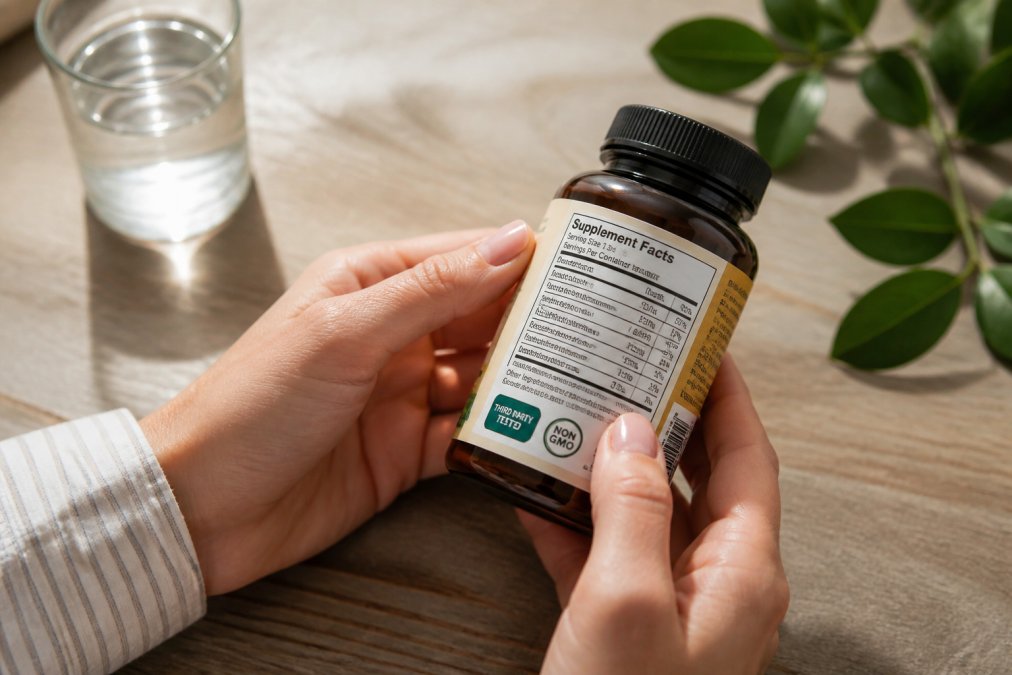
Next, examine the "Supplement Facts" panel, which shows serving size, servings per container, and the amount of each active ingredient per serving. Compare this to what the product claims. If a bottle claims 300mg of milk thistle but the label shows only 150mg per serving, you're getting half of what's promised.
Look for the statement "These statements have not been evaluated by the FDA." This required disclaimer indicates the product is a dietary supplement, not a drug, and helps you understand different regulatory standards.
Check for allergen warnings. Reputable manufacturers clearly label whether a product contains common allergens like milk, soy, tree nuts, or shellfish. Products manufactured in facilities that also process allergens should disclose this with "made in a facility that processes..." language.
Verify the expiration or "use by" date. Wellness products degrade over time, especially those with natural ingredients. Products with dates well into the future indicate proper stock rotation.
Look for the manufacturer's name and address. This is your direct line to accountability if something goes wrong with a product.
Check for Third-Party Supplement Testing and Certifications
Third-party testing confirms that what's on the label actually matches what's in the bottle and that harmful contaminants aren't present.
NSF Certified for Sport verifies that supplements contain exactly what the label claims and are free from banned substances (nsf.org). USP (United States Pharmacopeia) verification confirms that a product meets strict standards for purity, strength, and consistency (usp.org). These certifications require ongoing testing and audits, representing real accountability.
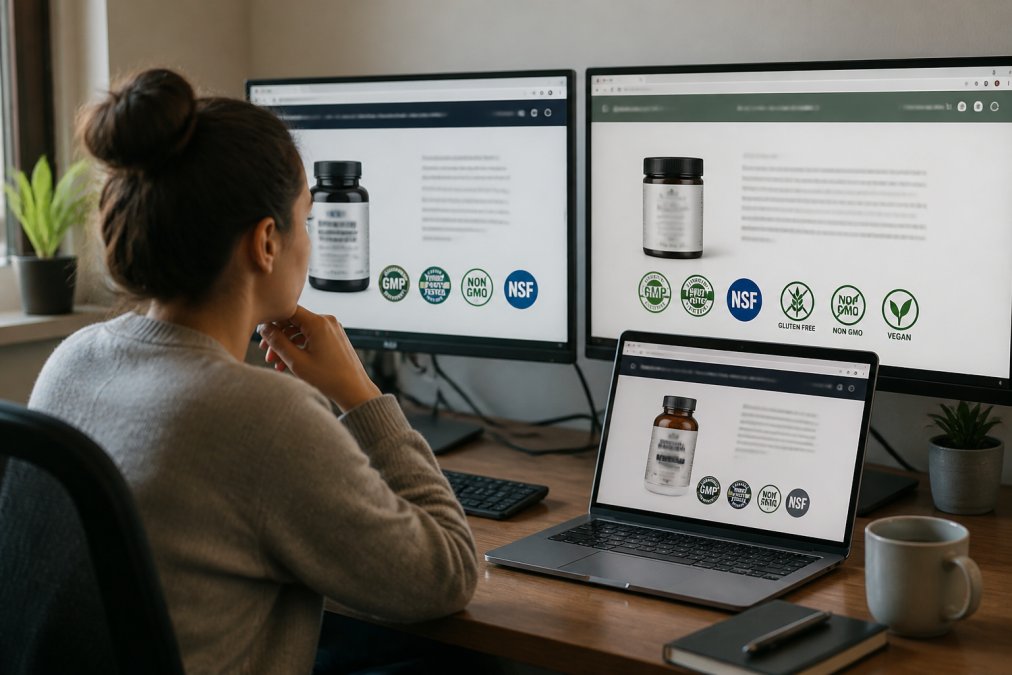
Look for the NSF, USP, ConsumerLab, or Informed Choice seals on product packaging or the retailer's website. NSF focuses on banned substance testing for fitness supplements. USP emphasizes purity and consistency. ConsumerLab conducts independent testing and publishes detailed reports. Informed Choice certifies products for sports use and freedom from banned substances.
Verify certifications by checking the certifying organization's website directly. Visit NSF.org, USP.org, or ConsumerLab.com and search for the specific product. This confirms the certification is current and legitimate, as counterfeiters sometimes use fake certification logos.
Most certifications verify that the product contains the claimed amount of active ingredients and is free from heavy metals, microbial contaminants, and undeclared substances. Some test for pesticide residues or verify organic claims.
Ask the retailer for Certificates of Analysis (CoA) from third-party labs. These documents show exactly what was tested and the results. If a retailer can't or won't provide this documentation, look elsewhere.
Be aware that "third-party tested" is sometimes used loosely. A product tested once years ago isn't the same as one tested regularly by an accredited lab. Look for certifications requiring ongoing compliance and regular retesting.
Identifying Fake Wellness Reviews and Trustworthy Feedback
Customer reviews can guide purchasing decisions, but fake reviews are widespread. Learning to spot genuine feedback protects you from wasting money on ineffective or unsafe products.
Genuine reviews contain specific details about the product's effects, timing, and the reviewer's individual response. A real review might say: "I took this for three weeks before noticing any change. The capsules are large and I had to take them with food or they upset my stomach." This specificity, including both positives and negatives, signals authenticity.
Fake reviews tend toward vague praise or identical language across multiple reviews. Phrases like "amazing product," "highly recommend," or "life-changing" repeated without specific details are warning signs.
Check the reviewer's history. A legitimate reviewer has a pattern of reviews across different items with varying ratings. Someone with 50 five-star reviews all posted within a week is almost certainly a paid reviewer.
Look at review timing. If a product launched three weeks ago but has 200 reviews, that's suspicious. Legitimate review accumulation takes time.
Read one-star reviews carefully. These often contain the most useful information because dissatisfied customers explain specifically what went wrong. If multiple one-star reviews mention the same issue, that's a real problem worth considering.
Verify reviews across platforms. Check if the same product has reviews on the retailer's website, Amazon, and independent review sites like Trustpilot. If reviews are dramatically different across platforms, something's off.
Red Flags That Signal Unsafe Wellness Products Online
Certain warning signs indicate that a wellness product or retailer isn't trustworthy.
Unusually low pricing is often the first red flag. If a supplement costs significantly less than competitors, ask why. Sometimes it's legitimate, but often low prices mean lower-quality ingredients, smaller serving sizes, or counterfeit products. Compare prices across multiple reputable retailers to establish what's reasonable.
Products with exaggerated health claims are dangerous. If a label claims a supplement can "cure," "treat," or "prevent" a disease, that's a federal violation (the FDA). Legitimate products use careful language: "supports healthy liver function" instead of "cures liver disease."
Vague ingredient sourcing is a major concern. If the retailer can't tell you where ingredients come from, you can't verify their safety or quality. Reputable brands source from established suppliers and can trace ingredients back to their origin.
Missing or unclear batch numbers is a safety issue. Every legitimate product has a batch or lot number on the label. This number allows manufacturers to track products and issue recalls if problems arise.
Packaging that looks off should concern you. Counterfeit products often have misspellings, poor print quality, or packaging that doesn't match the retailer's other products.
Retailers with no verifiable business presence are risky. If you can't find their business registration, physical address, or phone number, you have no recourse if something goes wrong.
Products without any third-party testing or certification should raise questions. While not all safe products have certifications, the absence of any independent verification combined with other red flags suggests the retailer hasn't invested in product safety.
Evaluate Return Policies and Data Privacy Before Checkout
Before completing a purchase, examine two critical areas: the return policy and how the retailer handles your personal data.
A straightforward return policy signals retailer confidence. Look for policies allowing returns within 30-60 days, even if you've opened the product. Policies that offer no returns or require returns within seven days are restrictive and concerning.
Check whether the retailer covers return shipping. Many reputable retailers cover return shipping or offer prepaid labels, removing friction from the return process.
Examine the refund timeline. Retailers that process refunds within five business days are operating efficiently. Those taking 30 days or longer are holding your money.
Review the retailer's privacy policy before providing payment information. Legitimate retailers have detailed privacy policies explaining what information they collect and whether they share it with third parties.
Check for SSL encryption on the checkout page. Your browser should show a padlock icon and "https" in the URL. Without this encryption, your payment information could be intercepted.
Look for clear security certifications indicating the retailer has been verified by security companies or complies with payment card industry standards.
Understand the retailer's data retention policy. Reputable retailers minimize data retention and don't store full credit card numbers after a transaction completes.
Check whether the retailer sells or shares your email with third parties. A good privacy policy clearly states whether your email will be shared and gives you the option to opt out.
Finding safe wellness products online requires diligence, but the process becomes straightforward once you know what to verify. Start by confirming the retailer's legitimacy and supply chain transparency, then examine product labels for clear ingredient information. Prioritize products with third-party testing certifications, scrutinize customer reviews for authenticity, and watch for red flags like exaggerated claims or unusually low pricing. Finally, protect yourself by reviewing return policies and data privacy practices before checkout.
Green Vitality USA makes this process easier by curating a selection of wellness products that meet these safety standards. Every product in our collection has been evaluated for ingredient transparency, sourcing reliability, and customer feedback. Our user-friendly online shopping experience puts you in control, you can verify certifications, read detailed ingredient information, and access our straightforward return policy before committing to a purchase. Shop Now and discover wellness products you can trust.
Frequently Asked Questions
Q: How can I verify if a wellness brand is legitimate before buying?
A: Check the retailer's business registration, look for physical contact information, and verify third-party certifications on product labels. Legitimate brands display ingredient transparency, provide batch testing results, and maintain clear return policies. Review the company's supply chain transparency and search for any warning letters or recalls related to their products. Avoid retailers with vague sourcing information or missing contact details.
Q: What third-party certifications should I look for on wellness product labels?
A: Look for NSF Certified for Sport, USP Verified, ConsumerLab.com, or third-party supplement testing seals that confirm ingredient accuracy and purity. These certifications mean an independent lab has verified the product contains what the label claims and is free from contaminants. Check the certification body's website to confirm it's legitimate. Products without any third-party testing are riskier, especially supplements and topical skincare where ingredient quality directly affects safety.
Q: How do I identify safe skincare and supplement ingredients?
A: Use the EWG Skin Deep database or similar ingredient checkers to research each component. Look for ingredient transparency, reputable brands list all ingredients in descending order by weight. Avoid products with undisclosed fragrance, parabens without justification, or banned substances. For supplements, verify active ingredient amounts match clinical study doses. Cross-reference ingredient sourcing and check for allergen warnings. When in doubt, consult a a qualified professional about specific ingredients for your health needs.
Q: Are online wellness product reviews reliable?
A: Verified purchase reviews from established retailers are more trustworthy than unverified comments. Watch for patterns: genuine reviews mention specific results, timelines, and sometimes drawbacks; fake reviews use generic praise or excessive enthusiasm. Check review dates, recent reviews are more relevant. Compare feedback across multiple platforms rather than relying on a single source. Be skeptical of products with only five-star reviews or sudden review spikes. Look for reviews that address your specific concerns, such as sensitive skin or ingredient allergies, for more actionable insights.
This article was written using GrandRanker