 how-to
How to Build a Relaxing Daily Wellness Routine
Table of Contents
- Why a Daily Wellness Routine Needs Anchors, Not Willpower
- A Daily Wellness Routine Checklist: Morning to Night
- How to Improve Sleep Quality Naturally
- Best Wellness Products for Busy Professionals
- Customizing Your Routine for Your Personality Type
- When Your Routine Falls Apart: A Troubleshooting Guide
- Frequently Asked Questions
Last Updated: September 28, 2026
Why a Daily Wellness Routine Needs Anchors, Not Willpower
Most people fail at a daily wellness routine because they rely on motivation. Motivation fades by Wednesday. A daily wellness routine is a set of repeated practices, tied to fixed moments in your day, that support your physical and mental health without requiring constant decisions.
Here's the good news: you don't need more discipline. You need better anchors. This guide from Green Vitality USA breaks down how to build a routine that survives busy weeks, plus a checklist you can start tonight. Below, we'll show you exactly how to make it stick.
Habit Stacking: Attach New Practices to Existing Ones
Habit stacking works because your brain already runs on autopilot for dozens of daily actions. Attach a new practice to one of them.
A common approach is pairing a new habit with something you already do without thinking:
- After you pour your morning coffee, drink a full glass of water
- After you brush your teeth, do five slow breaths
- After you park your car, take three minutes of quiet before walking in
The existing habit becomes the trigger. You stop relying on memory.
Environmental Design: Make the Right Choice the Easy One
Willpower runs out. Your environment doesn't. Set up your space so the healthy choice takes less effort than the alternative.
Fill a water bottle and leave it on your desk. Put your walking shoes by the door. Keep your phone charger outside the bedroom. Small friction changes decide most habits before you're even aware of choosing.
A Daily Wellness Routine Checklist: Morning to Night
A daily wellness routine checklist works best when it's short and split into three blocks: morning, midday, and evening. Each block has two or three actions, not ten. The goal is consistency, not perfection.
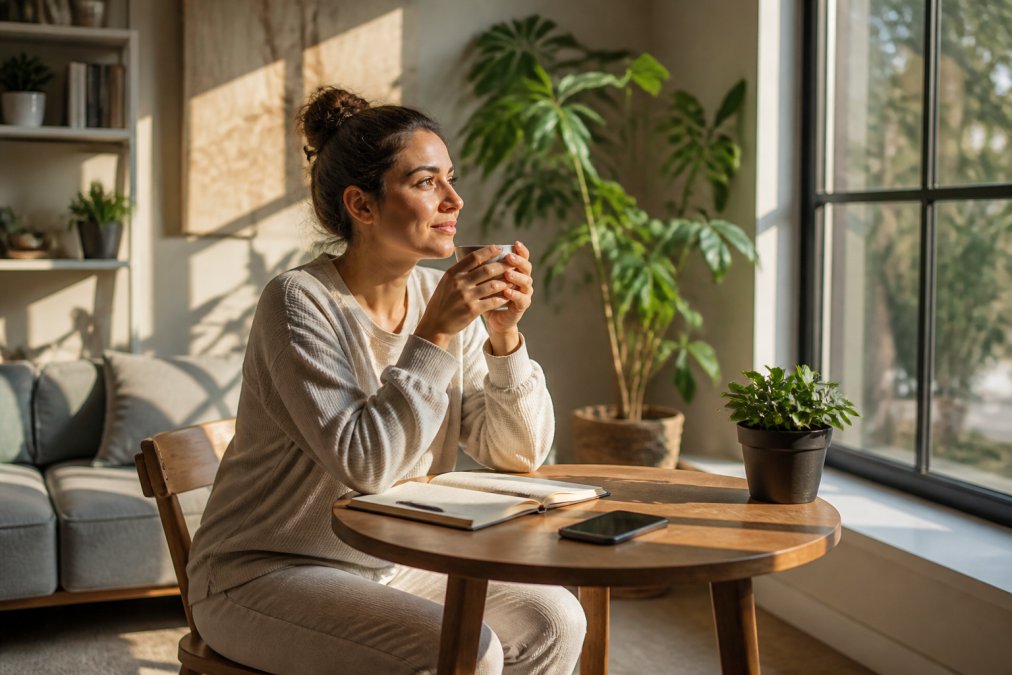
Morning: Light, Hydration, and Intention
Your body runs on a circadian rhythm, and morning light is the strongest signal you can give it. Within an hour of waking, try these:
- Drink 12 to 16 ounces of water
- Get 5 to 10 minutes of natural light, ideally outdoors
- Set one intention for the day, written or spoken
- Skip the phone for the first 20 minutes
Midday: Movement, Breath, and a Real Lunch Break
Physical movement in the middle of the day resets your focus. It doesn't need to be a workout.
- A 10-minute walk after lunch
- Two minutes of diaphragmatic breathing at your desk
- Eating away from your screen, even once
Evening: Wind-Down Rituals That Signal Rest
Evening routines tell your brain the day is closing. Keep them boring and repeatable.
- Dim your lights an hour before bed
- Write down tomorrow's top three tasks
- Drink caffeine-free tea, like senna or turmeric blends
- Charge your phone in another room
How to Improve Sleep Quality Naturally
To improve sleep quality naturally, focus on sleep hygiene: consistent timing, a dark and cool room, and a wind-down period. No supplement replaces these basics. But the reason these basics work is worth understanding, because it tells you which levers actually matter.
Full Body Massage Mat with Neck →
The Two Systems That Govern Sleep
Sleep is driven by two separate processes that you can influence independently.
- Sleep pressure (homeostatic). A chemical called adenosine builds up in your brain the longer you're awake. The more it accumulates, the sleepier you feel. Caffeine works by blocking adenosine receptors, which is why a 2 p.m. coffee can still be circulating at 10 p.m., caffeine has a half-life of roughly five to six hours, so about a quarter of it is still in your system after ten.
- The circadian clock. A cluster of cells in your hypothalamus tracks light and sets the timing of when you feel alert versus drowsy. Morning light is the strongest signal you can give it; bright light at night pushes it later.
What Actually Moves the Needle
Ranked roughly by impact:
- Fixed wake time. Your wake time anchors the circadian clock more than your bedtime does. Pick one and hold it within about 30 minutes, weekends included. A common pattern is that people fix their bedtime first and fail; fixing the wake time tends to work better.
- Morning light within an hour of waking. Ten minutes outdoors on a cloudy day is brighter than a well-lit kitchen. This is the same signal referenced in the morning block above, it does double duty.
- A cool, dark room. Core body temperature has to drop for sleep to begin. Most people sleep best in the mid-60s Fahrenheit. Blackout conditions matter because even dim light on the skin can suppress melatonin.
- A wind-down buffer of 30 to 60 minutes. This is where the evening rituals above earn their keep, not because tea is magic, but because a repeated sequence becomes a conditioned cue that sleep is next.
Cortisol, Caffeine, and Alcohol
If you want a small assist, a caffeine-free nighttime tea or a relaxing herbal patch can become part of your wind-down ritual. The ritual itself does most of the work, the product is the cue, not the cure.
Best Wellness Products for Busy Professionals
The best wellness products for busy professionals are the ones you'll actually use daily: simple, affordable, and easy to fit into an existing routine. Complexity kills consistency.
- Full Body Massage Mat with Neck Massager ($103.50), 10 massage points, 9 vibration modes, 3-level lumbar heat, and a 10-30 minute timer. Good for evening wind-down.
- Senna Herbal Tea Leaf ($14.12), caffeine-free, vegan, and gluten-free. A simple night-time tea.
- Natural Herbal Body Relaxing Comfort Patch ($15.18), a gentle nighttime skin sticker for tension and mood support.
- OceAura Eucalyptus Body Essential Oil ($12.49), a refreshing topical oil for massage and relaxation.
Customizing Your Routine for Your Personality Type
A routine that fits your personality lasts longer than one that fits a magazine article. Customization is the difference between a habit and a chore.
| Personality Type | Best Anchor | Works Well | Avoid |
|---|---|---|---|
| Planner | Fixed schedule | Timed blocks, checklists | Open-ended routines |
| Spontaneous | Mood-based | Short bursts, variety | Rigid timers |
| Social | People-based | Walks with a friend, group classes | Solo silent routines |
| Introvert | Solitude-based | Journaling, tea, breathwork | Crowded gyms |
When Your Routine Falls Apart: A Troubleshooting Guide
Every routine breaks. The question is whether you restart it or abandon it. Here's how to troubleshoot the most common failures.
- You missed three days. Restart with one habit, not all of them. Rebuild the anchor first.
- You're too busy. Cut your routine in half. A two-minute version still counts.
- You're bored. Swap one item, keep the rest. Novelty helps; overhauling hurts.
- You keep forgetting. Your anchor is weak. Tie the habit to something you already do daily.
- You feel no difference. Give it three to four weeks. Wellness habits build slowly.
Frequently Asked Questions
How can I start a daily wellness routine if I have a busy schedule?
Start with one anchor habit you already do, like your morning coffee, and attach a 2-minute practice to it: a few deep breaths, a glass of water, or a short stretch. Add a second habit only after the first feels automatic. A daily wellness routine built from small, repeatable actions survives a packed calendar better than a 90-minute plan you abandon by Wednesday. Keep a simple checklist on your phone so you can see progress without adding another task.
How long does it take to form a new wellness habit?
Research on habit formation suggests the timeline varies widely by person and behavior, often ranging from a few weeks to several months before a new action feels automatic. The bigger factor is consistency, not duration. Practicing a small habit at the same time each day, tied to an existing cue, builds the neural pathway faster than doing it sporadically. Expect the first two weeks to feel effortful, then notice how much less willpower the same action requires.
What are the essential components of a relaxing daily wellness routine?
Most effective routines include a few core elements: consistent sleep and wake times, hydration, physical movement, a stress-management practice like diaphragmatic breathing, and a wind-down ritual before bed. Whole food nutrition and some form of reflection, such as gratitude journaling, round it out. You do not need all of these on day one. Pick two or three that address your biggest pain point, such as stress spikes or poor sleep, and build from there.
How do wellness products fit into a daily relaxation routine?
Wellness products work best as supports, not substitutes, for the habits above. A caffeine-free herbal tea can mark the transition from work to evening. A massage mat with heat and vibration can make a 10-minute wind-down session easier to stick with. A topical eucalyptus oil can turn a short massage into a sensory cue that your body associates with rest. Choose items that fit an existing slot in your routine rather than adding a new obligation.
Building a daily wellness routine that lasts is less about motivation and more about the right anchors and the right tools. Green Vitality USA makes that easier with a curated selection of affordable wellness products, a fast and user-friendly shopping experience, and reliable, high-quality merchandise delivered to your door. Start with one anchor tonight, add one product that supports it, and let consistency do the rest. Shop now with Green Vitality USA and build a routine you'll actually keep.