 ultimate-guide
USP Verified Supplements: What It Means for You
Table of Contents
- What Does USP Verified Mean for Supplements?
- What USP Verification Actually Tests For
- USP vs NSF Certification for Supplements
- How to Check If a Supplement Is Third-Party Tested
- The Limits of USP Verification: What the Mark Doesn't Guarantee
- Best Practices for Choosing Wellness Supplements
- Conclusion
- Frequently Asked Questions
Last Updated: October 1, 2026
What Does USP Verified Mean for Supplements?
A USP Verified mark means an independent scientific body has tested a supplement and confirmed it contains what the label claims, in the declared amount, without harmful contaminants. For consumers, it's one of the clearest signals that a bottle matches its label.
The USP Verified mark comes from the United States Pharmacopeia, a nonprofit standards organization that has set drug and supplement quality benchmarks for nearly two centuries. The program covers dietary supplements sold at retail. We get questions about this seal constantly, and the honest answer is more nuanced than most guides admit. Below, we'll break down what the mark actually tests, where it falls short, and how to read a label like someone who knows what they're looking at.
The Four Pillars of USP Verification
USP verification rests on four checks: ingredient identity, potency, purity, and manufacturing documentation. Each pillar addresses a different failure mode.
- Identity: Is the ingredient actually what the label says?
- Potency: Does it match the declared amount per serving?
- Purity: Are heavy metals, microbes, or other contaminants below limits?
- Manufacturing review: Does the facility follow documented good manufacturing practices?
A product can pass one pillar and fail another. That's why the mark only appears after all four are cleared.
What USP Verification Actually Tests For
The program tests for ingredient identity, potency, purity, and dissolution, meaning how well a tablet or capsule breaks down so the body can absorb it. It also reviews the manufacturer's quality systems. But the specifics are where most guides stop short, and the specifics are what separate a real audit from a logo on a bottle.
Here's what the testing covers in practice, and how each check actually works:
- Ingredient identity: Confirms the herb, vitamin, or mineral is the correct species and form. Labs use techniques like high-performance liquid chromatography and mass spectrometry to fingerprint a compound against a reference standard. A bottle labeled "echinacea" that contains a cheaper related species fails here.
- Potency: Verifies the active ingredient falls within the declared range. USP standards generally allow a narrow window around the label claim, so a 500 mg capsule that assays at 380 mg is out of spec. This is the pillar that catches underdosing, which is one of the most common quality failures in the category.
- Contaminants: Screens for heavy metals such as lead, arsenic, cadmium, and mercury, plus microbial growth and pesticide residue. Limits are set against established public health thresholds, not arbitrary internal numbers.
- Dissolution: Checks that the dosage form releases its contents properly within a set time. A tablet that never breaks down passes identity and potency on paper but delivers nothing to the body. This is why dissolution is tested separately from potency.
What most guides miss is that USP audits the facility too, not just the finished bottle. Manufacturers must document batch records, raw material sourcing, and safety protocols. Auditors review supplier qualification, incoming material testing, and deviation handling.
What the Mark Does Not Test
This is the limitation most articles skip entirely. USP verification confirms quality control, not clinical benefit. It does not evaluate whether a supplement treats, prevents, or improves any health condition. It does not review marketing claims, dosing recommendations for your situation, or interactions with prescription medications. A verified product can still be unnecessary for you, still interact with what you take, and still be overpriced relative to a well-made unverified competitor.
The Cost Barrier Behind the Mark
Verification is not free, and the expense is real. Manufacturers pay application and testing fees, fund facility audits, and absorb the staff time required to maintain documentation. Those costs get passed along, which is why a verified bottle often carries a premium over an equivalent unverified one. That premium reflects the audit, not necessarily a better formula. Some genuinely high-quality brands skip verification for exactly this reason, especially smaller producers with limited budgets.
USP vs NSF Certification for Supplements
Both USP and NSF certification for supplements verify identity, potency, and purity, but they differ in scope and emphasis. USP leans on pharmacopeia standards and facility documentation. NSF emphasizes athletic banned-substance screening through its Certified for Sport program.
| Feature | USP Verified | NSF Certified for Sport |
|---|---|---|
| Identity and potency testing | Yes | Yes |
| Contaminant screening | Yes | Yes |
| Banned-substance panel | Limited | Extensive |
| Facility audit | Yes | Yes |
| Best for | General consumers | Athletes and tested competitors |
How to Check If a Supplement Is Third-Party Tested
To check if a supplement is third-party tested, look for a certification seal on the label, then verify it in the certifying body's online directory. Many brands print a seal that doesn't link to any searchable database, which is a red flag. The step most shoppers skip is the second one: actually looking up the product. A logo is easy to print. A database entry is not.
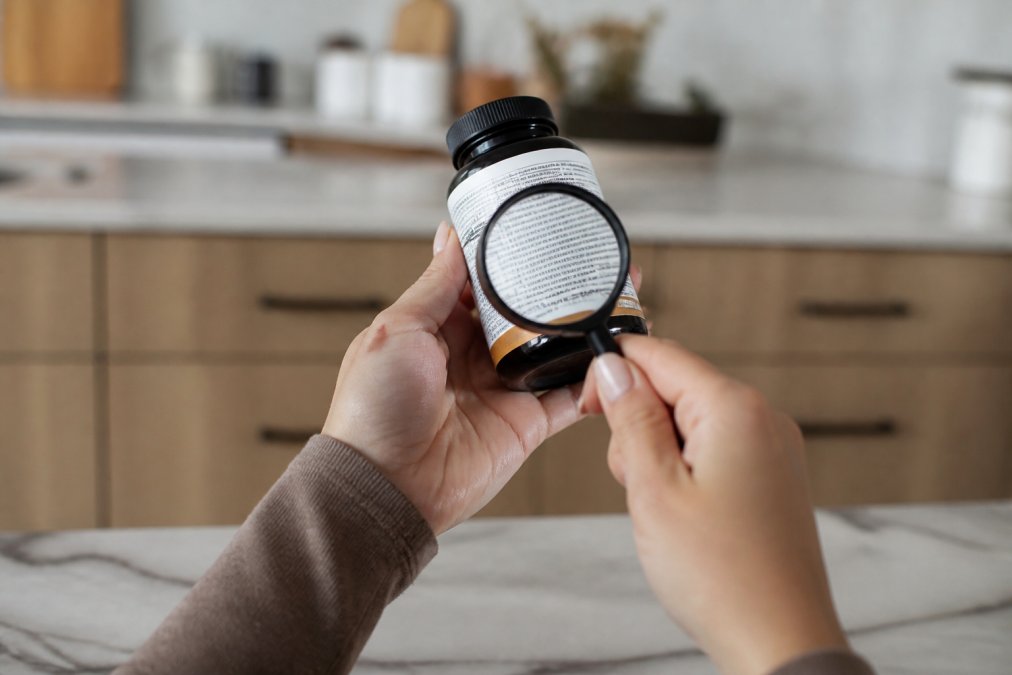
A quick verification checklist:
- Find the certification seal (USP, NSF, or another recognized body)
- Search the certifying body's website for the product name
- Confirm the exact product and lot appear, not just the brand
- Check the expiration date is current
- Look for a certificate of analysis if the brand publishes one
Spotting Counterfeit or Misleading 'Verified' Claims
This is where a little label literacy pays off. A real certification mark is a controlled trademark, and the certifying body publishes which products carry it. A few patterns show up again and again on misleading labels:
- Look-alike seals. A badge that mimics the shape or color of a known mark but uses a different name, or no organization name at all. If you can't identify who issued the seal, treat it as decoration.
- Vague wording. Phrases like "lab tested," "quality assured," "pharmacist approved," or "third-party inspected" with no certifying body named. These are marketing terms, not certifications.
- No searchable entry. A seal that does not correspond to any product in the issuer's online directory. This is the single most common counterfeit tactic.
- Brand-level claims, not product-level. A company may hold a certification for one product and print a similar badge on its entire line. Always confirm the specific product and lot.
- Stale or mismatched details. A directory entry that lists a different formulation, size, or expiration window than the bottle in your hand.
Reporting a Suspicious Supplement
If a product looks adulterated, mislabeled, or carries a seal you can't verify, you have real options. The FDA maintains a way to report problems with dietary supplements, including adverse events, false claims, and suspected adulteration. You can submit a report through the FDA's MedWatch program or its consumer complaint process. State attorneys general and the Federal Trade Commission also take action on deceptive supplement marketing, and the FTC accepts complaints about false advertising.
Reading a Certificate of Analysis
A certificate of analysis is a document from a testing lab that reports the measured identity, potency, and contaminant levels for a specific batch. It's the paper trail behind a claim.
The Limits of USP Verification: What the Mark Doesn't Guarantee
USP verification does not guarantee a supplement will work for you, is safe for your specific health conditions, or is worth its price. It confirms quality control, not clinical benefit.
Best Practices for Choosing Wellness Supplements
Sound supplement selection comes down to matching the product to your needs, checking the quality signals, and buying from a source you trust. Price alone shouldn't decide it, and neither should a single seal.
A practical approach:
- Know what you're actually trying to address before you buy
- Prioritize third-party testing for herbs, blends, and sports products
- Check the label for standardized extracts and clear dosage
- Buy from retailers that stand behind their inventory
- Start with one product at a time so you can judge how you respond
Conclusion
Sorting real quality signals from marketing noise is the hardest part of buying supplements online, and a single seal won't do all the work for you. Green Vitality USA offers a curated selection of high-quality health, beauty, and wellness products, provides a fast and user-friendly shopping experience, and keeps pricing affordable so you can prioritize your well-being without second-guessing every label.
Frequently Asked Questions
Should vitamins be USP verified?
USP verification is voluntary, but it provides strong assurance for certain products. It confirms the supplement meets standards for potency, purity, and manufacturing. For vitamins, this means the label accurately reflects what's inside and the product is free from harmful contaminants. While not all vitamins need it, choosing USP verified products is a reliable way to ensure quality and safety, especially for critical nutrients.
Is USP as good as NSF?
Both are reputable third-party certifiers, but they have different scopes. USP focuses on pharmacopeia standards for ingredients and products, while NSF offers certification for sports supplements and Good Manufacturing Practices. The best choice depends on the product. For general wellness, USP is highly trusted. For sport-specific needs, NSF Certified for Sport is often preferred. Look for either mark to ensure independent review.
How do I know if my supplements are good quality?
Check for third-party testing seals like USP, NSF, or ConsumerLab. Look for a certificate of analysis (COA) on the brand's website, which shows test results for potency and contaminants. Avoid products with vague labels or proprietary blends that hide ingredient amounts. Reputable brands are transparent about sourcing and manufacturing. When in doubt, choose products with independent verification to ensure label accuracy and safety.
Does the FDA regulate supplement quality like the USP?
The FDA regulates supplements as food, not drugs, so it doesn't test products before they're sold. Instead, it enforces Good Manufacturing Practices (GMPs) and monitors for safety issues after market entry. USP is an independent nonprofit that sets and verifies quality standards. While FDA oversight is limited, USP verification provides an extra layer of assurance by testing for potency, purity, and ingredient identity.