 ultimate-guide
Organic Skincare for Sensitive Skin: Benefits & Ingredient Guide
Table of Contents
- Why Organic Skincare Works for Sensitive Skin
- Understanding Organic Skincare Ingredients and Their Role
- Best Natural Skincare Products for Sensitive Skin
- Building a Gentle Skincare Routine for Sensitive Skin
- How to Patch Test Skincare Products Before Full Use
- Natural vs. Synthetic: What the Evidence Shows
- When to Stop a Product and Seek Professional Care
- Conclusion
- Frequently Asked Questions
Last Updated: October 9, 2026
Why Organic Skincare Works for Sensitive Skin
Sensitive skin demands a different approach. When your skin reacts easily to common ingredients, organic skincare sensitive skin becomes essential: fewer harsh chemicals, reduced irritation triggers, and a gentleness conventional products often overlook. Sensitive skin isn't a preference, it's a necessity for millions who experience redness, burning, or itching from standard formulations.
The core reason organic skincare works better for sensitive skin is ingredient selection. Organic products typically exclude synthetic preservatives, artificial fragrances, and petroleum-derived components that frequently trigger reactions, relying instead on plant-based alternatives gentler on compromised skin barriers.
What most guides miss is that sensitive skin responds better to simplicity. A five-step routine with ten ingredients per product creates more irritation opportunities than a two-step routine with five ingredients total.
Understanding Organic Skincare Ingredients and Their Role
Organic skincare ingredients differ fundamentally from synthetic counterparts in how they interact with sensitive skin. "Organic" refers to ingredients grown without synthetic pesticides, fertilizers, or GMO modification, a distinction that matters for barrier health. For sensitive skin, exposure to chemical residues from conventional farming can compound irritation, making organically sourced ingredients a meaningful choice.
Plant extracts form the backbone of most organic formulations. These concentrated botanical compounds deliver antioxidants that protect against environmental stressors, polysaccharides that support hydration, and phytochemicals that soothe inflammation. Common extracts include chamomile, calendula, green tea, and centella asiatica. Centella asiatica has become a staple in organic skincare for sensitive skin because it supports the barrier and reduces visible redness without the irritation potential of stronger actives.
Plant Extracts and Botanical Oils
Plant oils serve a dual purpose: they nourish the skin barrier while delivering active compounds. Oils like jojoba, rosehip, and squalane (derived from olives) mimic the skin's natural sebum, making them less likely to trigger immune responses.
The challenge with botanical oils lies in purity and processing. Cold-pressed oils retain more beneficial compounds but may contain plant particles that irritate sensitive skin; refined oils remove irritants but lose some nutritional value.
Many people assume "natural" oils are universally safe, but this causes real problems. Tea tree, lavender, and citrus oils, all natural, are potent and can trigger contact dermatitis in sensitive skin. The difference between beneficial and problematic botanical oils comes down to concentration and skin compatibility.
Hydration and Barrier Repair
Hydration forms the foundation of any effective routine for sensitive skin. When your barrier is compromised, it loses water rapidly, leading to increased irritation. Organic hydrating ingredients work through two mechanisms: humectants that draw moisture in and occlusives that seal it in place.
Hyaluronic acid, though technically a synthetic ingredient, is often included in organic formulations because it's biocompatible and highly effective. Products like the Moisturizing Face Cream with Hyaluronic Acid deliver deep hydration specifically designed for dry and sensitive skin.
Plant-based alternatives include vegetable glycerin, aloe vera, and plant butters. These work more slowly than hyaluronic acid but create less irritation risk for extremely reactive skin. Aloe vera contains polysaccharides that support barrier repair while providing cooling relief to inflamed skin. Products like the OceAura Aloe Vera Soothing Gel offer immediate soothing and hydration without harsh actives.
Best Natural Skincare Products for Sensitive Skin
Building an effective organic skincare routine requires products formulated for reactive skin. Not all natural products are equal, and some worsen sensitivity if they contain irritating botanical extracts or essential oils.
The Hoygi Centella Asiatica Skin Cream represents the type of organic skincare ingredient profile that works well for sensitive skin: centella asiatica provides proven barrier support and anti-inflammatory benefits, while gentle plant ingredients deliver nourishment without irritation.
When evaluating natural skincare products for sensitivity, look for: minimal ingredient lists (under 15 is ideal), absence of essential oils or fragrance, barrier-supporting ingredients like centella or oat extract, and third-party safety testing.
Organic skincare pricing varies widely, but effective products don't require premium pricing. Green Vitality USA offers curated natural skincare options at accessible price points, recognizing that sensitive skin care shouldn't drain your budget.
Building a Gentle Skincare Routine for Sensitive Skin
A successful routine for sensitive skin follows a specific structure: cleanse gently, hydrate thoroughly, protect the barrier. Skip the extras, actives, exfoliants, and treatments come later, only after your barrier has stabilized.
Cleansing Without Irritation
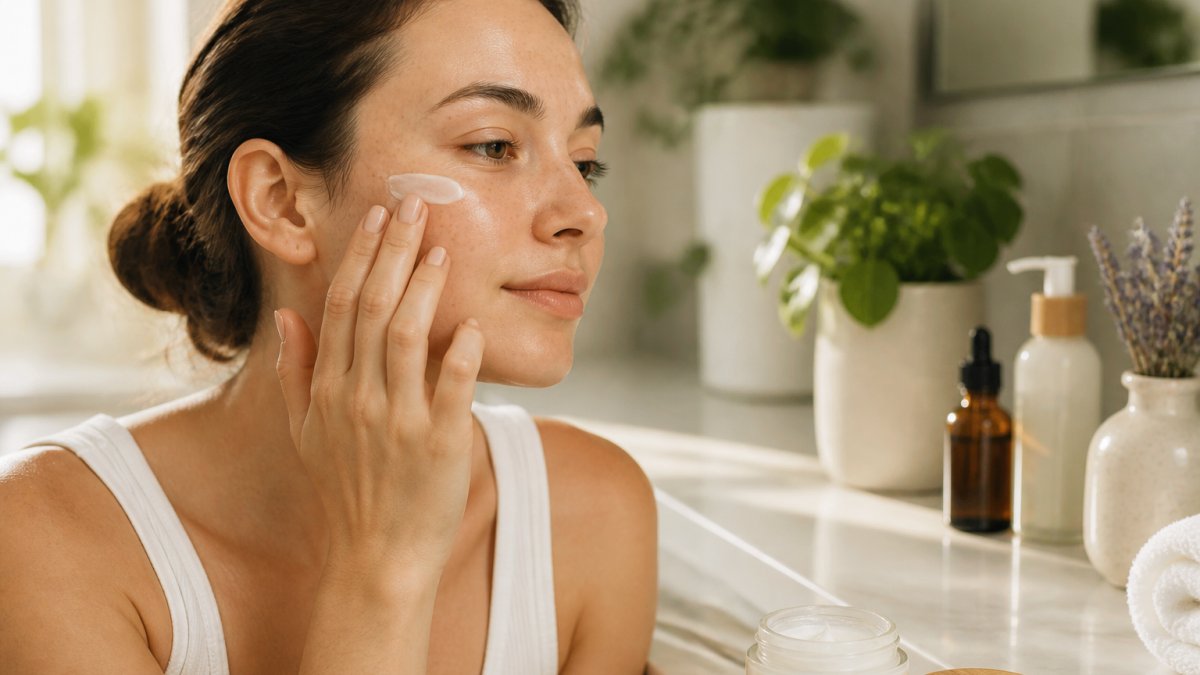
Cleansing is the first opportunity to irritate sensitive skin or protect it. Harsh surfactants strip the barrier, leaving it vulnerable to irritation and inflammation. For sensitive skin, cleansing should remove makeup and daily grime without disrupting natural pH or the lipid barrier.
Gentle cleansing starts with lukewarm water: hot water increases irritation, cold water can shock reactive skin. Use a cream or milk cleanser rather than a foaming formula, since foaming cleansers rely on harsh surfactants that damage the barrier.
Many people over-cleanse, believing more thorough cleaning prevents breakouts. The opposite is true for sensitive skin: over-cleansing depletes natural oils and damages the barrier, causing more irritation and, paradoxically, more breakouts as skin compensates with excess oil. Cleanse once daily in the evening and use only water in the morning.
Hydration and Nourishment Steps
After cleansing, apply hydrating products to damp skin so humectants draw moisture in more effectively. Layer a hydrating essence or toner first, then a moisturizer suited to your skin type. For very dry sensitive skin, the Moisturizing Face Cream with Hyaluronic Acid provides deep hydration without irritation.
Moisturizing Face Cream - Contains Hyaluronic Acid For Deep Hydration ,Suitable →
Nourishment comes from botanical oils and butters applied after moisturizer. If your skin is extremely reactive, skip oils initially and focus on hydration and barrier repair. Once skin stabilizes, typically after 2-4 weeks of gentle care, introduce a nourishing oil or serum. The OceAura Aloe Vera Moisturizing Gel works as a standalone moisturizer for oily sensitive skin or a hydrating layer under a richer cream for dry types.
How to Patch Test Skincare Products Before Full Use
Patch testing is the single most important step before introducing any new product to sensitive skin. A proper patch test takes 48 hours and reveals reactions before they damage your face.
Apply a pea-sized amount to an inconspicuous area: inner forearm, behind the ear, or along the jawline. These areas have similar sensitivity to the face but are less visible if a reaction occurs. Leave it on 24 hours without washing.
Even with a successful patch test, introduce the product slowly. Use it once daily for the first week, preferably at night so mild irritation resolves before you apply other products.
Document your patch tests with a simple log of what you tested, where, and the result. This creates a personal profile of ingredients your skin tolerates and those that trigger reactions.
Natural vs. Synthetic: What the Evidence Shows
The natural-versus-synthetic debate often oversimplifies a nuanced reality. Natural doesn't automatically mean safe, and synthetic doesn't automatically mean harmful. What matters is ingredient safety, skin compatibility, and formulation quality.
Synthetic preservatives like phenoxyethanol keep products stable and prevent bacterial growth. The FDA regulates cosmetic preservatives (the FDA).
Some synthetic ingredients also outperform natural ones for sensitive skin. Hyaluronic acid, though synthesized, is biocompatible and highly effective for hydration. Glycerin, whether plant-derived or synthesized, functions identically.
The real advantage of organic skincare sensitive skin lies not in synthetic versus natural, but in formulation philosophy.
According to dermatology research on contact dermatitis, the most common skincare irritants include fragrance (both natural and synthetic), preservatives in certain formulations, and essential oils, not synthetic ingredients as a category.
When to Stop a Product and Seek Professional Care
Knowing when a product isn't working, and when to seek professional help, prevents prolonged skin damage. Sensitive skin requires clear decisions about when to persist and when to stop.
Stop a product immediately if you experience severe reactions: intense burning, significant swelling, blistering, or widespread rash. These indicate contact dermatitis or an allergic reaction requiring professional evaluation.
Mild reactions, slight redness, temporary itching, or minor dryness, sometimes resolve as skin adjusts to new ingredients. This adjustment period is brief: 3-5 days maximum. If irritation persists beyond a week, the product isn't compatible. Stop using it and return to your baseline routine.
Seek professional dermatological care if:
- You develop persistent redness, swelling, or rash that doesn't improve with gentle skincare
- You experience itching or burning that disrupts daily life
- Your skin barrier feels damaged: extreme dryness, rough texture, or visible cracks
- You've eliminated potential irritants but sensitivity worsens
- You suspect an allergic reaction rather than simple irritation
A dermatologist can identify underlying conditions, eczema, rosacea, or contact dermatitis, that require treatment beyond gentle skincare. Many sensitive skin issues respond excellently to professional guidance, preventing years of trial-and-error with products that don't address the root cause.
Conclusion
Organic skincare for sensitive skin works because it removes common irritants while supporting barrier repair through gentle, effective ingredients. Building a routine requires patience, careful product selection, and honest assessment of what your skin tolerates. Green Vitality USA's curated collection, including the Moisturizing Face Cream with Hyaluronic Acid, Hoygi Centella Asiatica Skin Cream, and OceAura Aloe Vera products, makes effective organic skincare accessible and affordable. Start simple, patch test every new product, and give your skin time to stabilize before adding complexity. Your sensitive skin will thank you with improved comfort, reduced irritation, and genuine radiance.
| Step | Duration | Frequency |
|---|---|---|
| Patch test | 48 hours | Before each new product |
| Cleanse | 30-60 seconds | Once daily (evening) |
| Hydrate | 2-3 minutes | Twice daily |
| Moisturize | 1-2 minutes | Twice daily |
| Introduce new product | 1-2 weeks | One product at a time |
Frequently Asked Questions
What are the benefits of using organic skincare for sensitive skin?
Organic skincare reduces exposure to synthetic irritants, harsh preservatives, and synthetic fragrances that commonly trigger redness and inflammation in sensitive skin. Plant-based ingredients like aloe vera and centella asiatica provide hydration and barrier repair without the chemical load. Many people with sensitive skin experience fewer breakouts and less irritation when switching to organic formulations, though individual responses vary. The key is choosing products formulated specifically for sensitivity, not just any organic product.
How do you patch test a new skincare product safely?
Apply a small amount of the product to a discrete area like your inner arm or behind your ear, then wait 24-48 hours before using it on your face. Watch for redness, itching, burning, or swelling during this period. If no reaction occurs, apply a small amount to your jawline for another 24 hours. Only after passing both tests should you introduce the product into your full routine. Patch testing is essential for sensitive skin because reactions can take hours or days to develop, preventing a bad reaction on your face.
Can organic skincare products still cause allergic reactions?
Yes. Natural ingredients like essential oils, plant extracts, and botanical oils can trigger contact dermatitis or allergic reactions in sensitive individuals. Just because something is organic does not mean it is hypoallergenic. Common allergens include fragrance, citrus oils, and certain plant extracts. Always check ingredient lists and patch test first, especially if you have a history of contact dermatitis. If a reaction occurs, stop using the product immediately and consult a dermatologist if symptoms persist.
What ingredients should people with sensitive skin avoid?
Avoid synthetic fragrances, alcohol denat, sulfates, and strong preservatives like parabens if they trigger your skin. Natural irritants to watch for include essential oils, citrus extracts, and certain plant-derived ingredients. Harsh physical exfoliants and high concentrations of acids can also damage the skin barrier. Instead, look for products with gentle hydrating ingredients like hyaluronic acid, ceramides, aloe vera, and centella asiatica. Always read labels carefully and patch test new products before committing to regular use.