 ultimate-guide
Natural Anti-Aging Routine for Sensitive Skin
Table of Contents
- Why Sensitive Skin Needs a Different Anti-Aging Approach
- What 'Natural' Actually Means in Skincare
- Building Your Sensitive Skin Care Routine: Morning and Night
- Natural Skin Care Ingredients for Mature Skin That Won't Irritate
- How to Introduce New Skin Care Products Without Triggering Sensitivity
- Mineral Sunscreen for Sensitive Skin: Daily Protection Against Aging
- Realistic Timelines and What to Expect
- Common Mistakes That Damage Sensitive Skin and Accelerate Aging
- Frequently Asked Questions
Last Updated: October 10, 2026
Why Sensitive Skin Needs a Different Anti-Aging Approach
A natural anti aging routine for sensitive skin requires a fundamentally different strategy than standard approaches. Sensitive skin has a compromised moisture barrier and heightened reactivity to environmental stressors. Aggressive tactics, harsh exfoliants, high-strength retinoids, or multiple layered actives, backfire, triggering inflammation and irritation that accelerates visible aging.
The most effective anti-aging results come from supporting skin health first, then introducing targeted treatments carefully. Your skin barrier is your foundation. When healthy and hydrated, fine lines appear less pronounced and firmness improves naturally. When compromised, even gentle products cause problems.
The real challenge is finding anti-aging ingredients that work without triggering sensitivity. This guide covers building a natural anti-aging routine for sensitive skin that prioritizes barrier repair, hydration, and gentle actives, plus how to introduce products safely and set realistic expectations.
What 'Natural' Actually Means in Skincare
The term "natural" in skincare is marketing-driven and largely unregulated. A product labeled "natural" might contain 5% plant-derived ingredients and 95% synthetic compounds, or be entirely plant-based but include irritating essential oils. Understanding what "natural" actually delivers for your skin, rather than relying on the label, is essential for sensitive skin.
Evidence-based ingredient selection means looking beyond the "natural" claim to actual performance and safety data. Hyaluronic acid, plant-based antioxidants like green tea extract, peptides, and gentle plant oils have strong research supporting anti-aging benefits.
When evaluating a product, ask: Does this ingredient have research supporting its anti-aging benefit? Is the concentration high enough to be effective? Does it have a known irritation profile for sensitive skin? For sensitive skin, choose products formulated for sensitivity, tested on reactive skin types and designed to avoid fragrance, essential oils, and high-concentration actives.
Building Your Sensitive Skin Care Routine: Morning and Night
A natural anti-aging routine for sensitive skin follows a consistent structure: cleanse gently, hydrate deeply, treat with targeted actives, and protect. The order matters because each step prepares your skin for the next. Nighttime allows richer or more active products since repair happens then; daytime focuses on protection and hydration.
Step 1: Gentle Cleansing
Start with a soap-free, hydrating cleanser that removes impurities without stripping your barrier. Cream and milk cleansers are gentler than foaming formulas. Look for "soap-free" or "sulfate-free" labels to preserve natural oils while cleaning effectively.
Use a lighter cleanser in the morning and a more thorough one at night to remove sunscreen and pollutants. Avoid hot water, which damages your barrier; use lukewarm water and pat skin dry gently.
Step 2: Hydration and Barrier Repair
Immediately after cleansing, apply hydrating products to damp skin. Hyaluronic acid serums or hydrating toners draw water into skin and plump fine lines. Follow with a moisturizer containing ceramides, niacinamide, or centella asiatica to support barrier repair and reduce irritation.
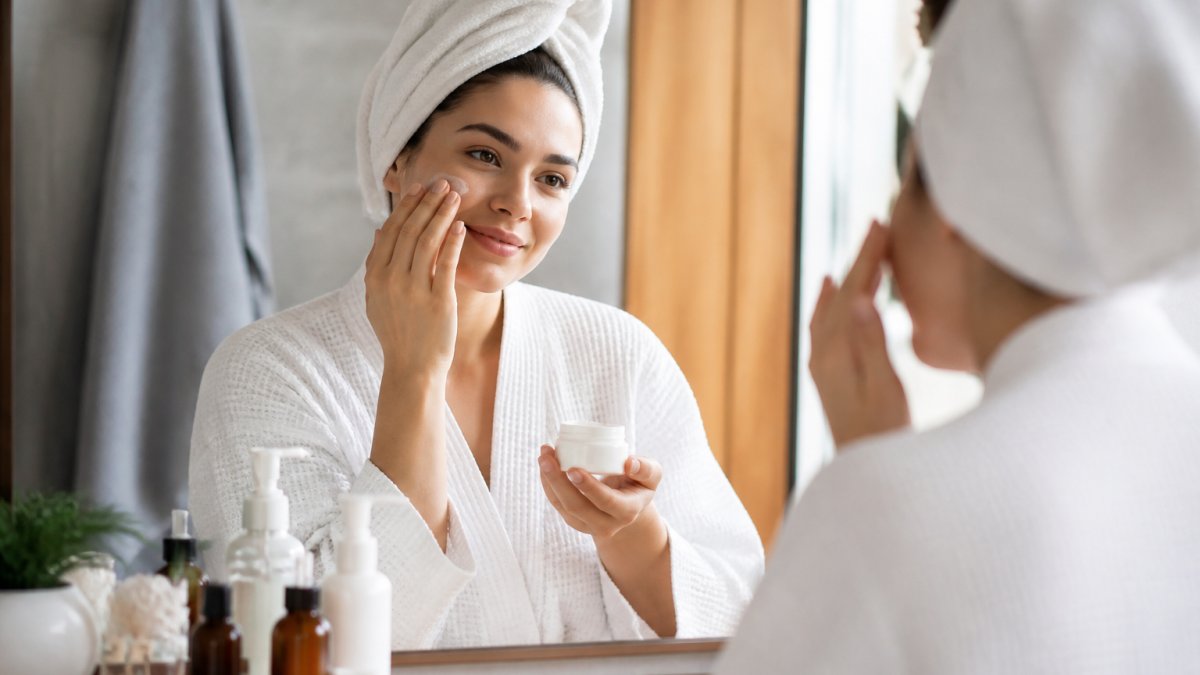
For nighttime, use a richer moisturizer that supports overnight repair. The Hoygi Centella Repair Moisturizer hydrates, firms and relieves dry skin, ideal for sensitive skin concerned with fine lines and firmness.
Step 3: Targeted Treatments and Serums
After your hydrating base, layer in targeted treatments: peptide serums, antioxidant serums (green tea or vitamin C derivatives), or low-strength retinoid alternatives. If using a retinoid, start with the lowest concentration at 2-3 times per week, gradually increasing frequency as your skin adapts.
Apply serums to clean, slightly damp skin, then wait a minute before moisturizing to prevent over-layering. A natural anti-aging routine for sensitive skin should never feel uncomfortable; if a product stings or causes lasting redness, it's too strong for your barrier.
Step 4: Daytime and Nighttime Finishers
Morning routines end with broad-spectrum mineral sunscreen (SPF 30 minimum) to prevent sun damage, the primary driver of visible aging. Nighttime routines can include an optional richer occlusive layer like a facial oil or sleeping mask.
Natural Skin Care Ingredients for Mature Skin That Won't Irritate
Choosing anti-aging ingredients for sensitive, mature skin means prioritizing those with strong research support and low irritation profiles. Hyaluronic acid is foundational, it holds up to 1000 times its weight in water, plumping skin and reducing fine lines without irritation, with decades of safety data supporting its use on sensitive skin.
Peptides signal skin to produce more collagen and elastin, improving firmness and texture. They're gentle and work well layered with other ingredients. Niacinamide (vitamin B3) reduces redness, supports barrier function, and calms inflammation while addressing fine lines.
Plant-based antioxidants like green tea extract, resveratrol, or ferulic acid protect against environmental stressors and support elasticity. Centella asiatica (cica) has mild firming properties, making it valuable for sensitive skin formulas.
Retinoids are the gold standard for anti-aging, but standard retinol can irritate sensitive skin. Gentler alternatives include retinol esters or encapsulated retinol, which release slowly. Start with the lowest concentration once weekly, increasing frequency as tolerance builds.
Avoid high-concentration essential oils, fragrance, and unrefined botanical extracts if your skin is reactive. These are "natural" but often irritating for sensitive skin types.
How to Introduce New Skin Care Products Without Triggering Sensitivity
Introducing new products to sensitive skin requires patience and a deliberate approach. Patch test by applying a small amount to your inner arm or behind your ear and wait 24-48 hours.
Add only one product at a time and wait 1-2 weeks before adding another. Start with the lowest recommended frequency and increase gradually.
Use the new product 2-3 times per week for weeks 1-2, every other day for weeks 3-4, then daily if desired. This slow approach allows your barrier to adapt without overwhelming your skin.
Keep your routine simple during introduction phases. If introducing a new serum, don't also introduce a new cleanser or moisturizer. This makes it easy to identify what your skin responds to.
Moisturizing Face Cream - Contains Hyaluronic Acid For Deep Hydration ,Suitable →
Watch for delayed reactions, which can occur 3-7 days after introducing a product. Mild irritation that resolves as skin adapts is normal with some actives like retinoids.
Mineral Sunscreen for Sensitive Skin: Daily Protection Against Aging
Sunscreen is the single most important anti-aging product you can use; UV exposure drives the majority of visible skin aging.
Mineral sunscreens use zinc oxide or titanium dioxide, naturally occurring minerals used safely in skincare for decades. They're less likely to irritate sensitive skin than chemical UV absorbers, though some find them slightly heavier. Modern formulations offer sheer, non-greasy textures.
Look for a mineral sunscreen formulated for sensitive skin, excluding fragrance and essential oils. Apply as your final morning step after moisturizer. Use about a quarter-teaspoon for your face and neck. Reapply every 2 hours if outdoors or after swimming.
The Hoygi Hyaluronic Acid Sunscreen Stick offers gentle moisturizing UV protection for sunburned and reddened skin, ideal for sensitive skin. Sunscreen sticks are practical for reapplication throughout the day because they're portable.
Consistent daily sunscreen use prevents new sun damage and allows your skin to repair existing damage over time.
Realistic Timelines and What to Expect
A natural anti-aging routine for sensitive skin produces results, but the timeline is longer than aggressive treatments because you're prioritizing barrier health. Expect hydration improvements (plumper skin, reduced fine lines) within 2-4 weeks of consistent use.
Firmness and elasticity improvements typically take 8-12 weeks. Peptides, retinoids, and antioxidants signal your skin to produce more collagen and elastin, slow biological processes.
Deeper wrinkles and significant age spots require 4-6 months of consistent use before meaningful improvement.
A natural anti-aging routine for sensitive skin can reduce fine lines, improve firmness and texture, even out skin tone, and prevent further aging. It cannot eliminate deep wrinkles or completely erase age spots.
Track your progress with photos taken in consistent lighting every 4 weeks. Skin changes are often too gradual to notice day-to-day but become obvious when comparing images across months.
Common Mistakes That Damage Sensitive Skin and Accelerate Aging
The most damaging mistake is over-treating: using too many actives, too strong concentrations, or too frequent application.
Using the wrong cleanser is another common error. Hot water, foaming cleansers, or over-cleansing strips your barrier and causes dryness, making fine lines more visible.
Skipping sunscreen or using inconsistent sun protection is the third major mistake. Many avoid sunscreen due to reactions to chemical formulas, but then go unprotected, accelerating sun damage.
Introducing too many products at once makes it impossible to identify what your skin tolerates. Slow, methodical introduction prevents abandoning products too quickly or continuing with irritating ones.
Neglecting your barrier in pursuit of anti-aging results is counterproductive. Your barrier is your foundation.
Expecting immediate results leads to frustration and abandonment. A natural anti aging routine for sensitive skin works best when you commit to 8-12 weeks of consistent use before evaluating results.
Building a natural anti-aging routine for sensitive skin is entirely achievable when you prioritize barrier health, introduce products gradually, and choose ingredients formulated for your skin type. At Green Vitality USA, we offer carefully curated skincare products designed for sensitive skin, including the Hoygi Centella Asiatica Skin Cream, which nourishes the skin and gives it a radiant glow, and Moisturizing Face Cream with Hyaluronic Acid for deep hydration, suitable for dry and sensitive skin.
Frequently Asked Questions
What should a sensitive skin care routine be?
A sensitive skin care routine focuses on gentle cleansing, hydration, and barrier repair without harsh actives. Start with a milk or cream cleanser, follow with a hydrating moisturizer containing hyaluronic acid or ceramides, and always use mineral sunscreen. Introduce any anti-aging ingredients slowly and patch-test first. Avoid fragrance, essential oils, and strong exfoliants that trigger irritation.
How do I introduce a new anti-aging product to sensitive skin?
Patch-test first: apply a small amount to your inner arm or behind your ear for 24 hours to check for reactions. If no irritation occurs, introduce the product once or twice weekly for two weeks, then gradually increase frequency. Never layer multiple new products at once. Wait at least two weeks between introducing different actives. This slow approach prevents barrier damage and helps you identify which ingredients work for you.
Which natural ingredients may help with fine lines without irritating sensitive skin?
Hyaluronic acid hydrates and plumps fine lines without irritation. Plant-based antioxidants like green tea and vitamin E protect against environmental damage. These ingredients work gently and are less likely to trigger sensitivity than stronger actives like retinoids or high-strength vitamin C.
How long does it take to see results from an anti-aging skin care routine?
Fine lines and skin texture typically show improvement in 6-8 weeks with consistent use. Deeper wrinkles and firmness changes take 12-16 weeks. Hydration improvements appear fastest, sometimes within 2-3 weeks. Results depend on ingredient strength, skin condition, sun protection, and consistency. Patience is essential; jumping between products every few weeks prevents your skin from adapting and showing real benefits.
Can I use mineral sunscreen every day without clogging sensitive skin?
Yes, mineral sunscreen is ideal for sensitive skin because it sits on the skin surface and reflects UV rays rather than absorbing into pores. Look for formulas with hyaluronic acid or lightweight moisturizing bases designed for sensitive skin. Daily mineral sunscreen prevents sun damage, which is the primary driver of visible aging. Reapply every two hours outdoors, or after swimming or sweating.
What ingredients should I avoid if I have sensitive skin?
Avoid fragrance, essential oils, alcohol denat, and sulfates, which strip the skin barrier. Strong actives like high-concentration retinoids, glycolic acid, and salicylic acid can irritate sensitive skin initially. Synthetic dyes and parabens trigger reactions in many people. Start with gentler alternatives like gentle plant-based ingredients, lower-strength actives, and fragrance-free formulations. Always check ingredient lists and patch-test before committing.