 ultimate-guide
Natural Hair Care Routine for Beginners: A 2026 Guide
Table of Contents
- Understanding Your Hair Type and Porosity
- Building Your Natural Hair Care Routine Foundation
- How to Determine Hair Porosity for Better Product Selection
- Your Natural Hair Wash Day Routine: Step-by-Step
- Natural Hair Care for Beginners Schedule: How Often to Wash
- Best Hair Care Products for Growth and Health
- Protective Styling and Nighttime Care
- Troubleshooting Common Natural Hair Setbacks
Understanding Your Hair Type and Porosity
Hair porosity, your hair's ability to absorb and retain moisture, depends on how tightly your hair cuticles lay. Low porosity hair has tightly sealed cuticles that resist moisture. High porosity hair has raised cuticles that absorb moisture quickly but struggle to retain it. Medium porosity hair falls between these extremes and is easiest to manage.
To determine your porosity, take a few clean hair strands and place them in a glass of water. If the hair floats for several minutes, you have low porosity. If it sinks immediately, you have high porosity. If it floats before sinking, you have medium porosity.
Low porosity hair requires lightweight products that penetrate the cuticle. High porosity hair needs heavier products and protein-rich treatments to seal cuticles and prevent moisture loss. Most beginners struggle because they use products designed for the wrong porosity type.
Green Vitality USA offers specialized hair treatment products for different porosity levels. Their Hair Treatment Serum with Argan, Macadamia & Avocado Oils provides moisture without heavy buildup, suitable for various porosity types.
Building Your Natural Hair Care Routine Foundation
A solid natural hair care routine for beginners starts with three essential steps: cleanse, condition, and seal. These form the backbone of every successful regimen.
The essential cleansing routine
Cleansing removes buildup, dirt, and product residue from your scalp and hair. Most beginners use sulfate-containing shampoos that strip natural oils and damage the hair cuticle.
Sulfate-free shampoos clean without stripping protective oils. When washing, focus shampoo on the scalp where oil accumulates, massaging in circular motions for at least 60 seconds (the American Academy of Dermatology). Rinse thoroughly with cool water, which seals the hair cuticle and locks in moisture. Hot water opens the cuticle and allows moisture to escape.
Most people with natural hair benefit from washing every 7-14 days (peer-reviewed research). Washing too frequently strips natural oils; washing too infrequently allows buildup to accumulate. Find your rhythm by observing how your scalp feels between wash days.
Co-washing as an alternative
Co-washing uses conditioner to cleanse instead of shampoo, removing dirt and buildup while leaving natural oils intact. This method works best for medium to high porosity hair or very dry hair, though you'll still need a clarifying shampoo monthly to remove heavy product buildup.
To co-wash, apply conditioner to your hair, focusing on the scalp and roots. Massage gently for a few minutes, then rinse thoroughly. Your hair will feel softer immediately, and over time, your natural curl pattern becomes more defined.
How to Determine Hair Porosity for Better Product Selection
Beyond the water test, several indicators help you identify your porosity level accurately.
The strand test provides another clue. Run your fingers up a single hair shaft from root to tip. If you feel resistance and bumps, you have high porosity. If it feels smooth, you likely have low porosity.
Drying time indicates porosity: high porosity hair dries very quickly, low porosity takes much longer, and medium porosity dries at a moderate pace.
Product absorption tells you what your hair needs. If products feel heavy or greasy, you likely have low porosity and need lighter formulations. If your hair absorbs products quickly but feels dry shortly after, you have high porosity and need heavier, protein-rich products.
Elasticity testing reveals moisture levels. Stretch a clean, damp strand gently. If it stretches significantly and snaps back, you have good elasticity. If it breaks easily, your hair needs more moisture and protein balance.
Once you've identified your porosity, product selection becomes straightforward. Low porosity hair thrives with lightweight leave-in conditioners and water-based products. High porosity hair benefits from creamy conditioners, oils, and protein treatments.
Your Natural Hair Wash Day Routine: Step-by-Step
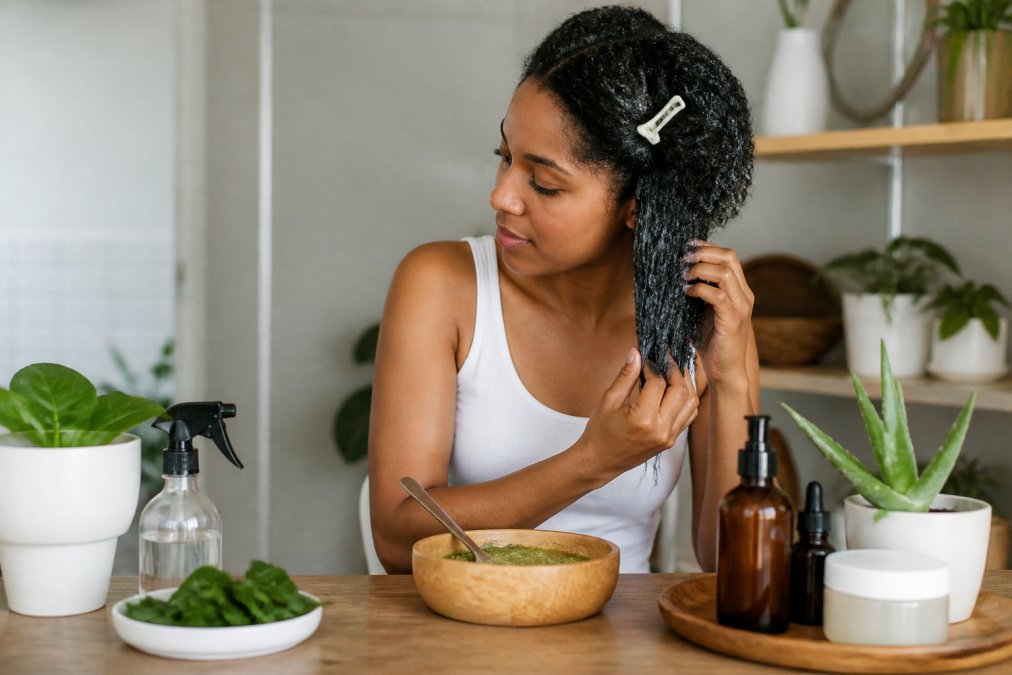
Wash day is when your natural hair care routine truly comes together.
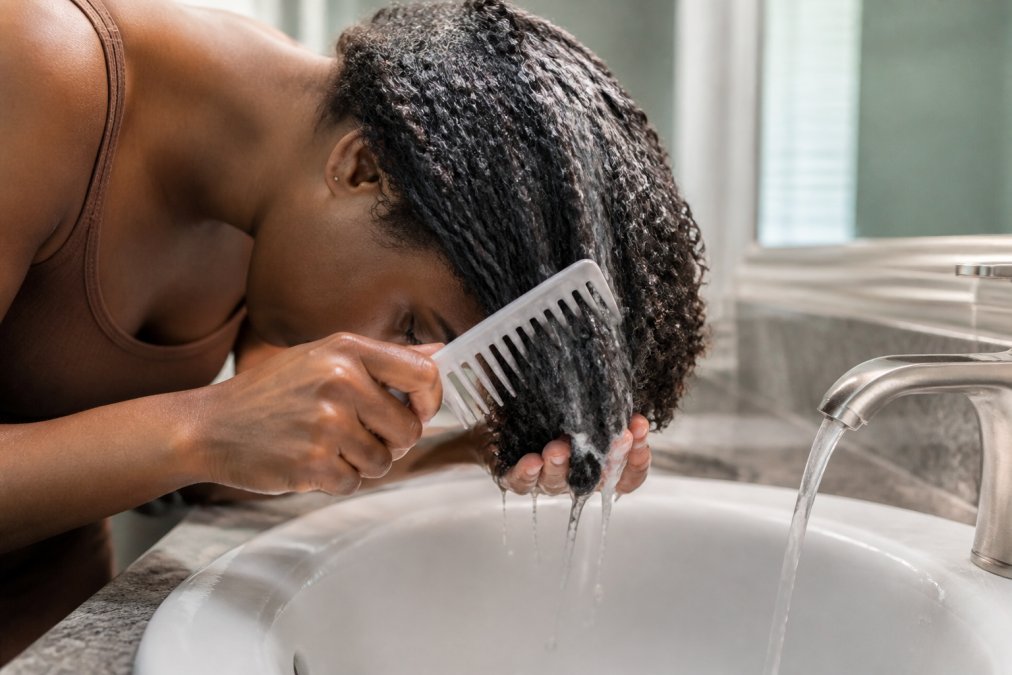
Step 1: Pre-wash treatment (15-30 minutes) Apply an oil or deep conditioning treatment to your hair before shampooing. This protective layer prevents shampoo from stripping too much moisture. Focus on mid-lengths and ends.
Step 2: Shampoo your scalp (5-10 minutes) Rinse the pre-wash treatment with lukewarm water. Apply sulfate-free shampoo to your scalp and massage thoroughly. Rinse completely with cool water.
Step 3: Apply deep conditioning treatment (10-20 minutes) Apply a deep conditioning mask while your hair is still wet. Leave it on for at least 10 minutes, longer is better.
Step 4: Rinse and apply leave-in conditioner (5 minutes) Rinse the deep conditioner thoroughly with cool water. While your hair is still dripping wet, apply leave-in conditioner.
Detangling without breakage
Always detangle on soaking wet hair, never on damp or dry hair. Water acts as a lubricant and reduces friction. Use a wide-tooth comb or your fingers, never a regular brush. Start at the ends and work up to the roots, removing small sections at a time.
Apply conditioner or detangling spray to each section as you work. If you encounter a stubborn tangle, apply more conditioner and wait a few minutes. Gently work it apart with your fingers first, then use the comb.
Conditioning and sealing moisture
Conditioning hydrates your hair; sealing locks that moisture in. Deep conditioning penetrates the hair shaft and restores moisture. Leave-in conditioner coats the hair and provides ongoing moisture.
Sealing is the final step that locks everything in. Apply an oil or cream to damp hair to create a protective barrier. The popular "LOC" method applies Leave-in conditioner, Oil, Cream in order while hair is still damp.
Green Vitality USA's Rosemary Anti-Breakage Nourishing Hair Care Oil serves as an effective sealing oil that protects moisture while providing scalp nourishment.
Natural Hair Care for Beginners Schedule: How Often to Wash
Most people with natural hair wash every 7-14 days. This timeframe allows your scalp to produce enough natural oils to protect your hair while preventing buildup. If you have very dry hair or high porosity, wash every 10-14 days. If you have oily hair or low porosity, wash every 7-10 days.
Between wash days, maintain your hair with co-washing, refreshing sprays, or reapplying leave-in conditioner and oil. Adjust your schedule based on how your hair feels. If your scalp feels greasy but your ends feel dry, you might be washing too frequently. If your scalp feels itchy or flaky, you might not be washing frequently enough.
Seasonal changes affect washing frequency. In winter, you might wash less frequently. In summer, heat and humidity might require more frequent washing.
Best Hair Care Products for Growth and Health
Look for products with nourishing ingredients like argan oil, coconut oil, shea butter, and protein. Avoid products with silicones, sulfates, and parabens, which can coat the hair and prevent moisture absorption.
Read ingredient lists carefully. Ingredients are listed in order of concentration, so the first few ingredients matter most. If water is first, followed by beneficial oils and butters, that's a quality product.
Green Vitality USA offers several products specifically formulated for natural hair growth and health. Their Hair Growth Vitamins with Biotin and Collagen support hair strength from within. The Jaysuing Hair Treatment provides scalp nourishment that supports growth at the root level.
Price doesn't always indicate quality. What matters is whether the product addresses your specific hair need. Test products on a small section first before applying to your entire head. Give each product at least three uses before deciding whether it's effective.
Protective Styling and Nighttime Care
Protective styling reduces manipulation and breakage, allowing your hair to retain length and health. Common protective styles include braids, twists, buns, and locs, which minimize friction between your hair and your environment.
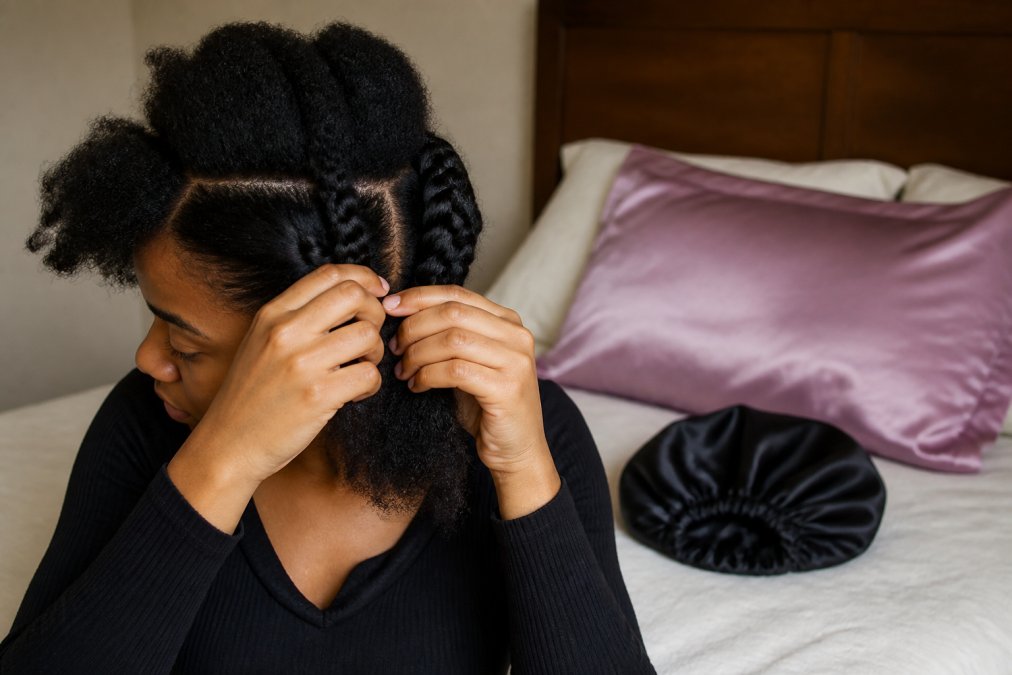
Wear protective styles for 2-4 weeks at a time, then give your hair a break (the American Academy of Dermatology). Continuous protective styling without breaks can cause tension alopecia.
Nighttime care prevents breakage while you sleep. A satin bonnet or silk pillowcase protects your hair and reduces friction compared to cotton. Apply your leave-in conditioner and seal your hair with oil before bed to keep it moisturized overnight.
Troubleshooting Common Natural Hair Setbacks
Product buildup occurs when products accumulate and prevent moisture from penetrating. Signs include dull, heavy hair that won't hold curls. Use a clarifying shampoo monthly to remove buildup.
Dryness and brittleness indicate insufficient moisture. Increase deep conditioning frequency and use the LOC method consistently.
Frizz and undefined curls often result from low moisture or humidity exposure. Increase leave-in conditioner and oil application, and consider protective styling in humid weather.
Scalp irritation and flaking might indicate insufficient rinsing or infrequent washing. Ensure you rinse for at least 60 seconds after shampooing.
Split ends and breakage usually mean your hair is too dry or experiencing too much manipulation. Increase moisture, reduce manipulation, and trim your ends every 8-12 weeks.
Slow growth frustrates many beginners, but hair grows approximately half an inch per month, this is normal. Focus on reducing breakage through protective styling, moisture, and gentle handling.
Starting a natural hair care routine for beginners requires patience and consistency, but the results are worth the effort. Your hair will be healthier, stronger, and more beautiful when you give it what it needs: moisture, protection, and gentle handling.
Green Vitality USA provides high-quality, affordable products that support this journey. From nourishing oils to targeted hair treatments, their curated selection makes it easy to build an effective routine without breaking your budget. Shop now and discover how the right products transform your natural hair care experience.
Frequently Asked Questions
What is the best simple natural hair care routine for beginners?
Start with these core steps: cleanse with a sulfate-free shampoo or co-wash, deep condition weekly, detangle gently with a wide-tooth comb, seal moisture with oils or leave-in conditioner, and protect your hair at night with a satin bonnet. Consistency matters more than complexity. Most beginners see the best results by establishing a routine they can maintain every week, then adjusting based on how their hair responds over time.
How do I identify my hair porosity for better product selection?
The water float test is simple: place a clean strand of hair in a glass of water. If it sinks quickly, you have high porosity and need products that seal moisture. If it floats, you have low porosity and need lightweight, moisture-rich products. If it sinks slowly, you have normal porosity. Understanding your porosity helps you choose the right conditioners, oils, and styling products that actually work with your hair's structure rather than against it.
How often should you wash natural hair?
Most beginners benefit from washing every 7-14 days, depending on scalp oiliness, porosity, and lifestyle. High-porosity hair may need weekly deep conditioning, while low-porosity hair may only need cleansing every 10-14 days. Between washes, use co-wash or dry shampoo to refresh your hair. Pay attention to how your scalp and strands feel, if your scalp is itchy or your curls lack definition, you may need to adjust your frequency.
What ingredients should I avoid in natural hair care products?
Avoid sulfates (they strip natural oils), silicones (they build up on low-porosity hair), parabens, and alcohol denat, which can dry out curls. Read labels for sulfate-free and silicone-free formulas. Look for products with natural oils like argan, macadamia, and avocado, as well as ingredients that support moisture retention and scalp health. Green Vitality USA offers sulfate-free options like the Hair Treatment Serum with argan, macadamia, and avocado oils designed specifically for natural hair.
What is the 'no poo' method and is it right for me?
No poo means skipping traditional shampoo and using co-washing (conditioner washing) or clarifying rinses instead. It works well for some natural hair types because it preserves natural oils and reduces breakage. However, it may not suit everyone, some people need occasional clarifying shampoos to remove product buildup. Try co-washing for a few weeks and observe your scalp and curl health. If your hair feels weighed down or your scalp itches, you may need a sulfate-free shampoo occasionally instead.
Why are Green Vitality USA's natural hair products more affordable than other retailers?
Green Vitality USA curates high-quality products directly and passes savings to you through our streamlined online model. We don't markup prices like traditional beauty retailers. Our Hair Treatment Serum starts at $8.12, and our Batana Oil with Rosemary is $16.25, both formulated with natural ingredients like argan, macadamia, avocado oils, and vitamins A, E, and B5. Every product is authentic and vetted for quality, not discounted or expired stock.
How do I know if a product will work for my natural hair before buying?
Check the product's ingredients against your hair's porosity and needs. High-porosity hair needs heavier oils and butters; low-porosity hair needs lightweight leave-in conditioners. Read reviews from people with similar curl patterns and porosity. Green Vitality USA's product descriptions include key ingredients and benefits, so you can match them to your hair type. Start with one product at a time so you can identify what works, and our return process makes it easy if a product doesn't perform as expected.
What's the difference between moisturizing and sealing in a natural hair routine?
Moisturizing means adding water or water-based products to your hair (conditioners, leave-in conditioners). Sealing means locking that moisture in with oils or butters applied on top. Both steps are essential: moisturize first with a conditioner, then seal with an oil like the Rosemary Anti-Breakage Nourishing Hair Care Oil ($7.41) to prevent moisture loss and reduce breakage. Skipping the seal step is why many beginners struggle with dry, brittle hair.
This article was written using GrandRanker