 ultimate-guide
How to Shop for Clean Beauty: A 2026 Guide
Table of Contents
- What Is Clean Beauty and Why It Matters
- Understanding Clean Beauty Ingredient Lists
- How to Use the EWG Skin Deep Database Guide
- How to Use Think Dirty App for Product Scanning
- Recognizing Clean Beauty Certification Labels
- Shopping for Clean Beauty on a Budget
- How to Shop for Clean Beauty Products With Sensitive Skin
- Spotting Greenwashing and Verifying Authenticity
- Frequently Asked Questions
Last Updated: September 1, 2026
What Is Clean Beauty and Why It Matters
Clean beauty refers to skincare and cosmetic products formulated without potentially harmful synthetic chemicals, focusing instead on ingredient transparency and safety. At Green Vitality USA, we help customers navigate this space by curating products that prioritize both efficacy and ingredient integrity.
The clean beauty movement has fundamentally shifted how consumers evaluate what goes on their skin. Rather than trusting marketing claims alone, informed shoppers now demand visibility into every ingredient listed on a product's label. This reflects a broader understanding that your skin absorbs what you apply to it, making ingredient selection a legitimate health concern.
What separates clean beauty from conventional skincare isn't always obvious. A product labeled "natural" might still contain synthetic preservatives. "Organic" certification doesn't guarantee the absence of irritants. "Non-toxic" remains largely unregulated. Understanding these distinctions is essential before you shop for clean beauty products.
The core principle is simple: clean beauty products avoid known irritants and endocrine disruptors while maintaining product efficacy and safety. This means scrutinizing ingredient lists rather than relying on marketing language alone.
Understanding Clean Beauty Ingredient Lists
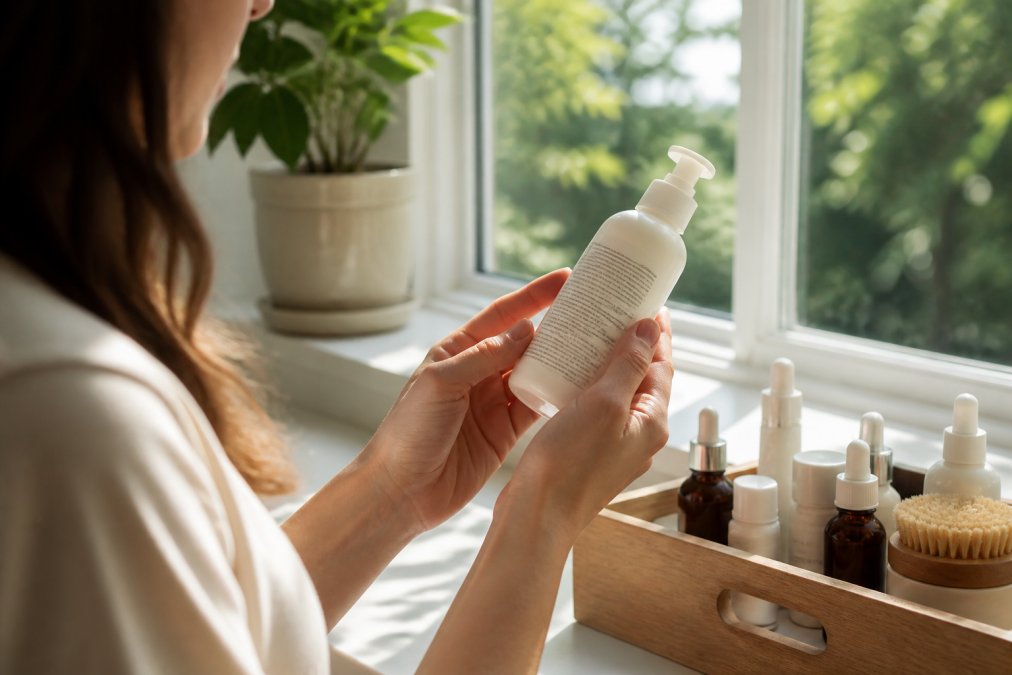
Reading ingredient lists is the foundation of shopping for clean beauty intelligently. Cosmetic products list ingredients in descending order by weight, meaning the first five ingredients make up the bulk of the formula. This ordering system gives you immediate insight into what you're actually paying for.
Start by identifying the active ingredients that deliver the promised benefit. Everything else is either a base, preservative, emulsifier, or fragrance component. Many shoppers skip this step and focus only on marketing language, which is where greenwashing thrives.
The ingredient list uses INCI (International Nomenclature of Cosmetic Ingredients) naming conventions, which can obscure what you're actually buying. Water appears as "aqua." Coconut oil becomes "cocos nucifera oil." Learning to decode INCI names takes practice but is worth the effort.
Ingredients to Avoid
Certain synthetic chemicals appear frequently in conventional skincare but have raised safety concerns among consumers prioritizing clean formulations. Parabens (methylparaben, propylparaben, butylparaben) are preservatives linked to potential endocrine disruption in some studies (peer-reviewed research). While regulatory bodies maintain they're safe at current usage levels, many clean beauty brands have reformulated to exclude them.
Phthalates are plasticizers often hidden under the term "fragrance" on labels. They're used to make fragrances last longer on skin but don't need individual disclosure. Sulfates like sodium lauryl sulfate strip natural oils from skin, making them problematic for sensitive skin types.
Synthetic fragrances represent another major category. Rather than listing individual fragrance components, manufacturers can simply write "fragrance" or "parfum," concealing dozens of undisclosed chemicals. Other commonly avoided ingredients include phenoxyethanol (a preservative), formaldehyde-releasing preservatives, and synthetic colorants derived from petroleum.
Natural vs. Organic vs. Clean: What the Labels Mean
These three terms are often used interchangeably, but they mean very different things when shopping for clean beauty products.
Natural ingredients come from plants, minerals, or animals rather than being synthesized in a lab. However, "natural" is largely unregulated on skincare labels. A product can claim natural ingredients while still containing synthetic preservatives or fragrances.
Organic certification is more rigorous. Products bearing USDA organic certification must meet specific standards: at least 95% of ingredients are organically grown without synthetic pesticides or fertilizers (usda.gov). However, organic certification applies only to agricultural ingredients. A product can be 95% organic and still contain synthetic preservatives in the remaining 5%.
Clean is the broadest and least regulated term. There's no official clean beauty standard, though some organizations have attempted to define it. Generally, clean products avoid specific ingredients considered potentially harmful, parabens, sulfates, phthalates, synthetic fragrances, but the definition varies by brand.
When you shop for clean beauty, you're making a personal choice about which ingredients you want to exclude. Reading labels matters more than relying on marketing claims. A product can be natural without being organic. It can be organic without being clean.
How to Use the EWG Skin Deep Database Guide
The Environmental Working Group's Skin Deep database is one of the most valuable free tools for evaluating product safety (ewg.org). It rates ingredients and finished products on a hazard scale from 1 (lowest hazard) to 10 (highest hazard), based on toxicology research and regulatory data.
To use the database effectively, search for a specific product by name and brand. The database returns a hazard score, ingredient breakdown, and individual ingredient ratings. Green scores indicate lower hazard potential; yellow and red indicate higher concern levels. This visual system makes it easy to compare similar products at a glance.
The database also allows you to search by individual ingredient. If you want to understand whether parabens, phthalates, or synthetic fragrances appear in products you're considering, you can research each ingredient's hazard profile independently.
One important caveat: the Skin Deep database reflects research available at the time of rating, and hazard scores can change as new studies emerge. Use it as a starting point for evaluation, not as the final word.
How to Use Think Dirty App for Product Scanning
The Think Dirty app transforms product evaluation into a quick barcode-scanning process. Download the app on your smartphone, and you can scan any beauty product's barcode in-store or at home to instantly see ingredient ratings and hazard assessments.
The app rates products on a 1-10 scale, with green indicating cleaner formulations and red indicating products with higher concern ingredients. Each ingredient receives an individual rating, and the app highlights which specific components drove the overall score.
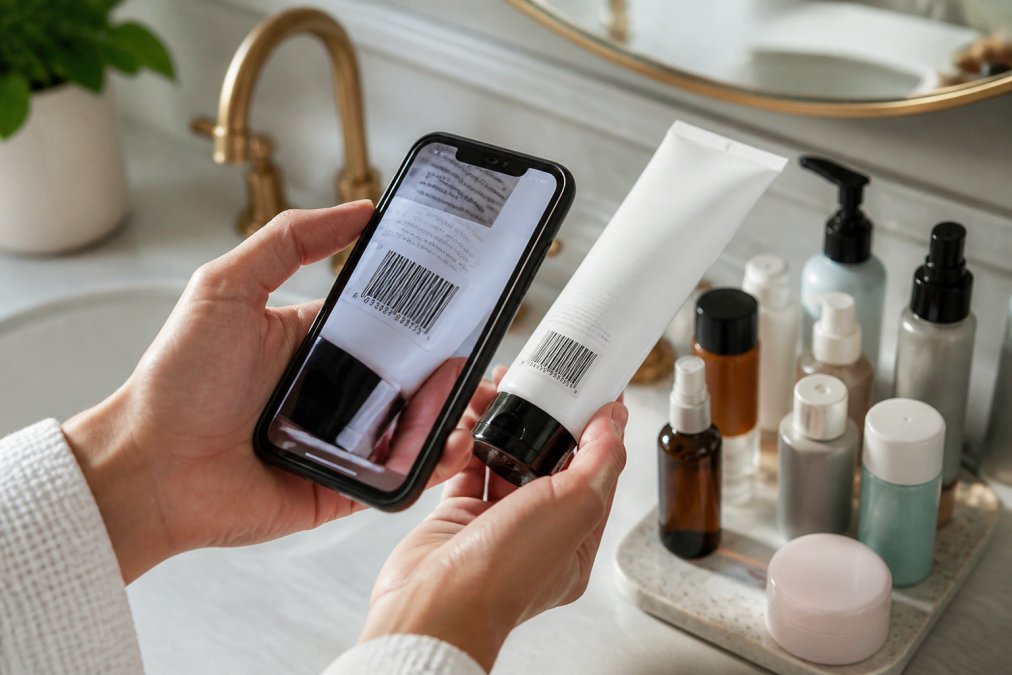
The real power of Think Dirty emerges when you're shopping. Rather than standing in an aisle trying to decode INCI names, you scan the barcode and get instant information. You can compare two similar products side-by-side and choose based on actual ingredient profiles.
The app also allows you to create a personal product list, tracking everything currently in your bathroom. This feature reveals patterns, perhaps you're inadvertently using multiple products containing the same concern ingredient. Consolidating or replacing one product might meaningfully reduce your overall exposure.
Think Dirty relies on user ratings and submissions, so newer or smaller-brand products might have incomplete data. When information is missing, cross-reference with the Skin Deep database or contact the brand directly.
Recognizing Clean Beauty Certification Labels
Legitimate third-party certifications provide independent verification that a product meets specific clean beauty standards. However, not all seals are equally rigorous.
Leaping Bunny certification indicates cruelty-free status; the product and its ingredients weren't tested on animals. This is an ethical consideration rather than a safety one.
USDA Organic certification applies to agricultural ingredients and requires strict standards for farming practices.
EWG Verified products have been reviewed by the Environmental Working Group and meet their hazard criteria. This certification is more relevant to ingredient safety than USDA Organic.
Vegan certifications confirm that products contain no animal-derived ingredients and weren't tested on animals.
Non-GMO Project Verified indicates that ingredients were not genetically modified.
The absence of a certification doesn't mean a product is unsafe or unclean. Many excellent clean beauty brands don't pursue third-party certification because the process is expensive and time-consuming. Always read the ingredient list regardless of certifications present.
Shopping for Clean Beauty on a Budget
Clean beauty doesn't require spending premium prices if you're strategic about where and how you shop. Start by identifying your non-negotiable ingredients. If you're sensitive to parabens and sulfates, those are your priority categories. Other product categories, like body wash or shampoo, might be lower-risk areas where you can compromise on price.
Green Vitality USA offers curated clean beauty products at competitive prices, including options like the Turmeric Vitamin C Clay Mask at $12.75, making effective clean skincare accessible without premium markups. Similarly, the Lily of the Desert Aloe Vera Gel at $25.57 provides a versatile, clean base ingredient for multiple applications.
Buy in bulk when possible. A 32 oz bottle of aloe vera costs less per ounce than a 4 oz bottle. Multi-use products stretch your budget further; a clean oil can serve as a moisturizer, makeup remover, and body oil simultaneously.
Seasonal sales and subscription discounts often apply to clean beauty products. Many brands offer first-purchase discounts or loyalty programs that reduce per-unit costs over time.
How to Shop for Clean Beauty Products With Sensitive Skin
Sensitive skin requires extra caution when shopping for clean beauty because even "clean" ingredients can trigger reactions in reactive skin types. The goal is identifying which specific ingredients your skin tolerates and which cause irritation.
Start with a patch test before introducing any new product. Apply a small amount to your inner arm or behind your ear and wait 24-48 hours. If no reaction occurs, apply a small amount to your face in a discreet area. Introduce one new product at a time and wait at least a week before adding another.
Fragrance is the most common culprit for sensitive skin reactions, whether synthetic or natural. Products labeled "fragrance-free" contain no added scent compounds. "Unscented" products might contain fragrance masking agents, making fragrance-free the safer choice for sensitive skin.
Hypoallergenic products are formulated to minimize allergic reactions, though this term remains largely unregulated. However, individual sensitivity varies; a hypoallergenic product for one person might trigger reactions in another.
If you have severe sensitivity, consider working with a dermatologist. They can perform patch testing with specific allergens and provide personalized recommendations.
The Amococo Whipped Tallow Balm at $16.25 offers a simple formulation suitable for many sensitive skin types, with minimal ingredients that reduce reaction risk.
Spotting Greenwashing and Verifying Authenticity
Greenwashing, making products appear cleaner or more sustainable than they actually are, is rampant in the beauty industry. Learning to identify misleading claims protects both your wallet and your skin.
Vague language is a primary red flag. Terms like "natural," "clean," "pure," and "gentle" lack legal definitions in cosmetics. Specific certifications and ingredient transparency are more reliable than marketing language.
Before-and-after imagery without context is another common greenwashing tactic. Lighting, angles, and makeup application dramatically affect how skin appears in photos. Look for clinical studies or user reviews instead.
Ingredient lists reveal truth that marketing cannot hide. If a product claims to be "clean" but contains parabens, sulfates, or phthalates, the marketing is misleading. Always cross-reference marketing claims against the actual ingredient list.
Verify certifications directly. If a product claims EWG Verified status, check the EWG website to confirm. Check for third-party reviews on reputable sites. Verified purchaser reviews provide honest feedback about whether a product delivers on its claims.
Be skeptical of "proprietary blends" or undisclosed formulations. Clean beauty requires transparency. When shopping online, verify you're purchasing from authorized retailers. Counterfeit beauty products exist, particularly for popular brands. Green Vitality USA curates products from verified suppliers, ensuring authenticity and quality.
Shopping for clean beauty requires diligence, but the effort pays dividends in skin health and peace of mind. By learning to read ingredient lists, using evaluation tools like Skin Deep and Think Dirty, and understanding certifications, you gain the knowledge to make informed choices. Green Vitality USA simplifies this process by curating clean beauty products that meet rigorous standards, delivering both efficacy and ingredient integrity at affordable prices. Start with one product category, master the evaluation process, and expand your clean beauty routine from there.
Frequently Asked Questions
How do I verify if a beauty product is truly clean?
Check the ingredient label for harmful chemicals like parabens, phthalates, and synthetic fragrances. Use the EWG Skin Deep database or Think Dirty app to scan the product barcode for safety ratings. Look for third-party certifications like Leaping Bunny or USDA Organic. Authentic clean beauty brands display ingredient transparency prominently and avoid greenwashing claims. If a product won't list its ingredients or hides them, that's a red flag.
What are the most common ingredients to avoid in skincare?
Avoid parabens (preservatives linked to endocrine disruption), phthalates (found in synthetic fragrances), sulfates (harsh cleansers), synthetic fragrances, formaldehyde releasers, and triclosan. Also watch for mineral oil, petrolatum, and PEG compounds that can trap bacteria and toxins. Reading ingredient lists carefully and cross-referencing with safety databases helps you spot these harmful chemicals before purchase.
Is clean beauty a regulated term in the industry?
No, 'clean beauty' is not officially regulated by the FDA, which means brands can use the term loosely. The FDA regulates cosmetics as a category but does not certify products as 'clean.' This creates opportunity for greenwashing. Third-party certifications like Ecocert or Leaping Bunny provide independent verification. Always check for these badges and read ingredient lists rather than relying on marketing claims alone. Regulatory compliance varies by ingredient, so understanding what standards actually apply protects you.
How can I find affordable clean beauty products without sacrificing quality?
Start by building a curated selection from trusted retailers that prioritize quality over quantity. Look for multi-use products like our Amococo Whipped Tallow Balm ($16.25) that work on face, body, and lips to stretch your budget. Compare cost-per-use rather than upfront price. Use the EWG Skin Deep database to identify budget-friendly options with high safety ratings. Buy products that address your specific concerns instead of filling your cabinet with unnecessary items. Patch test new products on a small area first to avoid wasting money on unsuitable formulas.
What should I do if I have sensitive skin and allergies?
Start with hypoallergenic, dermatologist-tested products and always patch test on a small area of skin before full application. Use the Think Dirty app to scan products and identify potential allergens. Look for clean beauty products with minimal ingredients and no synthetic fragrances or dyes. Keep a list of ingredients that trigger your skin and cross-reference new products against it. Consider products with natural extracts like aloe vera, which soothes without harsh chemicals. If a product causes irritation, stop use immediately and consult a dermatologist.
How long do clean beauty products last compared to conventional products?
Clean beauty products often have shorter shelf lives because they use preservative-free or natural preservation systems instead of synthetic chemicals. Most last 6-12 months after opening, while conventional products may last 18-24 months. Check expiration dates and storage instructions carefully. Natural products are more susceptible to degradation, so store them away from direct sunlight and heat. Some clean brands use airless packaging or glass containers to extend shelf life. Always verify the product's stability and efficacy before purchase, especially for sensitive formulations.
Where can I buy clean beauty products with confidence?
Shop with retailers that curate their selection and verify product authenticity, like Green Vitality USA, which offers affordable, high-quality clean beauty options with fast delivery. Avoid third-party marketplaces where counterfeit products are common. Check that the retailer provides ingredient transparency, accepts returns easily, and stands behind product quality. Read customer reviews for authenticity and efficacy feedback. Verify the brand's certifications directly on their official website. Reputable retailers will never pressure you to buy expired stock or lower-quality versions.
What's the difference between natural, organic, and clean beauty?
Natural beauty products use ingredients derived from nature but may still contain harmful preservatives or synthetic additives. Organic products meet USDA standards and are grown without synthetic pesticides, but organic alone doesn't guarantee safety. Clean beauty focuses on ingredient transparency and avoiding harmful chemicals entirely, regardless of whether ingredients are natural or synthetic. A product can be organic but not clean if it contains endocrine disruptors. Clean beauty is the broadest standard, prioritizing non-toxic formulations and regulatory compliance over sourcing alone.
This article was written using GrandRanker