 ultimate-guide
How to Read Skincare Ingredient Labels: 2026 Guide
Table of Contents
- How Skincare Ingredient Labels Are Structured
- FDA Cosmetic Labeling Requirements Explained
- What Is the 1% Rule in Skincare?
- Common Skincare Ingredients to Avoid
- Ingredient Interactions, Stability, and Skin Barrier Health
- Skincare Label Decoding Tools That Actually Help
- Conclusion
Last Updated: August 17, 2026
How Skincare Ingredient Labels Are Structured
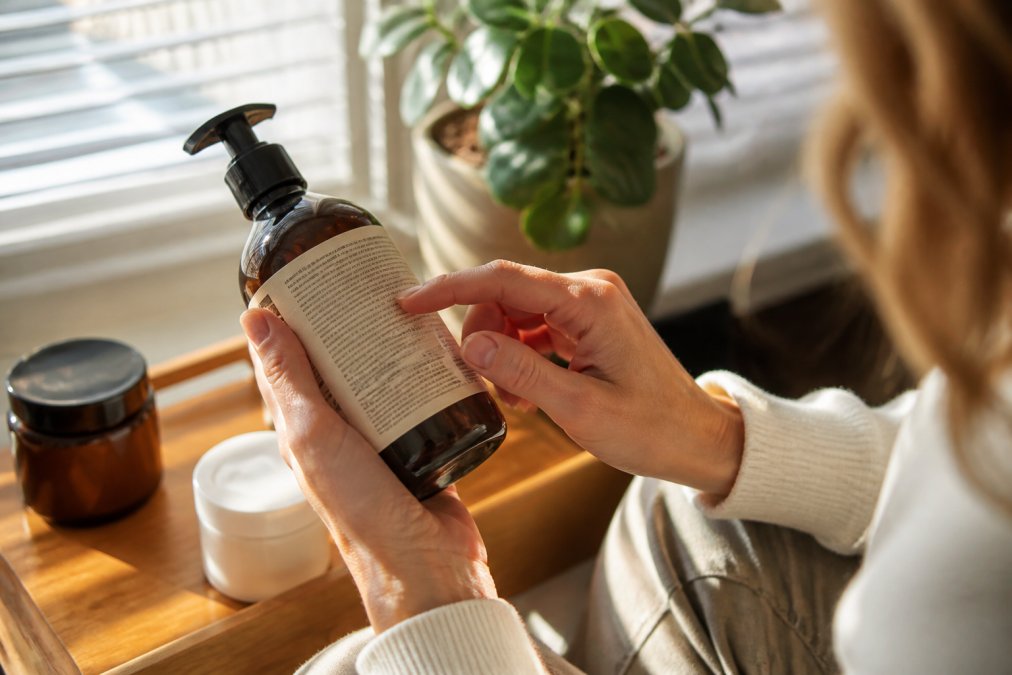
Most people flip a skincare product over and feel immediately overwhelmed by the dense, tiny-font ingredient list. But learning to read these labels turns that wall of text into useful information. The structure is not random, it's organized according to a specific, regulated system that becomes readable in under a minute.
Descending Order by Concentration
Every ingredient on a cosmetic label must be listed in descending order by weight. The first ingredient makes up the largest proportion; the last is present in the smallest amount. This is a federal requirement, not a brand choice.
If water appears first (as it does in most lotions and serums), water is the dominant component. If a botanical extract you're paying a premium for appears near the bottom of a 30-ingredient list, it's present in very small concentration. A common mistake is assuming that ingredients mentioned prominently on the front of packaging reflect their actual concentration, the back label is what tells the truth.
Active vs. Inactive Ingredients: Where to Look
Sunscreens and over-the-counter acne treatments split labels into "Active Ingredients" and "Inactive Ingredients", an FDA requirement for drug products. Active ingredients have a direct, regulated therapeutic function (zinc oxide for sun protection, salicylic acid for acne). Inactive ingredients are everything else: emollients, humectants, solvents, preservatives, and emulsifiers.
For purely cosmetic products (moisturizers, cleansers, serums without drug claims), everything appears in a single descending-order list.
FDA Cosmetic Labeling Requirements Explained
Skincare ingredient labels in the United States are governed by the FDA's authority under the Federal Food, Drug, and Cosmetic Act, updated by the Modernization of Cosmetics Regulation Act of 2022. According to FDA cosmetic labeling guidance, all cosmetic products must display a complete ingredient declaration using the standardized INCI naming system. Non-compliance can result in products being considered misbranded under federal law.
INCI Names and Chemical Nomenclature
INCI stands for International Nomenclature of Cosmetic Ingredients. These standardized names ensure the same ingredient carries the same name regardless of which brand uses it. This matters because brands often market ingredients under trade names that don't appear on labels. "Vitamin C" on the front might appear as ascorbic acid, sodium ascorbyl phosphate, or tetrahexyldecyl ascorbate on the ingredient list, three different forms with different stability profiles. Knowing the INCI name is the only way to know exactly what you're getting.
Botanical extracts follow a specific format: Latin genus and species in italics, followed by plant part. "Aloe vera leaf extract" becomes Aloe Barbadensis Leaf Extract. Synthetic compounds use their chemical names.
Label Symbols You Should Recognize
- PAO symbol (open jar icon): Period After Opening shows how many months a product remains stable after opening. "12M" means 12 months.
- Batch code: Letters and numbers allowing traceability to the manufacturing run, useful for checking expiration dates.
- Recycling symbols: Indicate packaging material type.
- Fragrance-free vs. unscented: "Fragrance-free" means no fragrance compounds were added. "Unscented" may contain masking agents, a meaningful difference for sensitive skin.
What Is the 1% Rule in Skincare?
The 1% rule is the formulation convention that any ingredient at 1% or less can be listed in any order after ingredients above 1%. This creates a practical dividing line on every ingredient list.
Formulators are not required to disclose which ingredients fall below the 1% threshold, so two ingredients appearing close together near the bottom might have very different actual concentrations. For consumers evaluating active ingredients, this matters: retinol is typically effective at 0.025% to 1%. If retinol appears near the bottom of a long list, it's likely at or below 1%, which may still be effective for sensitive skin but won't deliver the same results as higher-concentration formulas.
The 1% rule also explains why preservatives, colorants, and fragrance appear at the end of most lists, these ingredients are functional at very low concentrations.
| Ingredient Position | What It Tells You | Example |
|---|---|---|
| Top 3-5 ingredients | Dominant components by weight | Water, glycerin, cetearyl alcohol |
| Middle of list | Secondary actives and functional agents | Niacinamide, hyaluronic acid |
| Below the 1% threshold | Small but potentially active components | Retinol, peptides, botanical extracts |
| Very end of list | Preservatives, colorants, fragrance | Phenoxyethanol, parfum, CI 77891 |
Common Skincare Ingredients to Avoid
"Ingredients to avoid" depends on your skin type, existing conditions, and individual sensitivities. However, certain categories have well-documented associations with irritation or toxicity concerns worth scrutinizing.
Sensitizers and Potential Toxins
Fragrance (parfum) is one of the most common sensitizers in cosmetics. It's a catch-all term representing dozens of undisclosed compounds. For reactive or dermatological skin, fragrance-free formulations are safer.
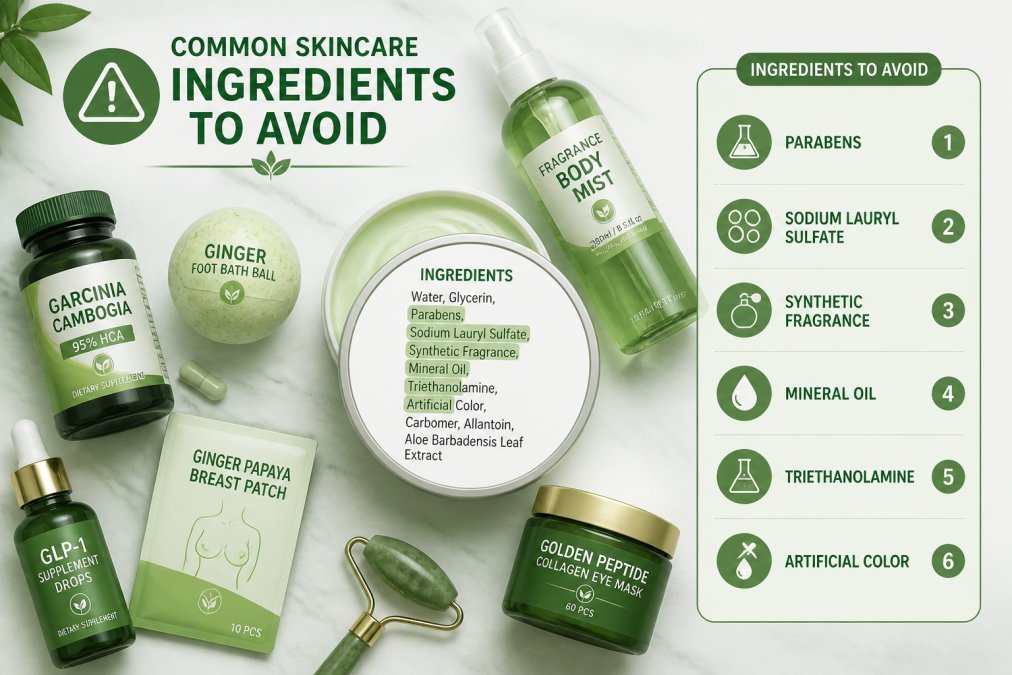
Parabens (methylparaben, propylparaben, butylparaben) have a long safety record, but ongoing research into potential endocrine-disrupting properties has led many formulators to use alternatives like phenoxyethanol. The National Institute of Environmental Health Sciences overview on parabens provides balanced evidence.
Sulfates, particularly sodium lauryl sulfate (SLS) and sodium laureth sulfate (SLES), are effective surfactants but can compromise the skin barrier and cause dryness in sensitive or eczema-prone skin.
Formaldehyde-releasing preservatives (DMDM hydantoin, imidazolidinyl urea, quaternium-15) release small amounts of formaldehyde to inhibit microbial growth. Formaldehyde is a known sensitizer and classified as a human carcinogen at occupational exposure levels.
Decoding 'Clean Beauty' Marketing Claims
"Clean beauty" is a marketing term, not a regulatory category. The FDA does not define "clean," "natural," "non-toxic," or "green" for cosmetics. Any brand can use these terms without meeting a specific ingredient standard.
What to look for instead:
- Specific ingredient exclusions: Claims like "formulated without parabens, sulfates, and synthetic fragrance" are verifiable. "Clean" alone is not.
- Third-party certifications: EWG Verified, COSMOS Organic, and NSF/ANSI 305 have defined ingredient standards and carry more weight than self-applied labels.
- Full ingredient transparency: Brands publishing complete INCI lists, including concentrations where possible, demonstrate higher transparency standards.
Ingredient Interactions, Stability, and Skin Barrier Health
Knowing individual ingredients is useful; understanding how they interact in a formula determines actual results. Some combinations reduce each other's efficacy. Vitamin C (ascorbic acid) works best at pH 3.5. Layering it with niacinamide at higher pH can reduce its effectiveness.
Retinol and exfoliating acids (AHAs, BHAs) used simultaneously can over-exfoliate and compromise the skin barrier, causing redness, tightness, increased sensitivity, and breakouts. Stabilizers and emulsifiers affect ingredient delivery, separation in a product signals instability affecting both preservation and performance.
For building a routine, introduce one new product at a time, wait two to three weeks before adding another, and keep a simple log. This makes it straightforward to identify reaction sources. According to American Academy of Dermatology guidance on skincare routines, simplicity consistently outperforms complexity for most skin types.
Skincare Label Decoding Tools That Actually Help
Ingredient database apps allow you to scan barcodes or enter ingredient lists manually, cross-referencing against safety databases and flagging potential sensitizers. Prioritize tools that cite sources and distinguish between established evidence and precautionary concerns.
EWG's Skin Deep database assigns hazard scores based on toxicity data and regulatory standards. It's a useful starting point, though its methodology weights precautionary concerns heavily, sometimes leading to high hazard scores for ingredients with limited evidence.
INCI decoder tools translate chemical nomenclature into plain-language descriptions, identifying whether an ingredient is an emollient, humectant, preservative, or pH adjuster.
Batch code checkers verify manufacturing dates and expiration information. If buying online, confirming batch codes against manufacturer records is the most reliable way to verify freshness.
Green Vitality USA's product selection includes detailed ingredient information for each listing, so you can review the full INCI list before purchasing. For sensitive skin, this upfront transparency makes the difference between confident purchasing and guessing.
Decoding skincare ingredient labels takes practice, but the framework is consistent once you understand it. If you have sensitive skin or specific ingredient concerns, combining INCI literacy, patch testing, and a simplified routine covers most risk. Green Vitality USA offers a curated range of skincare products with full ingredient transparency, affordable pricing, and straightforward shopping, so you spend less time second-guessing and more time finding what works for your skin. Shop Now and browse products with the ingredient detail you need to make a confident choice.
Frequently Asked Questions
How are ingredients ordered on a skincare label according to FDA regulations?
The FDA requires cosmetic ingredients to be listed in descending order of concentration by weight. The ingredient present in the highest amount appears first, and the one in the smallest amount appears last. The only exception is ingredients at or below 1% concentration, which can be listed in any order after the higher-concentration ingredients. This weight-based listing rule helps you gauge how much of each ingredient is actually in the formulation.
What is the 1% rule in skincare ingredient labeling?
The 1% rule means that any ingredient present at a concentration of 1% or less can be listed in any order on the label, regardless of its actual amount. This matters because many active ingredients like retinol, peptides, and botanical extracts are effective at concentrations well below 1%. So an ingredient appearing near the bottom of the list is not necessarily ineffective, it may be a potent active that works at very low concentrations. Check the brand's stated percentages when available.
What are the most common toxic or problematic ingredients to avoid in skincare?
Ingredients commonly flagged by dermatologists and consumer advocates include parabens (such as methylparaben and propylparaben), formaldehyde-releasing preservatives like DMDM hydantoin, synthetic fragrances listed simply as 'fragrance' or 'parfum,' sodium lauryl sulfate (SLS) in sensitive-skin formulas, and certain phthalates. People with reactive or sensitized skin should also watch for alcohol denat high on the ingredient list, which can disrupt the skin barrier with repeated use.
What do 'fragrance-free' and 'unscented' actually mean on a label?
These terms are not interchangeable. 'Fragrance-free' means no fragrance ingredients were added to the formula. 'Unscented' means the product has no detectable scent, but masking fragrances may still be present in the formulation to cover the smell of other ingredients. For people with sensitive skin or fragrance allergies, 'fragrance-free' is the safer label claim to look for. Neither term is strictly regulated by the FDA for cosmetics, so always scan the full ingredient list to confirm.
Can I mix any skincare actives together, or are there combinations to avoid?
Some active ingredient combinations can reduce product efficacy or irritate skin. Vitamin C (ascorbic acid) and niacinamide are often cited as a pair to use separately, since they can interact at certain pH levels. Retinol and AHAs or BHAs used together can over-exfoliate and damage the skin barrier. Benzoyl peroxide can deactivate retinol when applied at the same time. Patch testing new combinations and introducing actives one at a time helps you identify how your skin responds before committing to a full routine.
How do I identify active ingredients versus inactive ingredients on a skincare label?
On products regulated as over-the-counter drugs, such as sunscreens, acne treatments, and anti-dandruff products, the FDA requires active ingredients to be listed separately in a 'Drug Facts' box at the top of the label, with their concentration percentages. Inactive ingredients follow below. On purely cosmetic products without drug claims, there is no separate active/inactive split; all ingredients appear in a single descending-order list. Knowing which category your product falls into tells you exactly where to look.
This article was written using GrandRanker