 how-to
Gentle Natural Exfoliation for Sensitive Skin Types
Table of Contents
- Why Gentle Natural Exfoliation Suits Sensitive Skin
- Physical vs. Chemical Exfoliation: How to Choose
- How Often to Exfoliate Sensitive Skin
- A Homemade Face Scrub for Sensitive Skin That Won't Irritate
- Choosing a Chemical Exfoliant for Sensitive Skin
- Your Sensitive Skin Exfoliation Routine, Step by Step
- Signs of Over-Exfoliation and How to Recover
- Conclusion
- Frequently Asked Questions
Last Updated: October 18, 2026
Why Gentle Natural Exfoliation Suits Sensitive Skin
Gentle natural exfoliation is the practice of lifting dead skin cells with soft, skin-friendly ingredients instead of harsh grit or strong acids.
Sensitive skin reacts fast. The outer layer, called the skin barrier, is thinner and loses water more easily.
Below, we break down the two main methods, the safest natural ingredients, and a simple routine you can follow at home.
Physical vs. Chemical Exfoliation: How to Choose
Physical exfoliation rubs away dead cells with small particles. Chemical exfoliation dissolves the bonds holding dead cells to the surface using gentle acids. For sensitive skin, both can work, but the margin for error is smaller with physical scrubs because pressure and particle shape are hard to control.
Here is how the two compare on the factors that matter most for reactive skin:
| Factor | Physical | Chemical |
|---|---|---|
| Mechanism | Manual scrubbing with fine particles | Acids loosen dead cell bonds |
| Control | Pressure and duration are easy to overdo | Contact time and strength are measurable |
| Best for | Dullness, rough patches, texture | Uneven tone, clogged pores, post-blemish marks |
| Watch out for | Harsh grit, over-scrubbing, microtears | Leaving acids on too long, layering with other actives |
| Onset of results | Immediate but temporary smoothing | Gradual over several weeks |
| Risk on compromised barrier | Higher, because friction adds insult | Lower if strength and time are controlled |
A common mistake is using both in the same week. Pick one method and let your skin adjust before adding another.
Physical Exfoliants: Sugar, Oatmeal, and Coffee Grounds
Sugar is a popular natural exfoliant because the grains dissolve as you scrub, so the grit softens over time. Oatmeal is the gentlest of the three and doubles as a soothing agent.
If you love coffee scrubs, grind them fine and use a light touch. Better yet, save coffee for the body and keep the face gentle. For any physical scrub, apply it to damp skin, use the pads of your fingers rather than a brush or cloth, and stop after 30 seconds of slow circles.
Chemical Exfoliants: Lactic, Mandelic, and Salicylic Acid
Lactic acid is a mild alpha hydroxy acid that also helps skin hold water, which suits dry, sensitive types. Mandelic acid has larger molecules, so it sinks in slowly and tends to cause less stinging.
Start with one acid, applied once a week at most. More is not better here. Apply to dry skin unless the label says otherwise, set a timer for the contact time on the package, and rinse or neutralize as directed.
Ingredient Cautions for Homemade Scrubs
Kitchen ingredients are not automatically gentle on facial skin. Before you mix a scrub, check these points:
- Particle abrasiveness: Coarse sugar, salt, and coffee grounds can create microtears. Grind them fine and test on your jawline first.
- Food-allergy risk: Honey, dairy, nuts, and oats can trigger reactions in people with known allergies. Patch test on your inner arm for 24 hours.
- Hygiene: Homemade scrubs lack preservatives. Mix only what you will use in one sitting, use clean hands and utensils, and discard leftovers rather than storing them in the shower.
If you want a ready-made option that avoids these variables, look for a fragrance-free formula with a short ingredient list and a stated acid strength.
How Often to Exfoliate Sensitive Skin
Exfoliate sensitive skin once or twice a week, and never on consecutive days. That single rule prevents most irritation. More frequent exfoliation does not speed up results; it just wears down the barrier.
Watch your skin, not the calendar. If your face feels tight after washing or stings when you apply moisturizer, skip the next session. Give your skin a full week off before you start again.
A Practical Frequency Guide by Exfoliant Type
Use this as a starting schedule, then adjust based on how your skin responds. The goal is the least frequent application that still keeps skin smooth.
| Exfoliant type | Starting frequency | Contact time or pressure | How to build up |
|---|---|---|---|
| Fine physical scrub (oatmeal, fine sugar) | Once a week | 30 seconds of light circles with fingertips | Add a second session only after two calm weeks |
| Low-strength lactic or mandelic acid | Once a week | Follow the label; often 5-10 minutes before rinsing | Stay at once a week for four weeks before considering twice |
| Salicylic acid (acne-prone) | Once a week | Follow the label; leave-on formulas are common | Increase only if skin stays calm and pores remain clear |
| Exfoliating cleanser or pad | Two to three times a week | Brief contact during cleansing | Reduce if tightness or stinging appears |
For all types, apply to clean, dry skin unless the label says otherwise, avoid the eye area, and follow with a simple moisturizer. Do not exfoliate on the same day as a retinoid, a strong vitamin C product, or another acid.
Signs to Stop and How to Recover
Stop all exfoliation for at least one to two weeks if you notice:
- Redness that lasts more than an hour after application
- Stinging or burning during or after use
- Flaking, tightness, or a rough, papery texture
Recovery steps:
- Pause all acids and scrubs until skin feels calm again.
- Wash with lukewarm water and a mild, fragrance-free cleanser only.
- Moisturize twice a day with a simple, fragrance-free cream that contains ceramides or glycerin.
Some skin conditions, including rosacea, eczema, and contact dermatitis, need professional care rather than at-home exfoliation. If your skin reacts to almost everything, book a visit with a dermatologist before trying new products.
Hoygi Turmeric Acid Cleanser Pad Gentle Exfoliating Cleanser Without Tight →
A Homemade Face Scrub for Sensitive Skin That Won't Irritate
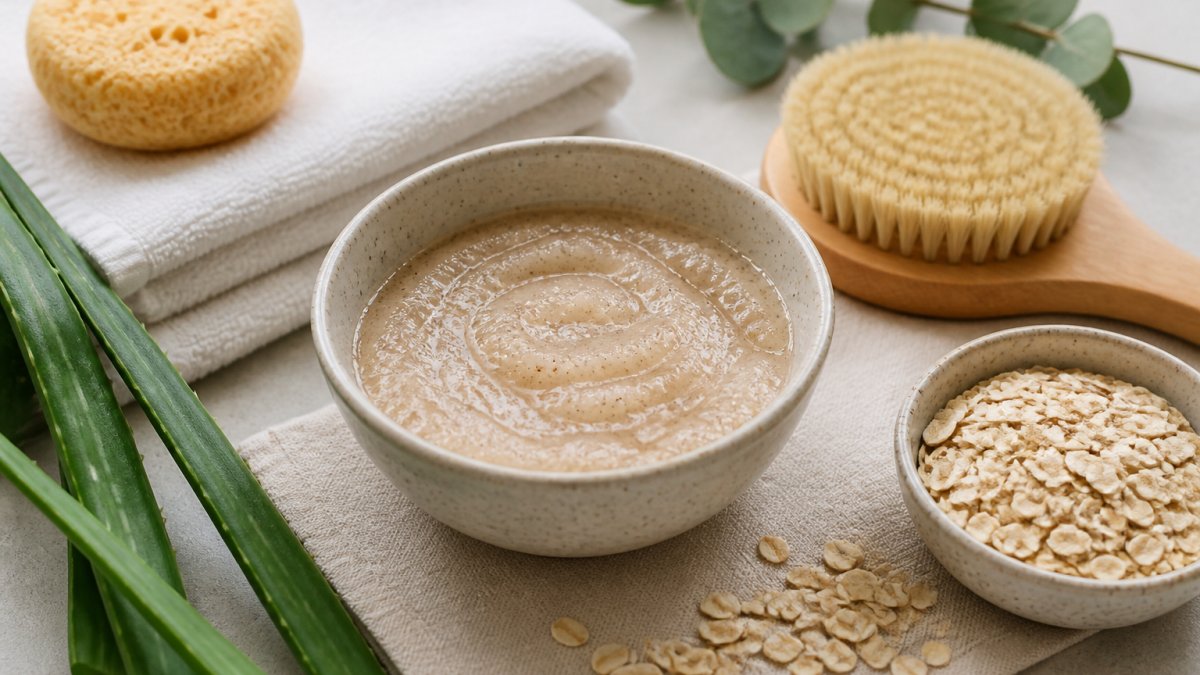
A homemade face scrub for sensitive skin should use fine, soft ingredients and skip anything sharp or fragranced. Oatmeal and honey make the safest base. Both are soothing, and neither strips the skin.

Oatmeal and Honey Recipe
This recipe takes about two minutes and makes one application.
- Grind two tablespoons of plain rolled oats into a fine powder.
- Mix in one tablespoon of raw honey and one teaspoon of plain yogurt.
- Add a few drops of water until the paste spreads easily.
- Apply to damp skin and massage in slow circles for 30 seconds.
- Rinse with lukewarm water and pat dry.
Use it right away. Skip the yogurt if your skin dislikes dairy, and leave out honey if you have a known allergy.
Ingredient Cautions for DIY Scrubs
- Skip lemon juice. It is far too acidic for sensitive skin and can cause burns in sunlight.
- Skip baking soda. It throws off skin's pH and irritates easily.
- Skip coarse salt and sugar in large grains. Fine grains only.
Choosing a Chemical Exfoliant for Sensitive Skin
The best chemical exfoliant for sensitive skin is a low-strength lactic or mandelic acid applied once a week. Look for fragrance-free formulas and short ingredient lists. Higher percentages do not mean faster results; they mean more risk.
Check the label for these signals:
- Strength: start low and stay low until your skin adjusts.
- Fragrance-free: fragrance is a common trigger for redness.
- Supporting ingredients: aloe vera, chamomile, and glycerin help calm and hydrate.
If a product stings on contact, wash it off and wait a week before trying again. Stinging that lasts more than a minute is a sign the formula is too strong for you.
Your Sensitive Skin Exfoliation Routine, Step by Step
A sensitive skin exfoliation routine works best when you keep it short and predictable. Here is how we would set it up.
- Cleanse with a mild, fragrance-free cleanser.
- Patch test any new product on your inner arm first.
- Exfoliate once a week to start, using one method only.
- Rinse with lukewarm water, never hot.
- Moisturize while skin is still slightly damp.
- Apply sunscreen every morning, rain or shine.
Patch Testing and Introducing Exfoliation
Apply a small amount of the product to your inner forearm and leave it for 24 hours. If you see redness, itching, or swelling, do not use it on your face. If your skin stays calm, try it on a small patch of jawline next, then build up.
Introduce one new product at a time. If you start three things in the same week, you will never know which one caused a reaction.
Aftercare: Barrier Support and Sun Protection
After exfoliation, your skin is more vulnerable to sun damage. Use a broad-spectrum sunscreen with SPF 30 or higher every morning. Reapply if you are outside for long stretches.
Moisturize with something simple and hydrating. Ingredients like aloe vera, chamomile, and glycerin help calm skin and support the barrier. Skip exfoliating acids on any day your skin feels raw.
Our Hoygi Turmeric Acid Cleanser Pad is a gentle option for days when you want light exfoliation without tightness. For body care, our OceAura Body Cleansing Exfoliating Gel offers a soft, delicate cleanse.
Signs of Over-Exfoliation and How to Recover
Over-exfoliation shows up as redness, stinging, flaking, tightness, and breakouts that appear out of nowhere. If you notice these signs, stop all exfoliation for at least one to two weeks.
Recovery steps:
- Pause all acids and scrubs until skin feels calm again.
- Wash with lukewarm water and a mild cleanser only.
- Moisturize twice a day with a simple, fragrance-free cream.
Some skin conditions, including rosacea, eczema, and contact dermatitis, need professional care rather than at-home exfoliation. If your skin reacts to almost everything, book a visit with a dermatologist before trying new products.
Conclusion
Finding a gentle natural exfoliation routine that works for sensitive skin takes patience, not force. Start with one soft method, patch test first, and give your skin time to adjust. At Green Vitality USA, we stock affordable skincare essentials like our Hoygi Lemon Exfoliating Gel and our Orange Exfoliating Gel Scrub to support a calm, simple routine. Shop now and build a skincare plan your skin can actually handle.
Frequently Asked Questions
How often should you exfoliate sensitive skin?
Start with once a week and watch how your skin responds for two to three weeks before adding a second session. Most sensitive skin types do well with one to two gentle exfoliations per week. If you notice redness, stinging, or tightness, skip a week and focus on moisturizer and barrier support. Chemical exfoliants like lactic acid are often tolerated at lower frequency than physical scrubs, so adjust based on the product and your skin's reaction rather than a fixed schedule.
Are natural face scrubs safe for sensitive skin?
They can be, but it depends on the grit and ingredients. Fine particles like colloidal oatmeal and sugar dissolve or soften as you scrub, while coarse salt, coffee grounds, and walnut shells can create micro-tears and redness. Avoid adding citrus juice, baking soda, or essential oils, which commonly trigger irritation. Always patch test a homemade face scrub for sensitive skin on your jawline for 24 hours before using it on your full face, and keep pressure light.
Which chemical exfoliant is suitable for sensitive skin?
Lactic acid and mandelic acid are the gentlest starting points because their larger molecules sit closer to the surface and cause less stinging. Salicylic acid works well for acne-prone skin but can be drying, so use it at low concentrations and infrequently. Choose fragrance-free formulas, begin with one application per week, and avoid layering multiple acids on the same night. Stop use if you see persistent redness or flaking, and give your skin barrier a week to recover.
What should you apply after exfoliating sensitive skin?
Apply a fragrance-free, hydrating moisturizer within a few minutes of exfoliating to support the skin barrier. Ingredients like ceramides, glycerin, and hyaluronic acid help calm and rehydrate. Skip toners with alcohol or strong actives that night. In the morning, use a broad-spectrum sunscreen with SPF 30 or higher, since exfoliation makes skin more sensitive to sun exposure. If your skin feels tight or stings, simplify your routine to cleanser, moisturizer, and sunscreen until it settles.