 comparison
Ulta vs Credo Beauty Product Selection: 2026 Guide
Table of Contents
- Ulta vs Credo Beauty Product Selection at a Glance
- What Ulta vs Credo Beauty Product Selection Really Means for Your Skin
- Clean Beauty Standards Comparison: How Each Retailer Vets Ingredients
- How to Identify Non-Toxic Beauty Products Before You Buy
- Pricing, Shipping, and Returns: What You Actually Pay
- Finding the Best Online Health and Beauty Store for Sensitive Skin
- Frequently Asked Questions
Last Updated: September 10, 2026
Ulta vs Credo Beauty Product Selection at a Glance
The Ulta vs Credo Beauty product selection debate comes down to one structural difference: Ulta stocks thousands of brands behind a self-declared "Conscious Beauty" filter, while Credo Beauty curates a smaller catalog against a published restricted substance list. Neither is automatically safer, what matters is how each vets ingredients, and whether you can verify those claims before you buy.
Ulta Beauty is a large-format retailer carrying mass, prestige, and indie brands under one roof, with a "Conscious Beauty" program labeling products that meet its own criteria for clean ingredients, cruelty-free status, and sustainable packaging.
Credo Beauty is a specialty clean beauty retailer with a curated brand roster; every brand must meet its "Clean Standard," a published restricted-ingredient list.
| Factor | Ulta Beauty | Credo Beauty |
|---|---|---|
| Catalog size | Thousands of brands, mass to prestige | Curated roster, clean-focused brands |
| Vetting approach | Self-declared "Conscious Beauty" labels | Published Clean Standard and restricted list |
| Transparency level | Category-level filters | Brand-by-brand ingredient screening |
| Best for | One-stop shopping across price points | Shoppers who want a strict ingredient filter |
| Trade-off | Clean labels sit beside conventional formulas | Smaller selection, fewer budget options |
Neither model is wrong. They solve different problems, and knowing which one matches your skin is the whole game.
What Ulta vs Credo Beauty Product Selection Really Means for Your Skin
Ulta vs Credo Beauty product selection affects your skin only through what ends up in the bottle. A "clean" sticker does not change a formula; the retailer's vetting rules do.
That distinction matters because "clean beauty" has no legal definition in the United States (the FDA). The FDA's guidance on cosmetics and ingredient labeling makes clear that the agency does not approve cosmetic products or their ingredients before they go to market, with limited exceptions. Any "clean" claim you see is a retailer or brand standard, not a government certification.
Comparing these retailers means comparing two private standards: one broad and label-based, the other narrow and list-based.
Ulta's Conscious Beauty Program
Ulta's Conscious Beauty program sorts products into five pillars: clean ingredients, cruelty-free, vegan, sustainable packaging, and positive impact. Products earn a badge by meeting a pillar's criteria. The advantage is scale, filter a massive catalog by value and compare across price points in one cart. The limitation: a "clean ingredients" badge reflects a brand's declaration, not a third-party audit of every batch.
Credo's Clean Standard
Credo's Clean Standard works the opposite way: Credo publishes a restricted substance list and requires brands to reformulate or exit. Screening happens before a product reaches the shelf, a meaningfully stricter filter. The cost is selection and price: fewer brands, fewer drugstore-price options, less room to shop a sale across categories.
Clean Beauty Standards Comparison: How Each Retailer Vets Ingredients
Ingredient vetting is where the two retailers diverge most. Most coverage stops at "Ulta uses badges, Credo uses a list", true but useless at the shelf. What matters is the mechanism: who screens, when, what they screen for, and what happens on failure.
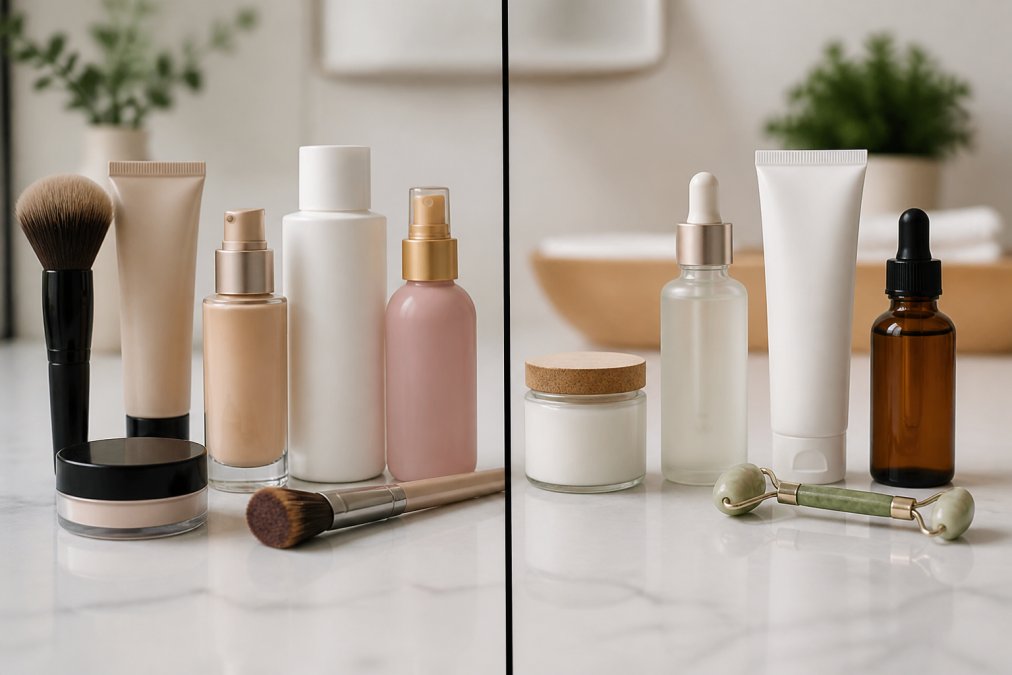
The two vetting models, side by side
Ulta's Conscious Beauty model is a filter you apply. Products already in the catalog are tagged against five pillars. The clean-ingredients pillar rests on brand declarations mapped to Ulta's published criteria, which typically exclude families such as parabens, phthalates, and formaldehyde-releasing preservatives, and require fragrance-component disclosure. The badge is applied at category level, so shoppers can filter thousands of SKUs in a few clicks.
Credo's Clean Standard is a gate a brand must pass. Credo publishes a restricted substance list, internally called its "Dirty List", and every brand must meet it before listing. Organized by ingredient family, it covers parabens, phthalates, formaldehyde releasers, certain UV filters, PEG compounds, and many fragrance allergens. Brands that cannot reformulate are removed, not flagged.
The practical difference shows up in four places:
- Who does the screening. Ulta relies on brand self-declaration against published criteria. Credo reviews each brand's full ingredient disclosure before acceptance.
- When screening happens. Credo screens before listing. Ulta's badges are applied to products already on shelf, which means a formula can change after a badge is granted.
- What is restricted. Credo's list targets specific ingredient families and named fragrance allergens. Ulta's clean pillar targets a broader set of criteria that also folds in packaging and ethics, which spreads the standard thinner per ingredient.
- What happens on failure. Credo's model is closer to a gate, reformulate or exit. Ulta's is closer to a filter, the product stays, the badge does not apply.
Why the difference matters at the shelf
A common mistake is assuming a badge equals a guarantee. It does not. Both systems are useful starting points, and both still require you to read the label on the product in your hand. The reason is structural: neither standard is a government certification. The FDA's guidance on cosmetics and ingredient labeling makes clear the agency does not approve cosmetic products or their ingredients before market, with limited exceptions. Every "clean" claim is a private standard.
The useful question is not "which retailer is cleaner" but "which retailer's standard maps to my specific triggers." If your trigger is a named fragrance allergen, Credo's list-based approach is a shorter path. If it is a preservative family, you can screen either catalog yourself, but Credo has already removed more from the shelf.
A methodology-first way to compare any two retailers
Apply the same four questions to any retailer:
- Is the restricted list published? If you cannot find it, the standard is marketing, not a standard.
- Is screening pre- or post-listing? Pre-listing screening is a gate; post-listing tagging is a filter.
- Does the standard name specific ingredient families, or only categories? Named families are auditable. Categories are not.
- What is the failure mode? Reformulate-or-exit is stricter than badge-not-applied.
Run those four questions against Ulta and Credo: Credo wins on strictness, Ulta on breadth, and neither on transparency, since neither publishes batch-level verification. That is why the next section walks through screening a product yourself in under five minutes.
How to Identify Non-Toxic Beauty Products Before You Buy
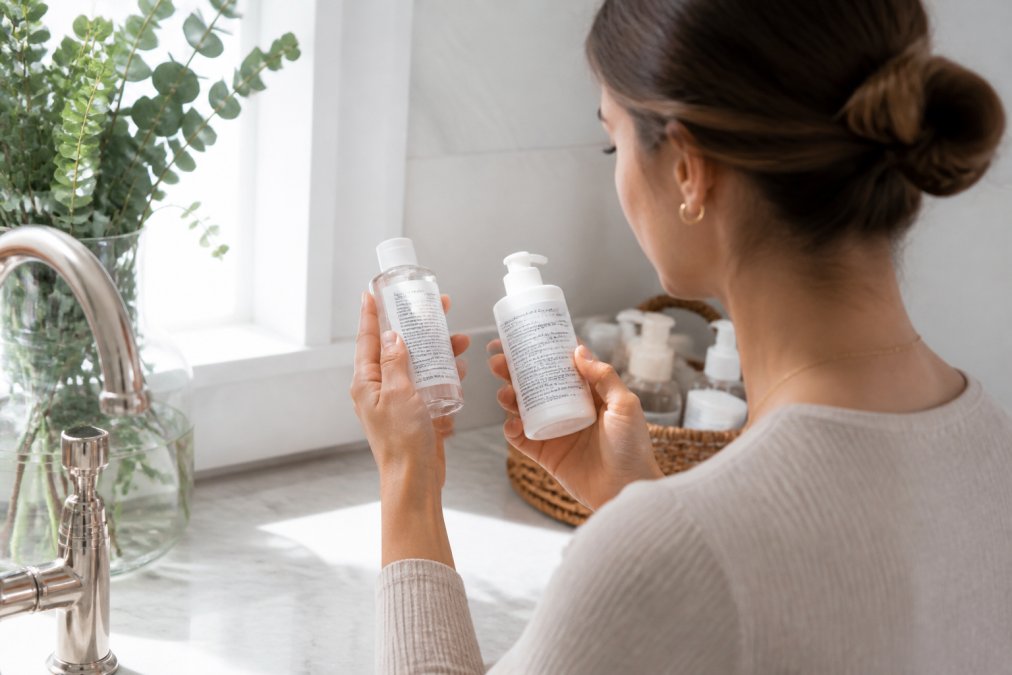
Learning how to identify non-toxic beauty products comes down to reading the ingredient list, not the marketing copy. Badges narrow the field; the label decides the purchase.
Start with the ingredient list on the back of the package, in descending order of concentration. Then apply a simple screen:
- Fragrance. "Fragrance" and "parfum" are catch-all terms that can hide dozens of compounds. If you react to synthetic fragrance, look for fragrance-free rather than unscented.
- Preservatives. Parabens are the most publicized, but the full preservative system matters more than any single name.
- Sulfates and phthalates. Common in cleansers and fragrances, and frequent triggers for sensitive skin.
- The rest of the formula. A short ingredient list is easier to audit than a long one.
Here is a five-minute vetting checklist you can run in any store or on any product page:
- Flip to the back label and read the full ingredient list, not the front claims
- Search the list for "fragrance" or "parfum" if you are fragrance-sensitive
- Note any ingredient you have reacted to before and check for close relatives
- Confirm the product is labeled fragrance-free if that is your requirement
- Cross-check the retailer's clean criteria against the actual formula
- Patch-test on your inner forearm for 24 hours before full use
That last step is the one most shoppers skip, and it is the only test that reflects your skin rather than a standard.
Pricing, Shipping, and Returns: What You Actually Pay
Price and policy differences between these retailers change the math on a full routine. Credo's curated model carries clean-focused indie brands that cost more to formulate at small scale, while Ulta spans drugstore to prestige pricing. What matters most is what each charges for access, shipping, and returns, those three line items often decide whether a routine is affordable.
Price bands, in plain terms
- Ulta Beauty spans the widest range in mass beauty retail: drugstore-tier skincare and haircare at the low end, prestige at the high end, with Ultamate Rewards layering points and member-only pricing on top. That is why Ulta is the default for routines across multiple price points.
- Credo Beauty sits almost entirely in the prestige and indie-clean band, with no drugstore tier and an assortment skewed toward smaller brands. The trade-off: fewer budget entry points, but a shorter path to a formula meeting a published restricted list.
A full routine built at Credo typically costs meaningfully more than the same routine at Ulta, even when individual products are comparable in size. That gap is the price of curation.
Shipping and returns: what to check before you commit
Shipping and return policy are the two levers that lower the risk of trying something new, especially for sensitive skin. Both retailers have shifted these policies over time, so check current terms on the retailer's policy page before checkout. Three things to verify:
- The return window and whether opened products qualify. Opened-product returns are the single biggest difference between a low-risk trial and a sunk cost. Some retailers accept opened cosmetics within a window; others do not.
- The free-shipping threshold. Most beauty retailers offer free standard shipping above a minimum order, and that threshold often determines whether a single-product trial is worth it or whether you should bundle.
- Whether the brand adds its own guarantee. A brand-level satisfaction guarantee can extend past the retailer's window, and it is often buried on the brand's own site rather than the retailer's.
The post-partnership reality: where to source these categories now
Most coverage of the Ulta vs Credo Beauty product selection comparison skips this part: the two retailers are no longer co-located as shoppers once expected, so the practical question is "where do I source each category now." A workable split:
- Mass and prestige staples, cleansers, moisturizers, haircare, and cosmetics across price points, are easiest to source at a large-format retailer with a broad catalog and a loyalty program.
- Strict clean-standard skincare and indie brands are easiest to source at a curated retailer with a published restricted list.
- Single-category replacements, a fragrance-free moisturizer, a sulfate-free cleanser, a paraben-free serum, are often fastest to source from a smaller curated store that has already screened the category, rather than re-auditing a thousand listings.
For shoppers who want a lower-risk entry point, a curated online store that carries vetted formulas at accessible prices often beats both. Green Vitality USA stocks a focused range of skin, hair, and wellness products, including a whipped tallow balm at $16.25 and a hair, skin, and nails supplement at $22.50.
Finding the Best Online Health and Beauty Store for Sensitive Skin
The best online health and beauty store for sensitive skin is the one whose vetting standard matches your specific triggers, not the one with the biggest catalog, the takeaway from the Ulta vs Credo Beauty product selection comparison.
If fragrance sensitivity is your concern, prioritize retailers that label fragrance-free products clearly and publish their restricted lists. If it is a specific preservative or sulfate, learn those ingredient names and screen every product yourself. If you simply want fewer questionable formulas in one cart, a tightly curated retailer saves you the work.
This is where a smaller, curated retailer earns its place. Green Vitality USA curates its catalog rather than listing everything available, meaning fewer products to screen and a shorter path from browsing to checkout.
The challenge with clean beauty is that every retailer defines "clean" differently, and none of those definitions is a government standard. That leaves the vetting work on you, unless you shop somewhere that has already done it. Green Vitality USA offers a fast, user-friendly shopping experience, reliable high-quality merchandise, and cost-effective pricing on skin, hair, and wellness essentials. Shop now at Green Vitality USA.
Frequently Asked Questions
What are the differences between Ulta's Conscious Beauty and Credo's clean standards?
Ulta's Conscious Beauty program uses five badges covering clean ingredients, cruelty-free status, vegan formulas, sustainable packaging, and positive impact. Brands self-report and must meet at least one badge. Credo's Clean Standard is stricter: it bans over 2,700 ingredients including parabens, phthalates, and synthetic fragrance, and requires third-party verification. Credo vets every product before it reaches shelves, while Ulta lets brands flag their own compliance.
Does Credo Beauty carry the same brands as Ulta?
No. Credo stocks roughly 150 vetted clean beauty brands, many of which are indie or exclusively clean. Ulta carries over 600 brands spanning mass-market, prestige, and clean lines, so you will find mainstream names there that Credo does not stock. If a specific brand matters to you, check both retailers directly before assuming overlap. Ulta's selection is broader; Credo's is deeper on clean formulations.
How do I identify non-toxic beauty products when shopping online?
Look for a full ingredient list, not just front-label claims like 'natural' or 'clean.' Check for parabens, phthalates, synthetic fragrance, and formaldehyde releasers. Third-party certifications such as EWG Verified, Leaping Bunny, or Made Safe carry more weight than self-declared badges. Retailers with published restricted substance lists, like Credo, make this easier. If a product page hides the ingredient list, that is a red flag worth noting.
Is Ulta's Conscious Beauty program as strict as Credo's ingredient standards?
No. Ulta's program requires brands to meet one of five criteria, and compliance is largely self-reported. Credo bans more than 2,700 ingredients and requires brands to submit full formulations for review before listing. That means a product can carry an Ulta Conscious Beauty badge while still containing ingredients Credo would reject. For shoppers with sensitive skin or strict non-toxic requirements, Credo's vetting is more rigorous.
What should I look for when shopping for clean beauty products online?
Prioritize retailers that publish their restricted substance list and require third-party verification. Check whether the store curates products or lists everything a brand sends. Read the ingredient list for your specific concerns, such as fragrance-free for reactive skin or paraben-free for hormone-related worries. Compare return policies too, since patch-testing at home is the only reliable way to know if a formula suits your skin.