 listicle
Best Organic Skincare Routine for Beginners
Table of Contents
- Why Beginners Need a Simplified Organic Skincare Routine
- Step 1: Identify Your Skin Type and Sensitivities
- Step 2: Cleanse with Gentle, Non-Comedogenic Products
- Step 3: Apply Serums and Essences for Hydration
- Step 4: Moisturize and Protect Your Skin Barrier
- How to Transition to Organic Skincare Without Damaging Your Skin
- Organic Skincare Ingredients to Avoid for Beginners
- Conclusion
Last Updated: August 24, 2026
Why Beginners Need a Simplified Organic Skincare Routine
Starting an organic skincare routine doesn't require a 10-step process or expensive products. The best organic skincare routine for beginners focuses on foundational steps that work with your skin's natural barrier. At Green Vitality USA, we've helped customers transition to cleaner skincare by simplifying what actually matters.
Most beginners overcomplicate their approach by buying products with trendy ingredients they don't understand and layering incompatible formulations. The reality is simpler: a solid routine needs just four core elements, cleansing, hydration, protection, and targeted treatment, built around your specific skin type.
What makes organic skincare different is the ingredient philosophy. Products formulated with botanical extracts, cold-pressed oils, and plant-based actives work more gently than synthetic alternatives and are less likely to disrupt your skin microbiome. But "organic" alone doesn't guarantee results. You need the right products in the right order, applied consistently.
This guide walks you through building a best organic skincare routine for beginners that actually works, covering identifying your skin type, correct cleansing, serum layering, and transitioning without irritation.
Step 1: Identify Your Skin Type and Sensitivities
Knowing your skin type is the foundation of any effective routine. The best organic skincare routine for beginners starts here.
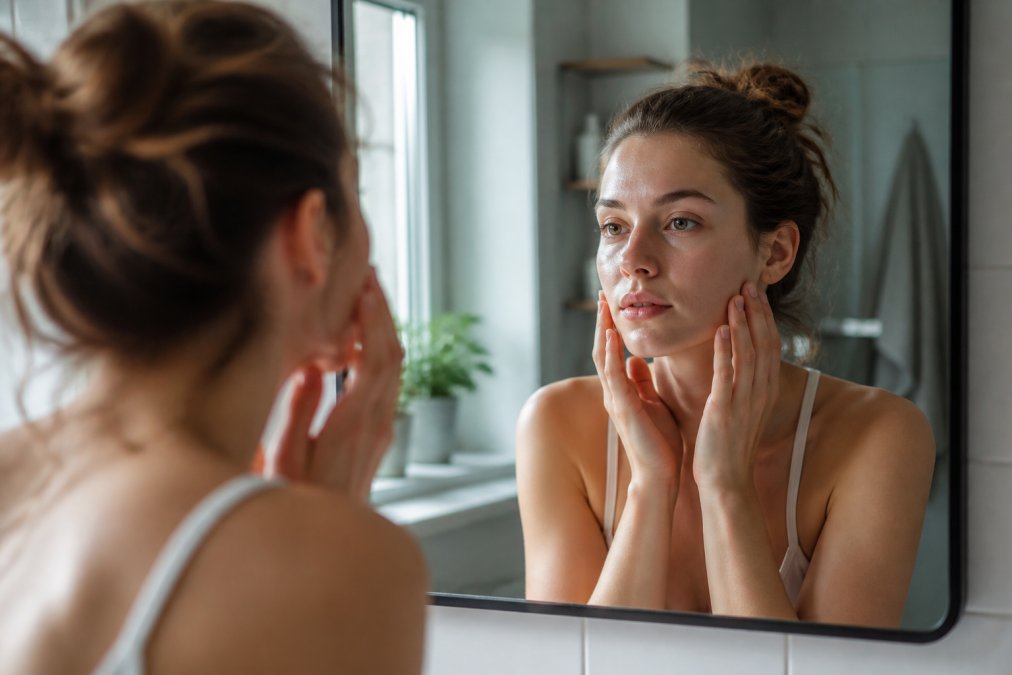
Skin type falls into five categories: oily, dry, combination, normal, and sensitive. Oily skin produces excess sebum visible as shine within hours of cleansing. Dry skin feels tight or flaky after washing. Combination skin is oily in the T-zone but dry elsewhere. Normal skin is balanced with minimal sensitivity. Sensitive skin reacts easily to products, environmental stressors, or temperature changes.
To identify your type, cleanse gently and wait 30 minutes without applying anything. Look in the mirror under natural light. Tightness indicates dryness; shine across your forehead and nose indicates oiliness; variation by zone indicates combination skin.
Sensitivity is separate from type, you can have sensitive oily or sensitive dry skin. Sensitive skin typically shows redness, burning, itching, or reactivity to common ingredients. If you experience these symptoms, start with hypoallergenic, fragrance-free products and perform a patch test on your inner arm before applying anything to your face.
Once you know your type, you can select products designed for your needs rather than following generic routines.
Step 2: Cleanse with Gentle, Non-Comedogenic Products
Cleansing is the most important step in any routine. It removes dirt, oil, makeup, and environmental pollutants. Poor cleansing leads to clogged pores, breakouts, and a compromised skin barrier. The best organic skincare routine for beginners prioritizes a gentle cleanser that doesn't strip your skin.
The double cleanse method works best for most skin types. Start with an oil-based cleanser to dissolve makeup and oil-soluble impurities. Cold-pressed oils like jojoba or rosehip actually regulate sebum production rather than worsening oily skin. Follow with a water-based cleanser to remove remaining residue. Look for products labeled non-comedogenic and avoid sulfates, which strip the skin barrier and trigger irritation.
For beginners, the OUHOE Yellow Exfoliating Oil ($8.74) serves double duty as both a cleanser and gentle exfoliant. Its oil base dissolves makeup while mild exfoliating particles remove dead skin cells. Follow with a gentle water-based cleanser to complete the double cleanse.
Cleanse morning and night, but don't over-wash. Excessive cleansing disrupts your skin microbiome and damages the protective acid mantle. Use lukewarm water, never hot, which opens pores and increases water loss. Pat your face dry gently with a clean towel.
Step 3: Apply Serums and Essences for Hydration
After cleansing, your skin is primed to absorb active ingredients. Serums and essences deliver maximum benefit through lightweight formulations that penetrate deeper than creams.
Essences come first in the routine. They're water-based and prepare your skin to receive heavier products. Essences often contain hydrosols and antioxidants that draw moisture into the skin. Apply essence by gently patting it into your skin, allowing 30 seconds for absorption before moving to the next step.
Serums follow essences. They're more concentrated and often contain active ingredients like peptides, botanical extracts, or vitamins. The Hoygi Bee Venom Essence ($12.49) combines hydrating essences with bio-active ingredients that improve skin condition and moisture retention. Apply a few drops to damp skin and press gently into your face and neck.
When layering serums, apply them in order of thinnest to thickest consistency. Allow 30-60 seconds between applications for each layer to set. For beginners, one essence and one serum are enough. The Hoygi Facial Care Serum ($12.49) provides daily hydration for all skin types with a lightweight formula that absorbs quickly without residue.
Step 4: Moisturize and Protect Your Skin Barrier
Moisturizing seals in hydration from previous steps and prevents water loss. Your skin barrier, the outermost layer of dead skin cells and lipids, acts as a protective wall. A good moisturizer restores this barrier using emollients and occlusives.
Emollients smooth and soften skin by filling gaps between skin cells. Occlusives form a protective layer that prevents water loss. The best moisturizers combine both. Look for ingredients like shea butter, plant oils, and ceramics.
Apply moisturizer while your skin is still slightly damp from serums. Use an amount about the size of a pea for your face. The Hoygi Centella Repair Moisturizer ($12.49) hydrates, firms, and relieves dry skin using gentle plant ingredients. Centella asiatica is known for its skin-soothing and barrier-repairing properties and works for all skin types, including sensitive skin.
Morning routines should end with sunscreen. Sun protection is non-negotiable, even on cloudy days. Choose a sunscreen with broad-spectrum protection and at least SPF 30 (the American Academy of Dermatology). Mineral sunscreens with zinc oxide or titanium dioxide work well for sensitive skin.
Night routines can include a heavier occlusive moisturizer or nourishing mask. The Hoygi Collagen Tear Mask ($12.49) works while you sleep, delivering hydration and firming peptides. Apply as the final step and peel off in the morning.
| Routine Step | Product Type | Key Benefit | Best For |
|---|---|---|---|
| Cleanse | Oil + water-based cleanser | Removes impurities without stripping | All skin types |
| Essence | Hydrating, water-based | Prepares skin for absorption | All skin types |
| Serum | Concentrated actives | Targets specific concerns | All skin types |
| Moisturize | Emollients + occlusives | Seals hydration, repairs barrier | All skin types |
| Protect | Sunscreen (AM) or mask (PM) | Prevents damage and supports repair | All skin types |
How to Transition to Organic Skincare Without Damaging Your Skin
Switching to organic skincare abruptly can trigger purging, where your skin sheds dead cells and brings impurities to the surface, appearing as temporary breakouts. This differs from a negative reaction, purging indicates active ingredients are working.
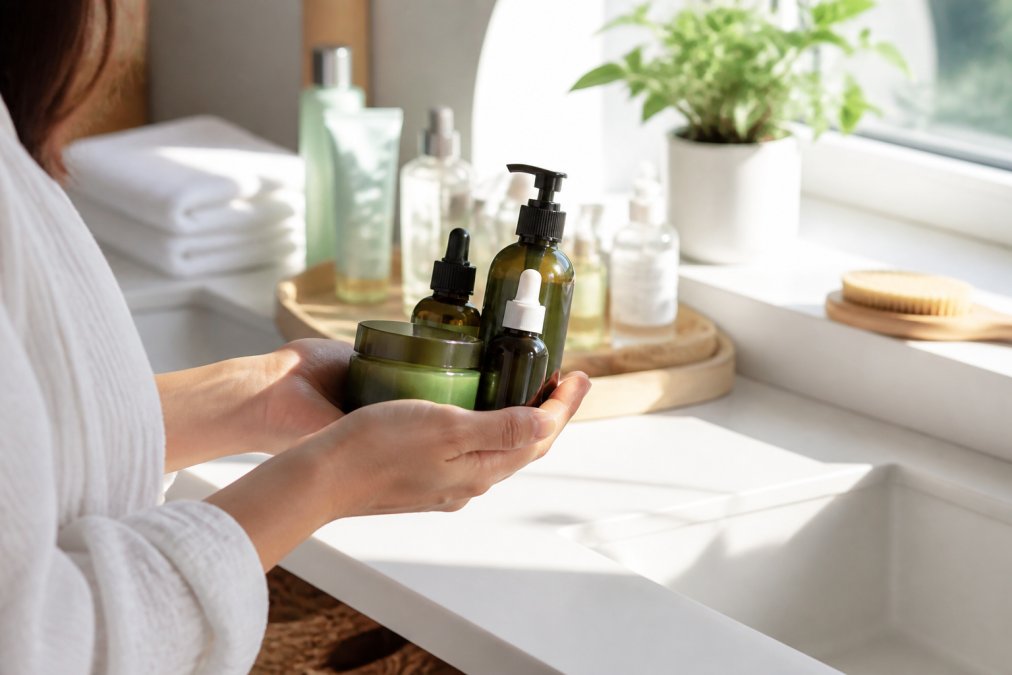
Start by introducing one new product every 7-10 days. This gives your skin time to adjust and helps you identify which product causes any reaction. Begin with the gentlest products first: cleanser, then essence, then serum, then moisturizer.
Expect a transition period of 4-6 weeks (the American Academy of Dermatology). Your skin may look slightly worse before improving, with small breakouts, slight redness, or increased oiliness. These symptoms typically fade as your skin adjusts. If irritation persists beyond six weeks or worsens significantly, discontinue the product and try an alternative.
Patch testing is essential for sensitive skin. Apply a small amount to your inner arm or behind your ear and wait 24-48 hours for any redness, itching, or burning. This prevents full-face reactions.
During transition, maintain your old routine in the evening while introducing new products in the morning. After one week of success, incorporate the morning product into your evening routine too.
Avoid introducing other changes during transition. Don't start new supplements, change your diet drastically, or add new activities. Keep everything else constant so you can accurately assess how your skin responds to new skincare products.
Organic Skincare Ingredients to Avoid for Beginners
Not all organic ingredients are gentle or suitable for beginners. Some are potent actives requiring careful introduction, while others trigger sensitivity in many people.
Essential oils are popular in organic skincare but problematic for beginners. While they smell wonderful, they're concentrated plant compounds that irritate sensitive skin. Lavender oil triggers contact dermatitis in some people, and tea tree oil is antimicrobial but extremely drying (peer-reviewed research). Beginners should avoid products with high essential oil concentrations and opt for hydrosols instead.
Citrus extracts and acids like lemon or grapefruit are photosensitizing and increase UV damage risk. Avoid these, especially during daytime routines. If used at night, wear sunscreen the next morning.
High concentrations of vitamin C are beneficial but unstable and irritating for sensitive skin. Start with gentler antioxidants like vitamin E or green tea extract instead.
Fragrance, whether synthetic or natural, is a common irritant. Look for fragrance-free or unscented products, especially if you have reactive skin. The Hoygi Gentle, Soothing, Moisturizing and Nourishing Facial Care cream ($12.49) is formulated without added fragrance, making it ideal for sensitive beginners.
Exfoliating acids like AHAs and BHAs are powerful but too strong for beginners. Save chemical exfoliation for after establishing a stable routine, typically after 8-12 weeks. Alcohol denat (denatured alcohol) is drying and irritating, avoid products where it appears in the first five ingredients.
Benzoyl peroxide, while effective for acne, is harsh and drying. Organic alternatives like sulfur or salicylic acid from willow bark are gentler for acne-prone beginners.
Some people react to common organic ingredients like shea butter or coconut oil, which are comedogenic. If you break out after introducing these, they're not right for you despite being natural.
The safest approach for beginners is paraben-free, sulfate-free, and fragrance-free products. As your skin strengthens, you can experiment with more potent ingredients.
Building the best organic skincare routine for beginners comes down to simplicity, patience, and listening to your skin. You don't need expensive products or complicated routines, just the right cleanser, hydrating essence, targeted serum, and protective moisturizer, applied consistently and adjusted based on how your skin responds.
Green Vitality USA offers a curated selection of organic skincare products designed for beginners. Our Hoygi and OUHOE lines provide gentle, effective formulations at affordable prices. Each product is selected for quality and suitability for sensitive skin. Shop Now and start your organic skincare journey with confidence, knowing you're using products that prioritize your skin health and well-being.
Frequently Asked Questions
What is the best organic skincare routine for a beginner?
Start with a 4-step routine: cleanse, tone or essence, serum, and moisturize. Beginners should use gentle, non-comedogenic products with botanical extracts and cold-pressed oils. Focus on building a consistent routine with a few high-quality products rather than layering many products at once. Most beginners see improvements in skin texture and hydration within 2-4 weeks of consistent use.
How do I know if a skincare product is truly organic?
Look for certifications from recognized bodies and check ingredient lists for paraben-free, sulfate-free, and synthetic fragrance-free formulations. Authentic organic products list botanical extracts, plant-based emollients, and cold-pressed oils as primary ingredients. Avoid products making vague 'natural' claims without third-party verification. Green Vitality USA curates products that meet rigorous standards, ensuring you receive authentic, high-quality organic skincare without guesswork.
How long does it take to see results from an organic skincare routine?
Most users notice improved hydration and skin texture within 2-4 weeks. However, results depend on your starting point and skin type. Sensitive skin may show faster improvements in irritation reduction, while anti-aging benefits typically take 6-8 weeks. During the transition period, you may experience temporary purging as your skin adjusts to botanical ingredients and begins cellular turnover. Consistency matters more than speed, stick with your routine for at least 4 weeks before evaluating results.
What organic skincare ingredients should beginners avoid?
Beginners with sensitive skin should patch test essential oils, as they can cause irritation when applied directly. Avoid products with high concentrations of enzymatic exfoliants if you have reactive skin. Steer clear of products listing synthetic fragrances, parabens, or sulfates, these contradict organic principles and can trigger sensitivity. Some botanical extracts like citrus oils may increase sun sensitivity, so use sunscreen if your routine includes them. Always patch test new products on a small area first.
This article was written using GrandRanker