 listicle
Best Natural Relaxation Products for Stress in 2026
Table of Contents
- Best Natural Relaxation Products for Stress: Quick Comparison
- Natural Supplements for Anxiety and Everyday Stress Support
- Aromatherapy and Essential Oils for Calming Properties
- Topical and Physical Relaxation Tools for Tension Relief
- How to Manage Stress Naturally With a Daily Routine
- FDA Regulation of Dietary Supplements: What Buyers Should Know
- Safety, Side Effects, and When to Talk to a Doctor
- Frequently Asked Questions
Last Updated: September 14, 2026
Best Natural Relaxation Products for Stress: Quick Comparison
The best natural relaxation products for stress work on different pathways: adaptogens steady cortisol over weeks, minerals calm the nervous system within hours, and aromatherapy offers immediate sensory relief. This guide ranks ten options by performance, cost, and who each suits.
Most people buy relaxation products the wrong way: they try one supplement for three days, feel nothing, and conclude natural remedies don't work. The real issue is mismatch, a fast-acting nervine herb behaves nothing like a slow-building adaptogen.
Below, we break down which products fit which stress symptoms, from racing thoughts at midnight to jaw tension at 3 p.m. Every item is stocked by Green Vitality USA, priced as listed.
| Product | Category | Price | Best For | Activation Time |
|---|---|---|---|---|
| Magnesium Complex Capsules | Mineral support | $13.75 | Muscle tension, sleep quality | Hours |
| Ashwagandha Capsules | Adaptogen | $15.18 | Ongoing daily stress | Weeks |
| Rhodiola Rosea Capsules | Adaptogen | $7.54 | Fatigue, mental clarity | Days to weeks |
| Lemon Balm Glycerite | Nervine herb | $27.08 | Racing thoughts, restlessness | 30-60 minutes |
| Passion Flower Extract | Nervine herb | $27.08 | Occasional sleeplessness | 30-60 minutes |
| Organic Essential Oils Set | Aromatherapy | $9.39 | Immediate calming, diffuser use | Minutes |
| Nasal Inhaler Stick | Aromatherapy | $17.45 | On-the-go stress spikes | Seconds |
| Dead Sea Spa Gift Set | Topical/ritual | $35.54 | Evening wind-down routine | 20-40 minutes |
| Herbal Body Comfort Patch | Physical tool | $15.18 | Nighttime tension | 15-30 minutes |
| Women Vitality Support Drops | Adaptogen blend | $16.25 | Mood and energy balance | Days to weeks |
Natural Supplements for Anxiety and Everyday Stress Support
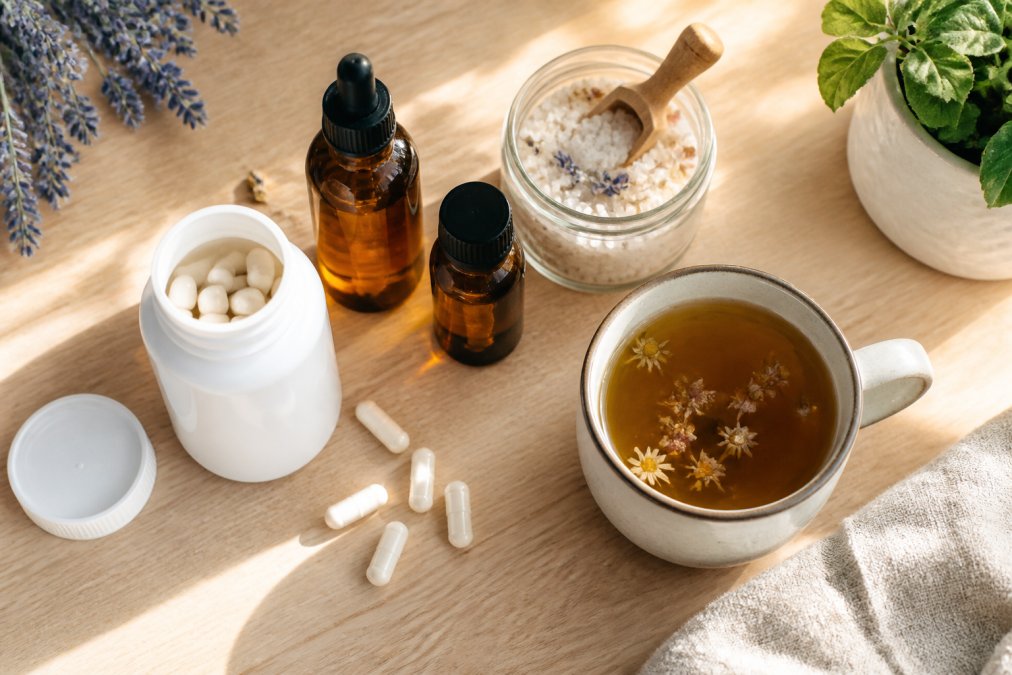
Natural supplements for anxiety fall into three groups: adaptogens that regulate cortisol over time, minerals that support nervous system regulation acutely, and nervine herbs with mild sedative effects. Matching the group to your stress pattern matters more than brand loyalty.
Adaptogens: Ashwagandha and Rhodiola Rosea
Adaptogens are botanical extracts that help the body resist stress rather than blunt it. They work gradually, nobody feels an ashwagandha capsule on day one.
The Natural Ashwagandha Capsules at $15.18 suit constant, low-grade pressure: irritability and poor sleep rather than panic. Give adaptogens several weeks of daily use before judging them.
Rhodiola Rosea at $7.54 leans toward mental clarity and daytime energy under stress. If your stress shows up as afternoon fog rather than wired restlessness, start here.
Magnesium and Mineral Support
Magnesium supports muscle relaxation and sleep quality, which is why it appears in nearly every evidence-based relaxation stack. The Magnesium Complex Capsules at $13.75 combine malate and glycinate with eight elemental magnesium sources.
Malate suits daytime tension; glycinate is the evening form. Magnesium is not a sedative, it supports a system already trending toward calm, and works far better alongside sleep hygiene than instead of it.
Nervine Herbs: Lemon Balm and Passion Flower
Nervine herbs are the fastest-acting category here, and the one most people should try first. Lemon Balm Glycerite at $27.08 and Passion Flower Extract at $27.08 both deliver gentle, non-habit-forming relief within 30 to 60 minutes.
Lemon balm suits mental restlessness; passion flower is the pick for occasional sleeplessness driven by repetitive thoughts.
Aromatherapy and Essential Oils for Calming Properties
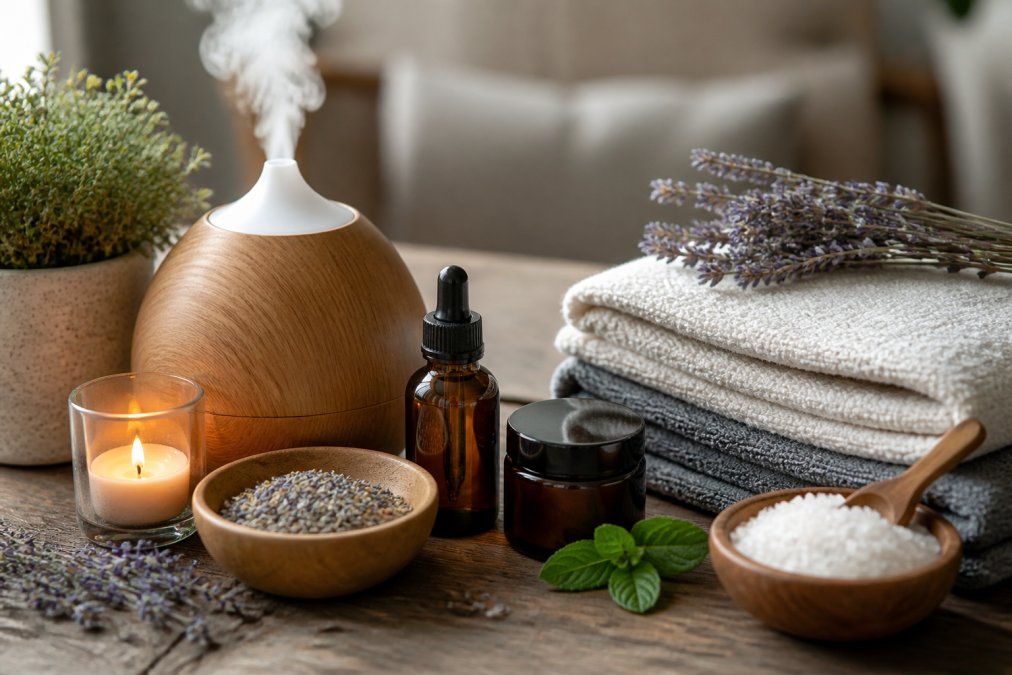
Aromatherapy works through the olfactory system's direct line to the limbic region, so scent can shift mood faster than anything you swallow. The Organic Essential Oils Set at $9.39 covers diffuser basics cheaply.
For stress spikes outside the house, the Nasal Inhaler Stick at $17.45 pairs essential oil with menthol for a cooling effect within seconds. It's the most portable item here.
What most guides miss: "therapeutic grade" is a marketing term, not a regulatory standard, and the FDA does not certify essential oil purity grades (the FDA).
Topical and Physical Relaxation Tools for Tension Relief
Physical and topical tools address tension where it lives: in muscles, skin, and the sensory nervous system. A patch, bath, or tactile object acts on the surface where the tension signal starts, faster than an adaptogen, more targeted than a diffuser.
How Topical and Physical Tools Actually Work
Three mechanisms do most of the work here:
- Transdermal and local action. A patch or balm delivers menthol, camphor, or herbal extracts to a tight area. The cooling or warming sensation competes with tension signals at the nerve level, so you feel it in minutes.
- Thermoregulation. A warm bath raises core body temperature; the cooldown afterward is a reliable natural sleep trigger. The drop, not the heat, is the signal.
- Tactile grounding. Weighted or textured objects give the nervous system a concrete physical input, interrupting racing thoughts, the principle behind fidget tools and weighted blankets.
Matching the Tool to the Tension
Different tension patterns respond to different tools. Buying by symptom beats buying by category:
- Jaw and neck tension at 3 p.m., a warming or cooling patch on the tight area plus a two-minute shoulder roll. The patch handles sensation; movement handles circulation.
- Restless legs or full-body wired feeling at night, a warm bath with bath salt, followed by a cool bedroom. The temperature swing does more than the salt.
- Racing thoughts with no physical tightness, a tactile tool (fidget, textured stone, weighted lap pad) works better than a topical, because the problem is cognitive.
- Skin sensitivity or sensory overload, unscented, minimal-ingredient topicals. Fragrance is the most common irritant here.
Budget vs. Premium in This Category
The Herbal Body Comfort Patch at $15.18 is the value entry point: single-purpose, applies to tight areas before bed. The pick if you want one targeted tool and nothing else.
For a fuller ritual, the Luxury Dead Sea Spa Gift Set at $35.54 bundles bath salt, facial spray, mud mask, and essential oil. The bath salt alone captures most of the thermoregulation benefit; the rest is ritual value, not pharmacology. If budget is tight, buy bath salt on its own.
What Most Guides Get Wrong
Two things. First, they treat physical tools as interchangeable with supplements, when topical and tactile tools act on sensation and temperature, not cortisol or neurotransmitters. Second, they ignore skin sensitivity: patch-test any new topical on your inner forearm for 24 hours before applying it to your neck or jaw.
How to Manage Stress Naturally With a Daily Routine
Most guides list products in isolation and leave you to guess which belong together. The real question is not "which product is best" but "which products stack without canceling each other out." This section covers the stacking logic, then maps it to three stress profiles and two budget tiers.
The Stacking Principle
A mineral, an herb, and a scent ritual each address a different link in the same chain: magnesium supports the nervous system's baseline, a nervine herb takes the edge off a spike, and aromatherapy gives the limbic system an immediate sensory anchor. Stacking means you are not asking one product to do three jobs.
The rule that keeps stacking safe: one new addition per week. Add three at once and feel off, and you cannot tell which caused it. One week per addition also lets you notice whether a product does anything before layering the next.
Symptom-Based Stacks
Match the stack to how your stress actually shows up, not to a generic "relaxation" goal.
Profile 1: Physical tension (jaw, shoulders, tight chest)
- Morning: Magnesium Complex with breakfast, malate form suits daytime tension
- Afternoon: two-minute breathing pause at the stress peak, plus a nasal inhaler if you need a sensory reset
- Evening: warm bath 60-90 minutes before bed, then a comfort patch on the tight area
- Why it works: this profile is muscular and thermal, so minerals and temperature do more than sedative herbs
Profile 2: Racing thoughts (mind won't slow down at night)
- Morning: Rhodiola Rosea with breakfast for daytime mental clarity
- Afternoon: nasal inhaler at the stress peak, a 10-second sensory interrupt
- Evening: Lemon Balm Glycerite 30-60 minutes before bed
- Why it works: this profile is cognitive, so the nervine herb and the sensory anchor matter more than magnesium
Profile 3: Wired-and-tired (exhausted but can't settle)
- Morning: Ashwagandha with breakfast, the slow-build adaptogen for constant low-grade pressure
- Afternoon: skip stimulants; use the inhaler or a short walk instead
- Evening: Magnesium Complex with dinner, then Passion Flower Extract 30-60 minutes before bed
- Why it works: this profile needs both the adaptogen (weeks) and the acute nervine (minutes); the two operate on different timelines and don't compete
Budget vs. Premium Stacks
You do not need the full catalog. Two honest tiers:
Best value stack (under $50 total)
- Magnesium Complex Capsules, $13.75
- Rhodiola Rosea Capsules, $7.54
- Organic Essential Oils Set, $9.39
- Total: roughly $30.68. Covers mineral support, daytime resilience, and a scent ritual. This is the stack to start with if you are new to natural relaxation products.
Best overall stack (under $100 total)
- Magnesium Complex Capsules, $13.75
- Ashwagandha Capsules, $15.18
- Lemon Balm Glycerite, $27.08
- Nasal Inhaler Stick, $17.45
- Total: roughly $73.46. Adds the slow-build adaptogen and the fastest-acting nervine, plus a portable sensory tool. This is the stack for someone who has already tried one product and wants a full routine.
A Realistic Week-One Schedule
- Day 1-7: Add one product only. Most people start with magnesium in the evening or lemon balm before bed, depending on whether their stress is physical or cognitive.
- Day 8-14: Add the second product from your profile. Keep the first one unchanged so you can isolate the effect.
- Day 15-21: Add the third. By now you should be able to name which product does what.
- Week 4 onward: Hold the stack steady for a month before judging adaptogens. They build; they don't hit.
FDA Regulation of Dietary Supplements: What Buyers Should Know
FDA regulation of dietary supplements operates under a post-market framework: products reach shelves without pre-approval, and the agency acts on reported problems afterward. That puts real weight on the buyer.
The practical implications are straightforward. Under FDA guidance on dietary supplements, manufacturers are responsible for safety and labeling accuracy, but no one verifies claims before sale. Look for a third-party testing seal, a clear supplement facts panel, and a seller who publishes ingredient sourcing. If a label promises to "cure" anxiety, that claim alone is a red flag, since supplements cannot legally make disease claims.
Safety, Side Effects, and When to Talk to a Doctor
Natural does not mean risk-free. Common side effects include drowsiness from nervine herbs, digestive upset from magnesium taken without food, and skin irritation from topical patches. Ashwagandha may interact with thyroid and sedative medications; essential oils can irritate sensitive skin undiluted (Ashwagandha as a Unique Cause of Thyrotoxicosis Presenting With Supraventricular...).
Talk to a doctor before starting any supplement if you take prescription medication, are pregnant or nursing, or manage a chronic condition. Persistent anxiety, panic, or sleeplessness lasting weeks warrants professional evaluation rather than self-treatment. Natural alternatives support a wellness routine; they do not replace care for any diagnosed condition.
Stress rarely yields to a single purchase. It yields to a routine built from the right combination: a mineral for muscle relaxation, an herb for racing thoughts, a scent for instant grounding. Green Vitality USA curates exactly these categories, with fast direct-to-door delivery, transparent pricing, and a customer-focused approach that makes building your stack simple. Start with one product matched to your stress pattern, add a second after a week, and let the routine do the rest. Shop now and build a calmer evening, one layer at a time.
Frequently Asked Questions
What are the most effective natural supplements for stress relief?
Adaptogenic herbs like ashwagandha and rhodiola rosea are among the most studied for stress support, along with magnesium and nervine herbs such as lemon balm and passion flower. Clinical research points to magnesium glycinate for muscle relaxation and sleep quality, and ashwagandha for lowering cortisol levels. Effects vary by person, so start with one product at a time and track how you feel over two to four weeks before adding another.
Are natural relaxation products safe to use daily?
Most botanical extracts and mineral supplements are well tolerated when you follow the dosage recommendations on the label. That said, some herbs have sedative effects that can interact with prescription medications, and certain products are not recommended for pregnant or nursing women. Check with a healthcare professional before making any natural relaxation products part of your daily wellness routine, especially if you take medication for anxiety or sleep.
How do I choose the right stress relief product for my needs?
Match the product to your main symptom. Racing thoughts at night point toward nervine herbs or magnesium; daytime tension and low mood often suit adaptogens like rhodiola; physical tightness responds well to topical patches or aromatherapy. Budget matters too, since a full routine can be built for under $60. Start with one category, give it two weeks, and add a second product only if the first helps.
Do natural relaxation products require a prescription?
No. Dietary supplements, essential oils, and topical patches are sold over-the-counter and do not require a prescription. Under FDA regulation of dietary supplements, these products are treated as a food category rather than drugs, which means they cannot claim to treat or cure conditions like generalized anxiety disorder. If your symptoms are persistent or severe, see a healthcare professional rather than self-treating with supplements alone.
How long does it take for natural stress relief products to work?
It depends on the format. Aromatherapy and nasal inhalers can shift how you feel within minutes because the scent acts quickly. Topical patches and magnesium may take 30 to 60 minutes. Adaptogenic herbs like ashwagandha and rhodiola typically need two to four weeks of consistent use before you notice changes in mood stabilization or mental clarity. Keep a simple log so you can tell what is actually working.