 listicle
Alternatives to Synthetic Fragrances in Daily Skincare
Table of Contents
- Why Synthetic Fragrances Are Worth Replacing
- How to Read Skincare Labels for Hidden Fragrances
- Essential Oils vs Synthetic Fragrance in Skincare
- Benefits of Fragrance-Free Skincare for Sensitive Skin
- Fragrance-Free and Naturally Scented Products to Try
- How to Patch Test and Transition Your Routine
- Conclusion
- Frequently Asked Questions
Last Updated: September 29, 2026
Why Synthetic Fragrances Are Worth Replacing
Synthetic fragrances are lab-created aromatic compounds, often built from petroleum-derived chemicals, that give skincare products their scent. They are the most common cause of allergic contact dermatitis from cosmetics, according to American Academy of Dermatology guidance on fragrance allergy. At Green Vitality USA, we see customers every week asking how to move away from them without giving up a pleasant routine.
How to Read Skincare Labels for Hidden Fragrances
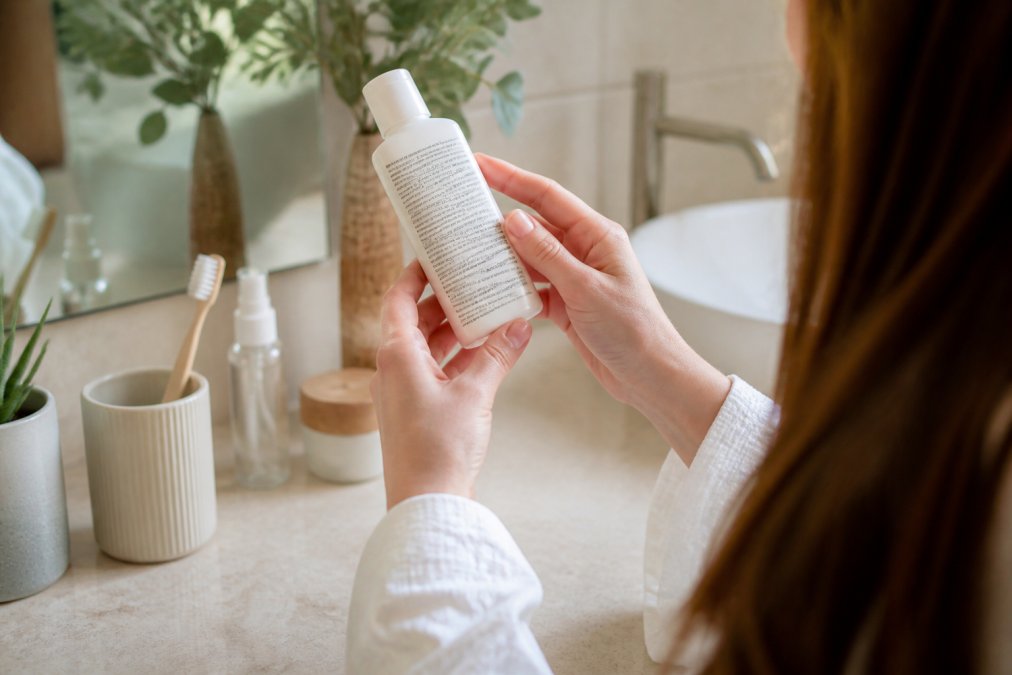
Reading a label for hidden fragrance means scanning the full ingredient list, not the front of the bottle, for names that signal scent compounds. "Fragrance" or "parfum" is the obvious one; the harder ones hide behind chemical names.
Common Ingredient Names That Signal Synthetic Fragrance
A common mistake is trusting the word "natural" on the front label, it says nothing about what is inside. Watch for these names:
- Phthalates (often listed as diethyl phthalate), used to make scent last longer
- Parabens, sometimes paired with fragrance as a preservative system
- Linalool, geraniol, limonene, and citronellol, which occur in both natural and synthetic form and are common allergens
- Cinnamal, eugenol, and coumarin, frequent in "spicy" or "warm" scents
What 'Fragrance-Free' and 'Unscented' Actually Mean
Fragrance-free means no scent compounds were added and no masking fragrance is present. Unscented means the product may still contain fragrance, added to cover the smell of raw ingredients, the most misunderstood distinction in clean beauty (the FDA).
Essential Oils vs Synthetic Fragrance in Skincare
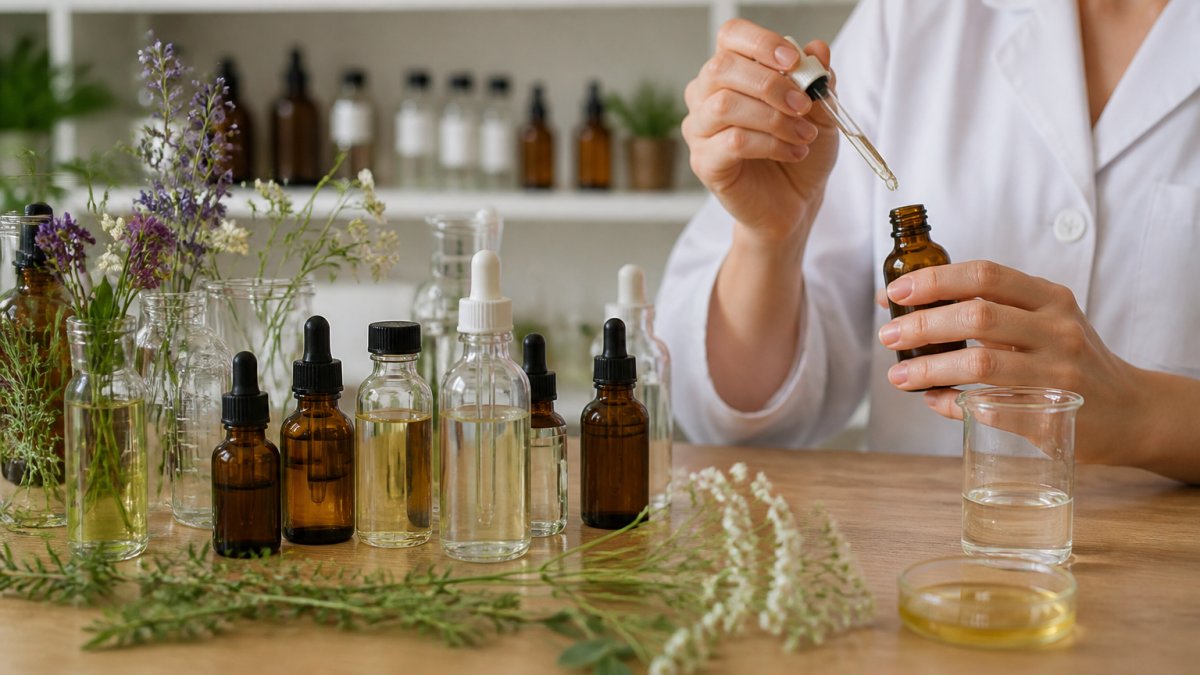
Essential oils are concentrated plant extracts, usually produced by steam distillation or cold pressing. Synthetic fragrance is manufactured, sometimes to replicate a natural scent, sometimes to invent one. Neither is automatically safer, and both can trigger reactions.
A Scent Guide: What Natural Alternatives Actually Smell Like
Most comparisons stop at "natural smells better," which is useless in a store. Here is how the common natural scent families behave on skin, so you can match a scent before you buy.
- Citrus (bergamot, sweet orange, lemon, grapefruit): Bright and sharp, then fades within 30 to 60 minutes, the shortest-lived family. Best for morning routines and body washes where you want a lift, not a lingering trail.
- Floral (lavender, geranium, rose, neroli): Opens soft and sweet, then settles powdery or herbal. Lavender reads clean and slightly medicinal to some, calming to others. Good for evening routines and body creams.
- Herbal and green (rosemary, tea tree, chamomile, cucumber): Fresh and grassy, sometimes camphor-like. They smell "clinical" to people used to sweet synthetic scents, which is why they work in cleansers and toners.
- Earthy and woody (cedarwood, vetiver, patchouli, sandalwood): The longest-lasting natural family, warm, dry, grounding. They hold scent closer to a synthetic fixative, making them the best bridge off synthetic perfume.
- Spicy and warm (clove, cinnamon, ginger, cardamom): Rich and noticeable, but also among the most likely to irritate. Use sparingly and patch test carefully.
Cost, Stability, and Shelf-Life Trade-Offs
Synthetic fragrance is cheaper to produce and more stable in the bottle, resisting oxidation and holding scent for years, a real advantage if you buy in bulk or keep products in a warm bathroom.
| Factor | Synthetic Fragrance | Essential Oils |
|---|---|---|
| Cost | Lower | Higher, varies widely by oil |
| Scent behavior | Linear, long-lasting | Evolving, fades faster |
| Shelf life | Long, stable | Shorter, oxidation risk |
| Allergen disclosure | Often hidden | Usually listed individually |
| Best for | Budget, longevity | Scent preference, transparency |
How to Store Natural-Scented Products So They Last
Because natural scent compounds are more fragile, storage matters more than with synthetic products. A few habits extend shelf life:
- Keep bottles out of direct sunlight and away from the shower's steam line.
- Store citrus-scented products in a cool, dark cabinet rather than on a windowsill.
- Cap tightly after each use, oxygen is what drives oxidation.
- Buy smaller sizes of citrus-heavy products and use them within a few months.
- Trust your nose: when a natural scent turns sharp, sour, or "off," the oil has likely oxidized and is more likely to irritate.
Benefits of Fragrance-Free Skincare for Sensitive Skin
Fragrance-free skincare removes the most common trigger of contact dermatitis, which is why dermatologists recommend it first for reactive skin. If your skin stings, reddens, or breaks out after a new product, fragrance is a leading suspect.
The benefits go beyond avoiding a reaction:
- Fewer variables when you are trying to find what irritates your skin
- Safer layering with active ingredients like retinoids or acids
- Better tolerance for daily use, especially on the face and neck
- Easier to combine with prescription treatments
Fragrance-Free and Naturally Scented Products to Try
Green Vitality USA stocks options for building a lower-fragrance routine. Here is how three fit different needs.
| Product | Price | Best For |
|---|---|---|
| West Month Cucumber Essential Oil | $12.49 | Sensitive skin, light botanical scent |
| Roxelis Body Care Cream | $12.49 | Daily body care, non-greasy finish |
| Jaysuing Lavender Shower Gel | $12.49 | Gentle cleansing with natural scent |
How to Patch Test and Transition Your Routine
Patch testing means applying a small amount of a new product to a controlled area and waiting before using it broadly. The protocol matters more than the advice, and so does knowing what you are looking for.
Herb Pharm - Kava - 1 Each-4 Fz →
What You Are Actually Testing For
Fragrance reactions fall into two patterns that behave differently:
- Irritant contact dermatitis shows up fast, usually within minutes to a few hours. It looks like redness, stinging, or a dry, scaly patch. It is a direct reaction to the substance, not an immune response, and it tends to stay where the product touched.
- Allergic contact dermatitis is delayed. It can take 24 to 72 hours to appear, and it can spread beyond the application site. Itching, small bumps, and weeping or crusting are common signs. This is the pattern that catches people off guard, because the product seemed fine on day one.
That delay is why a one-day patch test is not enough: a product can pass a same-day check and still react two days later.
A Step-by-Step Patch Test Protocol
Total time: 3 to 5 days per new product.
- Day 1: Apply a small amount, about the size of a pea, behind your ear or on your inner forearm. Use the same spot for every product you test so you have a consistent baseline.
- Day 2: Check for redness, itching, or bumps. If the area is clear, reapply the same amount to the same spot.
- Day 3: If still clear, apply to a larger area, such as the jawline or the side of your neck.
- Day 4: If still clear, begin normal use on the face, starting with a thin layer.
- Day 5: Watch for delayed reactions. If nothing appears by the end of day five, the product is likely tolerable for you.
If a reaction appears at any step, stop using the product and let the area settle before testing anything else. Do not "push through" a mild reaction, repeated exposure to an allergen can make the reaction worse over time.
How to Transition Without Losing Track
Introduce one product at a time. Switch your cleanser, moisturizer, and serum in the same week and you will never know which caused a reaction. A workable sequence:
- Start with the product that stays on your skin longest, usually your moisturizer or facial oil. These have the most contact time and the highest chance of revealing a sensitivity.
- Wait one full week before adding the next product, even if the first one passed.
- Move to rinse-off products next, cleansers and body washes. They have less contact time, so reactions are less common, but they still happen.
- Add actives and treatments last. Retinoids, acids, and vitamin C can make skin more reactive, so testing them alongside a new fragrance source muddies the picture.
- Keep a simple log, product name, date started, and any change in your skin. A phone note is enough.
Conclusion
The shift away from synthetic fragrance is less about finding a perfect product and more about knowing what you put on your skin. Start with your labels, patch test one product at a time, and let your skin tell you what it tolerates.
Frequently Asked Questions
Are synthetic fragrances hormone disruptors?
Some synthetic fragrance compounds, particularly phthalates used as fixatives, have been studied for their potential effects on the endocrine system. The research is ongoing, and not all synthetic fragrance ingredients act the same way. If you are concerned about hormone disruption, choosing products with full ingredient transparency or fragrance-free formulas removes that uncertainty entirely. Look for labels that list every ingredient rather than using the catch-all term 'fragrance.'
How can I identify synthetic fragrance on a skincare label?
Check for the word 'fragrance,' 'parfum,' or 'aroma' on the ingredient list. These catch-all terms can hide dozens of individual compounds without disclosure. Also watch for specific synthetic ingredients like phthalates, synthetic musks, and preservative-fragrance hybrids. If a product claims to be natural but lists 'fragrance' without specifying the source, treat it as synthetic until the brand confirms otherwise. Reading labels carefully is the most reliable way to avoid hidden synthetic fragrances.
Are essential oils a safe alternative to synthetic fragrances?
Essential oils are plant-derived and generally well tolerated, but they are not risk-free. Compounds like linalool, limonene, and geraniol are natural but can still trigger contact dermatitis in sensitive individuals. Citrus oils and floral waters can cause photosensitivity. The key difference is transparency: essential oils are usually listed by their specific botanical name, so you know exactly what you are applying. Patch testing before full use is essential, especially if you have reactive skin.
Is 'fragrance-free' the same as 'unscented'?
No, and the distinction matters. 'Fragrance-free' means no fragrance ingredients were added, though the base ingredients may have a faint natural odor. 'Unscented' means the product may contain masking fragrances to neutralize the smell of other ingredients, so it can still include synthetic fragrance compounds. For sensitive skin, 'fragrance-free' is the safer choice. Always scan the full ingredient list rather than trusting the front label alone.
What are the best natural alternatives to synthetic fragrance in skincare?
Plant-based options include essential oils, botanical extracts, floral waters, and hydrosols. Cucumber soothing essential oil, lavender extracts, and rose-derived ingredients are common choices. Some products use gentle plant extracts for nourishment without added fragrance at all. When switching, introduce one product at a time and patch test on your inner arm for 24 to 48 hours. This approach lets you identify any sensitivities before committing to a full routine change.
Switching your routine takes patience, but you do not have to do it alone. Green Vitality USA offers vetted, affordable skincare and body care with a fast, customer-focused shopping experience. Start with one product, patch test it properly, and expand at your own pace. Shop now and find what your skin actually likes.