 listicle
Alternatives to Popular Drugstore Skincare Brands
Table of Contents
- Why Shoppers Are Moving Away From Drugstore Skincare
- Quick Comparison: Drugstore vs. Curated Natural Alternatives
- Best Natural Skincare for Sensitive Skin
- How to Read Skincare Labels Like a Formulator
- Skincare Routine for Aging Skin: What Changes After 35
- Affordable Alternatives That Rival Drugstore Staples
- What to Avoid When Switching to Natural Skincare
- Frequently Asked Questions
Last Updated: September 28, 2026
Why Shoppers Are Moving Away From Drugstore Skincare
Shoppers are moving away from drugstore skincare because the ingredient lists on mass-market labels rarely tell the whole story. This guide to alternatives to popular drugstore skincare brands breaks down what to look for, what to avoid, and how to build a routine that respects both your skin barrier and your budget.
Ingredient Transparency and Labeling Gaps
Ingredient transparency is the practice of listing every component in a formula in clear, standardized language so buyers can judge it for themselves. In practice, many mass-market labels bury fragrance and dye under vague terms. The FDA guidance on cosmetic labeling requires ingredients to be listed in descending order of concentration, but "fragrance" can legally stand in for a blend of dozens of undisclosed compounds.
Quick Comparison: Drugstore vs. Curated Natural Alternatives
Curated natural alternatives differ from drugstore staples in three practical ways: shorter ingredient lists, fewer synthetic fragrance and dye additives, and clearer sourcing. But the differences that actually change your skin show up at the formula level, not the shelf level. The table below summarizes the trade-offs a shopper actually weighs, followed by the mechanisms behind them.
| Factor | Typical Drugstore Product | Curated Natural Alternative |
|---|---|---|
| Ingredient list | Long, filler-heavy | Shorter, active-first |
| Fragrance | Often synthetic | Frequently fragrance-free |
| Dyes | Common | Usually none |
| Label clarity | Vague terms allowed | Named botanicals |
| Price per item | Low | Comparable to low |
| Best for | Basic cleansing | Sensitive, aging skin |
What Actually Differs at the Formula Level
Three mechanisms separate most drugstore staples from well-built natural alternatives, and each one shows up on your skin over a different timeline.
Long-Term vs. Short-Term: What to Expect and When
This is the part most comparison articles skip, and it is where expectations get set.
- Days 1-3: Hydration and feel. A lighter natural moisturizer may feel less 'cushioned' than a petrolatum-heavy drugstore cream. That is the occlusive film you are missing, not a sign the product failed.
- Weeks 1-2: Barrier comfort. If a sulfate cleanser was the irritant, most users notice less tightness and fewer reactive flare-ups within about two weeks of switching.
- Weeks 4-8: Texture and tone. Niacinamide, peptides, and gentle exfoliating oils typically need four to eight weeks of consistent use before fine lines, dullness, or uneven tone visibly shift. Any product promising overnight transformation is overpromising.
- Months 3+: Cumulative barrier health. This is where the shorter-ingredient-list approach pays off, fewer irritant exposures over time means fewer setbacks.
How Natural Alternatives Interact With the Rest of Your Routine
A product does not work in isolation. Two practical rules:
- Order by texture, not by price. Thinnest to thickest: cleanser, toner, serum, oil, moisturizer, sunscreen. A heavy drugstore cream applied before a serum blocks the serum.
- Do not stack actives. If you are using an exfoliating oil, do not add a drugstore AHA/BHA toner the same night. Over-exfoliation is the most common cause of 'my new natural product broke me out', and it is usually the combination, not the product.
Best Natural Skincare for Sensitive Skin
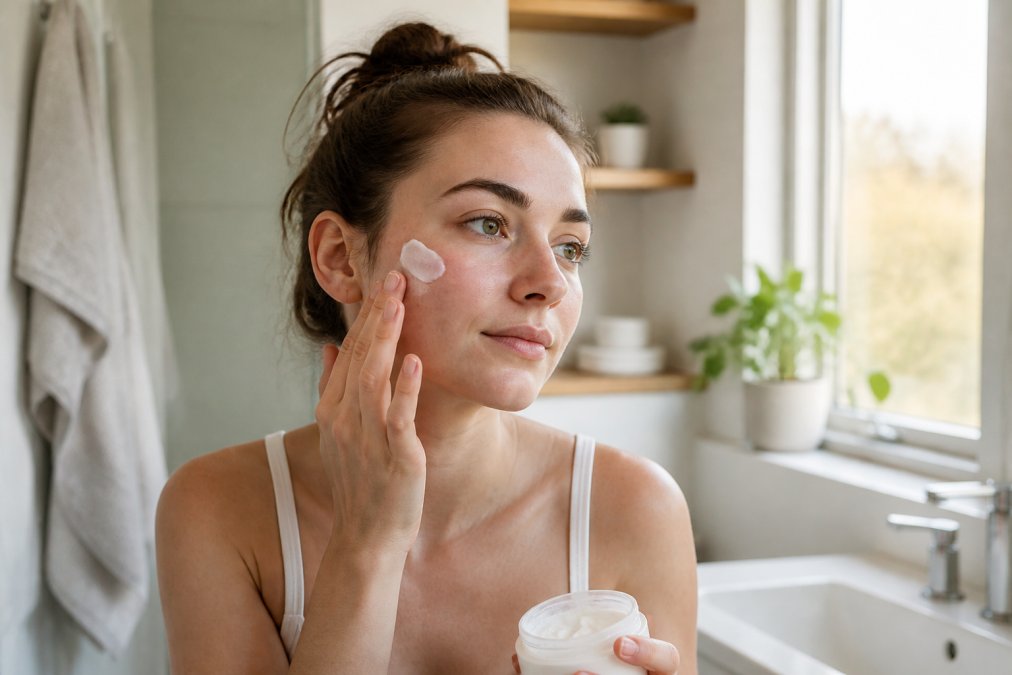
The best natural skincare for sensitive skin favors short ingredient lists, fragrance-free formulas, and barrier-supporting ingredients. Sensitive skin reacts to fewer things when the formula contains fewer potential irritants. Look for ceramides, squalane, glycerin, and niacinamide, all of which support the skin barrier and moisture retention rather than stripping it.
Fragrance-Free and Dye-Free Formulas to Look For
Fragrance-free means no added scent, natural or synthetic. Dye-free means no colorants. Both matter because fragrance is among the most common causes of contact irritation, and dyes add nothing to how a product works. When you scan a label, treat "parfum," "fragrance," and "FD&C" colorants as signals to look closer.
How to Read Skincare Labels Like a Formulator
Reading a skincare label like a formulator means checking three things in order: the ingredient list, the order of those ingredients, and the presence of known irritants. The Cosmetic Ingredient Review ingredient database is a useful reference for checking individual names.
Decoding INCI Names and Ingredient Order
INCI names are the standardized international terms for cosmetic ingredients, which is why you see "aqua" instead of water and "tocopherol" instead of vitamin E. Order tells you concentration: the first five ingredients make up the bulk of the formula. If an active you want appears after the preservative, there is very little of it.
- First five: the base and bulk of the product
- Middle: active and supporting ingredients
- Last few: preservatives, fragrance, colorants
- Red flags: fragrance high on the list, long dye names
Skincare Routine for Aging Skin: What Changes After 35
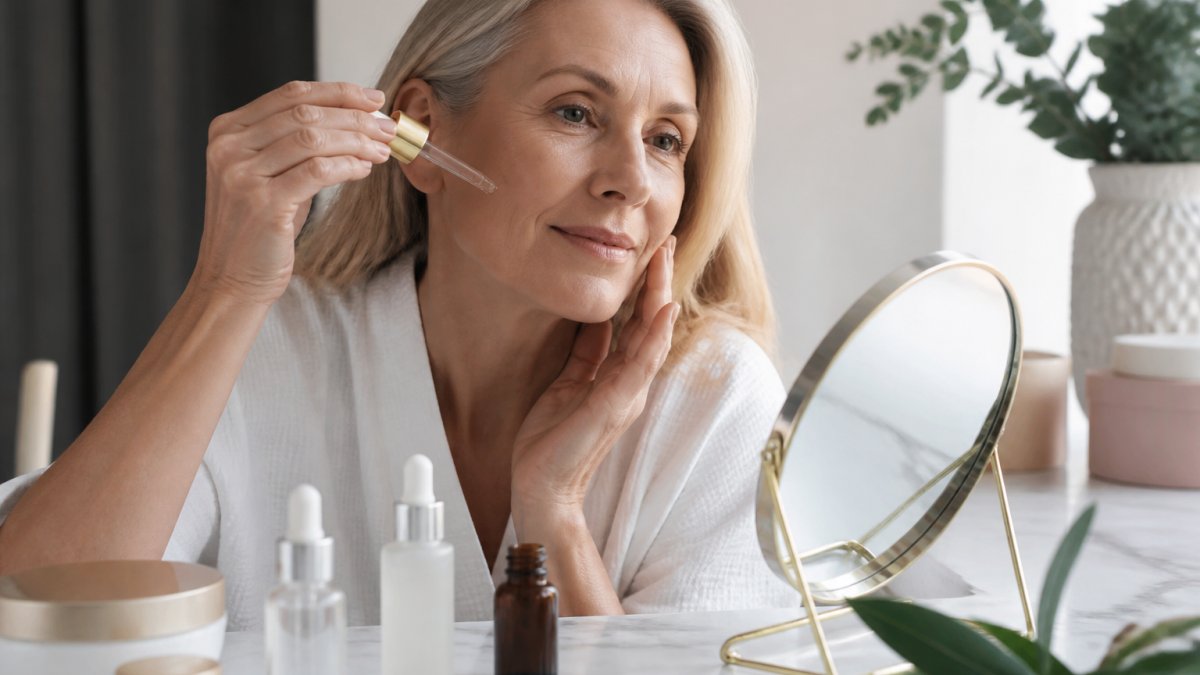
A skincare routine for aging skin shifts focus from cleansing to supporting collagen, elasticity, and moisture retention. After 35, the skin's natural renewal slows and fine lines become more visible, so the routine should lean on hydration and gentle firming rather than aggressive exfoliation.
What Is Actually Changing in the Skin
Three processes drive most of what you see in the mirror after 35:
- Collagen and elastin decline. Collagen production drops gradually from the mid-20s onward. The visible result is loss of firmness and the beginning of fine lines, especially around the eyes and mouth.
- Slower cell turnover. The stratum corneum renews more slowly, which reads as dullness and uneven texture rather than a single dramatic change.
- Barrier lipid loss. Ceramides and natural oils decrease, so skin loses water faster and reacts more to irritants it used to tolerate.
A Practical AM and PM Sequence
Morning:
OUHOE Facial Anti Wrinkle And Firming →
- Gentle cleanse, or rinse with lukewarm water if skin is dry
- Hydrating serum with niacinamide or peptides
- Eye care for puffiness and dark circles
- Moisturizer to seal in moisture
- Broad-spectrum sunscreen, SPF 30 or higher, every morning, this is the single highest-impact step for aging skin
Evening:
- Gentle cleanse to remove sunscreen and buildup
- Treatment step, alternate a peptide or niacinamide serum with a gentle exfoliating oil two to three nights a week, never both on the same night
- Eye care
- Richer moisturizer to support overnight barrier repair
Ingredient Priorities, In Order
If you only remember four ingredients, remember these:
- Sunscreen filters, daily UVA/UVB protection prevents the majority of visible photoaging
- Niacinamide, supports barrier lipids and evens tone; well tolerated by most sensitive skin at 2-5%
- Peptides, signal ingredients that support the skin's own collagen-building processes; results are gradual
- Ceramides, squalane, glycerin, barrier and hydration support, the foundation everything else sits on
Retinoids are the most evidence-backed anti-aging ingredient class, but they are also the most likely to cause irritation. If you introduce one, start at the lowest concentration twice a week and build up slowly. Do not add a retinoid and an exfoliating oil in the same week.
What to Expect and When
- Days 1-7: Hydration improves; skin may feel calmer if you removed a harsh cleanser
- Weeks 2-4: Tone looks more even; less reactive flushing
- Weeks 6-12: Fine lines around the eyes and mouth begin to soften with consistent peptide and sunscreen use
- Months 3-6: Firmness and elasticity changes become visible; this is the realistic window for collagen-supporting ingredients
Anyone promising visible firming in a week is selling hope, not a formula.
Affordable Alternatives That Rival Drugstore Staples
Affordable alternatives can match drugstore staples on price while offering clearer labels. A fragrance-free moisturizer, a peptide serum, and a hydrating mask cover the same ground as a drugstore three-step, often for less per item. The catch is that you have to know which ingredients to prioritize.
What to Avoid When Switching to Natural Skincare
The biggest mistake when switching is assuming "natural" always means gentle. Some botanical extracts and essential oils irritate sensitive skin, and a long plant-based list can be just as confusing as a synthetic one. Avoid products that lean on essential oils for scent if your skin is reactive, and skip anything that promises overnight transformation.
- Don't chase "chemical-free" claims, since water is a chemical
- Don't stack multiple exfoliants at once
- Don't ignore patch testing on the inner arm
- Don't assume higher price means better ingredients
Frequently Asked Questions
Why should I switch from drugstore skincare to natural alternatives?
Drugstore formulas often rely on synthetic fragrance, dyes, and preservatives that can irritate sensitive skin. Natural alternatives typically use plant-derived oils, butters, and extracts that support the skin barrier. Many people also find that natural formulas list fewer ingredients, making it easier to spot potential triggers. The switch is less about marketing and more about reading labels and choosing products with ingredients your skin tolerates well.
What ingredients should I avoid in conventional drugstore skincare?
Common irritants include synthetic fragrance, drying alcohols (denatured alcohol, SD alcohol), and certain preservatives like methylisothiazolinone. For acne-prone skin, heavy mineral oil and coconut oil can clog pores in some people. If you have sensitive skin, patch test anything with essential oils or exfoliating acids. Reading the ingredient list in order of concentration helps you spot these before you buy.
Are natural skincare alternatives more effective for sensitive skin?
Not automatically. Natural does not mean non-irritating; essential oils and botanical extracts can trigger reactions too. What matters is the formula: fragrance-free, dye-free, and pH-balanced products tend to work better for reactive skin. Look for short ingredient lists and staples like glycerin, ceramides, and squalane, which support the skin barrier without added sensitizers.
How do I transition my skincare routine to clean beauty products?
Swap one product at a time, starting with cleanser or moisturizer, and give each new item two weeks before adding another. This makes it easier to identify what works and what causes a reaction. Keep your sunscreen consistent since it is the most important anti-aging step. Track what you use in a notes app so you can trace any irritation back to its source.
Is it more expensive to switch to premium natural skincare brands?
Not necessarily. Many curated online retailers offer natural formulas. The bigger cost difference often comes from buying fewer, more targeted products instead of a full shelf of impulse buys. Compare cost per ounce, not just the sticker price.
Switching away from drugstore skincare is really a test of patience: you have to read labels, introduce products slowly, and let your skin adjust. Green Vitality USA makes that easier with a curated selection of affordable, high-quality skincare, fast and user-friendly online shopping, and a customer-focused approach built around reliable products at cost-effective prices. Get started with Green Vitality USA and build a routine you can actually read, understand, and trust.